Pea protein isolate produces muscle protein synthesis responses equivalent to whey protein when doses are matched for leucine content — the amino acid that triggers muscle building signalling. The 2019 JISSN study confirmed this directly. The relevant differences between pea and whey protein are not about muscle building effectiveness at equivalent doses, but about digestibility profile, amino acid completeness, allergen suitability, halal status and personal tolerance.
What Is Pea Protein?
Pea protein is extracted from yellow split peas (Pisum sativum) through wet milling — the pea is milled, the starch and fibre are separated out, and the protein fraction is concentrated and dried. Pea protein isolate typically contains 80–90% protein by weight. It contains all nine essential amino acids but is relatively low in methionine and cysteine — which is why it is often combined with rice protein (which is lower in lysine but higher in methionine) to create a more complete amino acid profile.
What Is Whey Protein?
Whey is the liquid separated from milk during cheese production. Whey protein concentrate (WPC) contains 70–80% protein; whey protein isolate (WPI) contains 90%+ protein with most of the lactose removed. Whey has the highest biological value of any protein source and is particularly rich in leucine — the amino acid most important for activating the mTOR pathway that triggers muscle protein synthesis.
Pea Protein vs Whey: The Direct Comparison
| Factor | Pea Protein Isolate | Whey Protein Isolate |
|---|---|---|
| Protein % per gram | ~80–85% | ~90–95% |
| Leucine content | ~7–8% of protein | ~10–12% of protein |
| BCAA content | Good — ~18% of protein | High — ~25% of protein |
| Digestibility (DIAAS) | 0.82 (good) | 1.09 (excellent) |
| Methionine content | Low — limiting amino acid | High |
| Muscle protein synthesis | Equivalent to whey at matched leucine doses | Gold standard; faster peak |
| Lactose | Lactose-free | Low (isolate), moderate (concentrate) |
| Allergens | No dairy, soy, gluten | Dairy — not suitable for dairy allergy |
| Halal status | Halal — plant derived | Depends on sourcing and certification |
| Environmental impact | Lower — peas fix nitrogen, less water | Higher — dairy farming |
Does Pea Protein Build the Same Muscle as Whey?
At equivalent leucine doses: yes. The landmark 2019 RCT in the Journal of the International Society of Sports Nutrition found that pea protein supplementation produced the same gains in bicep muscle thickness as whey protein over 12 weeks of resistance training in healthy male subjects. The key is matching leucine content — pea protein is slightly lower in leucine per gram, so you need approximately 10–15% more pea protein by weight to match whey’s leucine delivery at equivalent doses.
Pea protein’s lower methionine content is a consideration for very high protein diets (above 1.6g/kg body weight) as methionine is a limiting factor for protein synthesis at very high intakes. Combining with rice protein or ensuring some dietary methionine from other foods resolves this.
Who Should Choose Pea Protein?
- Vegans and vegetarians — whey is animal-derived
- People with dairy allergy or lactose intolerance
- UK Muslim consumers seeking halal-certified protein — pea protein is inherently halal; whey requires specific halal certification
- People with digestive sensitivity to whey — pea protein is generally well tolerated with minimal bloating
- People wanting a lower environmental footprint
Who Should Choose Whey Protein?
- People prioritising fastest possible post-workout muscle protein synthesis peak — whey is more rapidly absorbed
- People who prefer the taste and texture profile of whey
- People with high leucine requirements (advanced athletes) who want the most leucine-dense source per gram
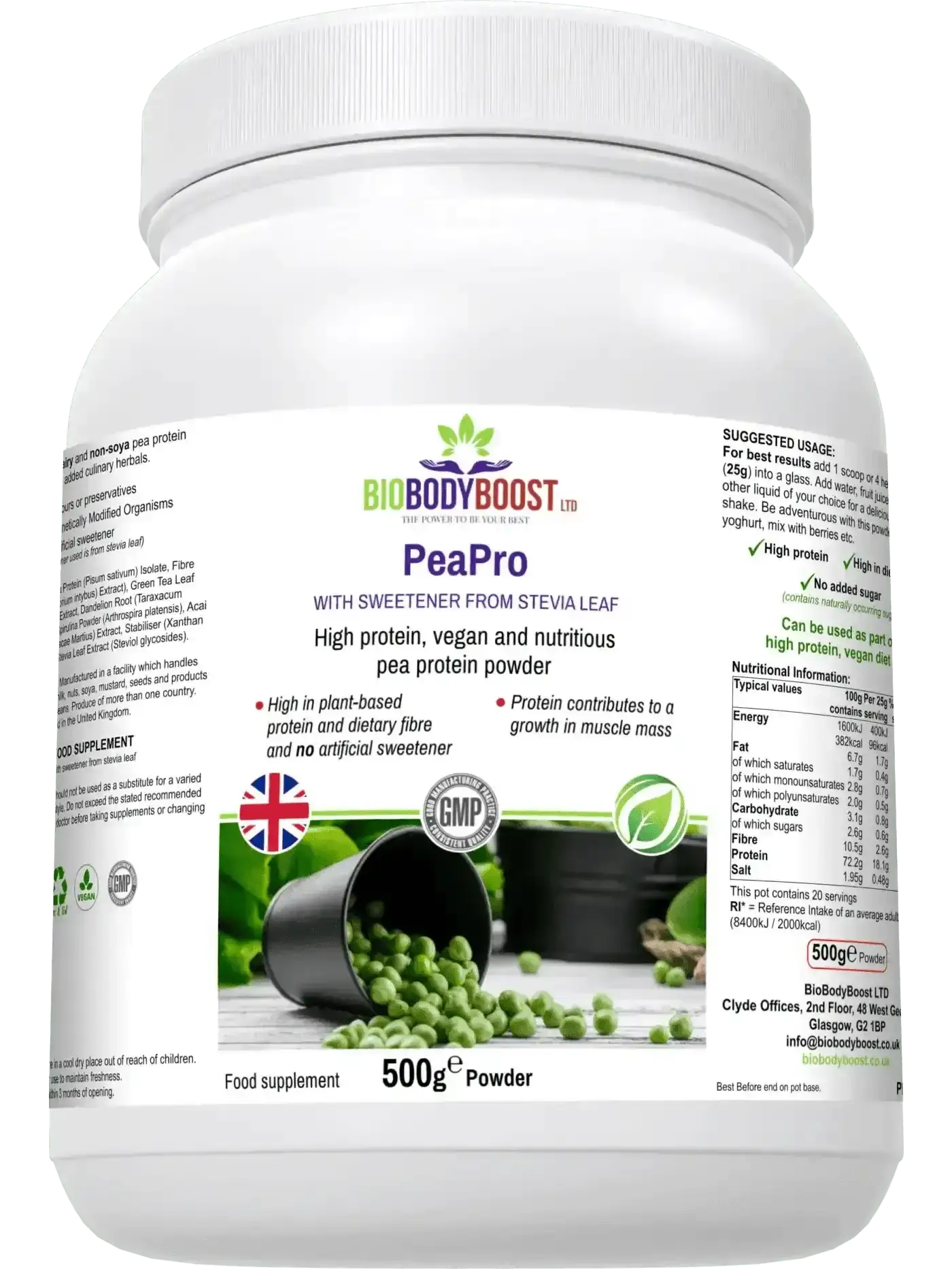
PeaPro by BioBodyBoost — vegan pea protein isolate, 18.1g protein per serving, halal certified, no artificial sweeteners. WheyPro Chocolate and WheyPro Vanilla — from hormone-free, grass-fed UK dairy, halal certified, no artificial sweeteners. Browse the sports range.