Quick answer: beetroot supplements lower blood pressure by supplying dietary nitrates that the body converts to nitric oxide — a molecule that relaxes blood vessel walls. Meta-analyses report average systolic reductions of 3–5 mmHg and diastolic reductions of 1–3 mmHg with consistent daily use. Effects are strongest in people with elevated baseline blood pressure and build over 2–4 weeks.
How beetroot lowers blood pressure: the nitrate-nitrite-nitric oxide pathway
Beetroot (Beta vulgaris) is one of the highest dietary sources of inorganic nitrate, typically providing 250–400mg nitrate per 100g raw beetroot. The mechanism follows a three-step pathway:
- Dietary nitrate is absorbed in the small intestine and concentrated in saliva
- Bacteria on the tongue reduce nitrate to nitrite (this is why antibacterial mouthwash blunts the effect — it kills the bacteria required for conversion)
- Nitrite is further reduced to nitric oxide (NO) in blood and tissue, particularly under conditions of low oxygen
Nitric oxide acts on the smooth muscle lining blood vessel walls, causing them to relax and dilate (vasodilation). Wider vessels reduce peripheral resistance, which lowers both systolic and diastolic blood pressure. This is the same general mechanism targeted by some classes of antihypertensive medication, though via a different pathway.
What the meta-analyses actually show
The evidence base for beetroot and blood pressure is now substantial enough to draw reliable conclusions from meta-analyses rather than individual trials:
Siervo et al. (2013), Hypertension — Meta-analysis of 16 trials (n=254). Dietary nitrate supplementation (primarily from beetroot) reduced systolic blood pressure by a mean of 4.4 mmHg and diastolic by 1.1 mmHg vs placebo. Reductions were larger in people with higher baseline blood pressure.
Lara et al. (2016), European Journal of Nutrition — Meta-analysis of 22 RCTs. Inorganic nitrate and beetroot supplementation reduced systolic BP by 3.55 mmHg and diastolic by 1.32 mmHg overall. Effects were larger in shorter trials (acute dosing) and in hypertensive populations vs normotensive individuals.
Jackson et al. (2019), Nutrients — Systematic review of 43 studies. Concluded that beetroot-derived nitrate consistently produces clinically meaningful reductions in systolic BP, with the strongest evidence in people with pre-hypertension and stage 1 hypertension. Effects in people with normal blood pressure (<120/80 mmHg) were smaller and less consistent.
Honest limit: A 3–5 mmHg reduction in systolic BP is clinically meaningful at a population level — epidemiological data suggests even a 2 mmHg reduction reduces stroke risk by approximately 10% at scale. But for an individual with stage 2 hypertension (above 160/100 mmHg), beetroot supplementation alone is not a substitute for prescribed antihypertensive medication. It is a useful adjunct, not a primary treatment.
Beetroot capsules vs juice: which is better?
Most early trials used beetroot juice at 250–500ml per day, delivering 300–600mg of dietary nitrate. Concentrated capsules were developed to deliver equivalent nitrate loads in a more practical format. The comparison:
- Nitrate delivery: Good concentrated capsules (standardised to nitrate content) deliver equivalent nitrate to juice. Many consumer capsules are not standardised, making dose comparison difficult — look for products with declared nitrate content in mg per serving.
- Sugar: Beetroot juice (particularly commercial varieties) contains 6–10g sugar per 250ml serving. Capsules contain negligible sugar, making them better suited to people managing blood glucose alongside blood pressure.
- Oxalate load: Beetroot is high in oxalates. Juice delivers more oxalate per sitting than capsules. For people prone to oxalate kidney stones, capsules may reduce oxalate exposure, though the effect is modest.
- Consistency: Trials consistently show that the blood pressure effect requires daily use — it is not maintained after stopping. Capsules have a compliance advantage for long-term daily use.
Honest limit: Juice used in trials was typically freshly prepared or cold-pressed without heat treatment. Some commercial juices use heat processing that can reduce nitrate content. If using juice rather than capsules, choose cold-pressed and check nitrate content on the label.
Effective dose: what trials actually used
Across the meta-analyses, the doses showing consistent blood pressure reduction were:
- Nitrate dose: 300–600mg dietary nitrate per day
- Whole beetroot equivalent: approximately 200–250g raw beetroot, or 70–140ml concentrated beetroot shot
- Capsule equivalent: varies by product — look for standardised nitrate content or equivalent to 3,000–6,000mg concentrated beetroot extract
- Duration for measurable effect: acute effects on nitric oxide levels appear within 2–3 hours; sustained blood pressure reduction builds over 2–4 weeks of daily use
Single-dose effects exist but are modest. The clinical evidence for meaningful blood pressure reduction is built on consistent daily supplementation over weeks, not occasional use.
Beetroot vs other circulation supplements
Beetroot is not the only supplement with evidence for blood pressure and circulation. Understanding the mechanisms helps you decide whether to use it alone or in combination:
- Nattokinase: Works via fibrinolysis (breaking down fibrin clots) rather than vasodilation. Addresses blood fluidity rather than vessel tone. Different mechanism to beetroot — rationale for combining exists. Full comparison: nattokinase vs beetroot UK evidence guide.
- Magnesium: EU-authorised to contribute to normal muscle function — vascular smooth muscle included. Magnesium deficiency is associated with increased blood pressure in epidemiological data. A 2016 meta-analysis in Hypertension (Zhang et al., 34 trials) found magnesium supplementation reduced systolic BP by 2 mmHg and diastolic by 1.78 mmHg at doses of 368mg/day and above.
- Omega-3 (EPA+DHA): A 2022 meta-analysis in the Journal of the American Heart Association (Miller et al., 71 trials) found EPA+DHA supplementation at 2–3g/day reduced systolic BP by 2.61 mmHg and diastolic by 1.64 mmHg, with larger effects in hypertensive individuals.
- Coenzyme Q10: A 2007 meta-analysis in the Journal of Human Hypertension (12 trials) found CoQ10 supplementation reduced systolic BP by up to 17 mmHg and diastolic by up to 10 mmHg — notably larger effect sizes than beetroot, though the trials were older and smaller, and effects varied substantially between studies.
Who should be careful with beetroot supplements
- People taking antihypertensive medication: Beetroot has additive blood-pressure-lowering effects. If you are on prescribed medication for hypertension, speak to your GP before adding beetroot — the combined effect may lower blood pressure further than intended.
- People prone to oxalate kidney stones: Beetroot is high in oxalates. Concentrated daily supplementation adds to dietary oxalate load. Discuss with a healthcare professional if you have a history of calcium oxalate stones.
- People using antibacterial mouthwash daily: Antibacterial mouthwash kills the tongue bacteria required for the nitrate-to-nitrite conversion step. A 2019 study in Free Radical Biology and Medicine found twice-daily antibacterial mouthwash use completely abolished the blood pressure benefit of beetroot nitrate in healthy adults. If using mouthwash, use it before the beetroot supplement rather than after.
- People with G6PD deficiency: High nitrate intake can theoretically increase methaemoglobin formation in G6PD-deficient individuals. Seek medical advice before supplementing.
Beeturia (pink or red urine and stools after consuming beetroot) is harmless — it reflects excretion of the pigment betanin and is not a sign of blood in urine. It is more common in people with low stomach acid or iron absorption differences.
Our beetroot supplement
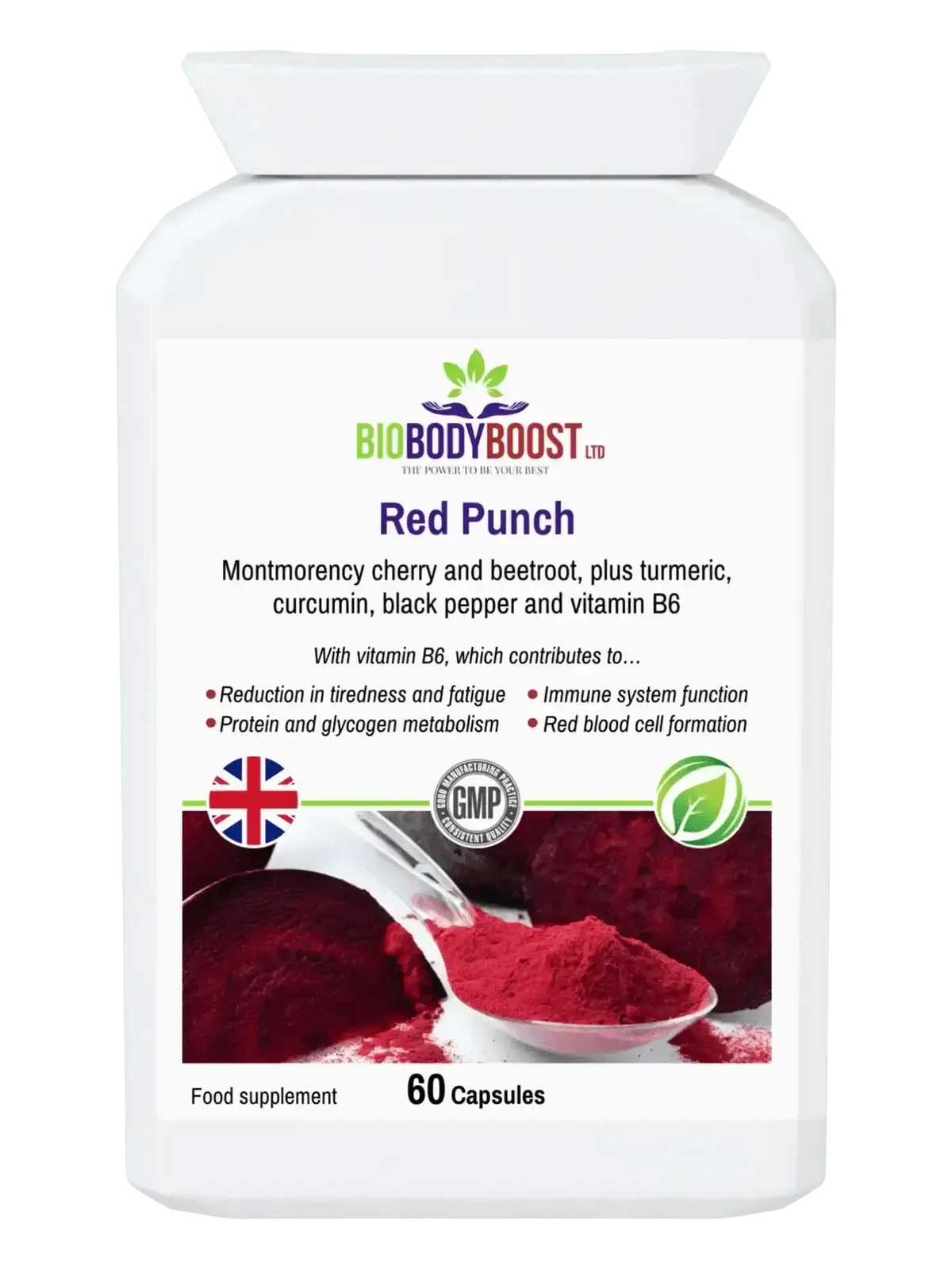
Red Punch combines 4,500mg equivalent concentrated beetroot with Montmorency tart cherry and vitamin B6 — halal approved, vegan, UK-manufactured under GMP. The tart cherry addition provides anthocyanins with separate evidence for exercise recovery and sleep quality. Explore the full Halal Vitamins UK collection.
Food supplements should not replace a varied diet or healthy lifestyle. This article does not constitute medical advice. If you have diagnosed hypertension or take prescription medication, consult your GP before starting any new supplement.
How much does beetroot lower blood pressure in mmHg?
Meta-analyses consistently report average reductions of 3–5 mmHg systolic and 1–3 mmHg diastolic with daily beetroot/nitrate supplementation. The Siervo et al. 2013 meta-analysis (16 trials) reported 4.4 mmHg systolic and 1.1 mmHg diastolic. The Lara et al. 2016 meta-analysis (22 RCTs) reported 3.55 mmHg systolic and 1.32 mmHg diastolic. Effects are consistently larger in people with elevated baseline blood pressure (pre-hypertension or stage 1 hypertension) than in people with normal blood pressure.
How long does beetroot take to lower blood pressure?
Acute effects on nitric oxide and blood flow appear within 2–3 hours of a single dose. However, the sustained, measurable blood pressure reductions reported in clinical trials build over 2–4 weeks of consistent daily supplementation. Single or occasional doses produce some effect, but the evidence base for meaningful blood pressure reduction is built on daily use over at least 2 weeks. Stopping supplementation causes the effect to fade over a similar timeframe.
Can I take beetroot supplements with blood pressure medication?
Not without checking with your GP first. Beetroot nitrates lower blood pressure via vasodilation. If you are already taking antihypertensive medication (ACE inhibitors, calcium channel blockers, beta blockers, diuretics, etc.), the effects are additive and may lower your blood pressure further than your GP intended. This is not a reason to avoid beetroot altogether — it is a reason to have the conversation with your prescriber so they can monitor your blood pressure and adjust medication if needed.
Is beetroot juice or capsules better for blood pressure?
For most people, capsules are more practical for the daily consistency the evidence requires. Juice delivers equivalent nitrate but also delivers sugar (6–10g per 250ml serving), higher oxalate load, and is less convenient for long-term daily use. The key variable for either form is the actual nitrate content delivered — look for standardised nitrate content on the label (in mg) rather than just a generic beetroot weight. Many commercial beetroot capsules do not standardise for nitrate, making dose comparison unreliable.
Does antibacterial mouthwash stop beetroot from working?
Yes — this is well-established. The nitrate-to-nitrite conversion that initiates the blood pressure mechanism depends on bacteria on the tongue. Antibacterial mouthwash kills these bacteria and completely abolishes the blood pressure benefit of dietary nitrate. A 2019 study in Free Radical Biology and Medicine confirmed this effect in humans. If you use mouthwash, use it before taking your beetroot supplement, not after. Avoid swallowing mouthwash, and wait at least 30–60 minutes before taking the supplement if possible.
Is beetroot supplementation halal?
Beetroot is a plant-based ingredient with no inherent halal concerns. What requires checking is the capsule material (standard gelatine is animal-derived — look for HPMC plant-derived capsules) and manufacturing environment (for cross-contamination compliance). Red Punch is halal approved with a plant-derived capsule and full supply chain compliance.