Vitamin K1 (phylloquinone) is primarily used by the liver for blood clotting factor synthesis. Vitamin K2 (menaquinone) is primarily used by bones and blood vessels to direct calcium to the right places. Both forms activate vitamin K-dependent proteins, but different proteins in different tissues predominate for each form. This distinction has significant practical implications for supplementation.
What Is Vitamin K?
Vitamin K is a fat-soluble vitamin essential for the activation of vitamin K-dependent proteins through a process called gamma-carboxylation. Without vitamin K, these proteins cannot bind calcium and perform their functions. There are currently 17 known vitamin K-dependent proteins in the human body, performing functions in coagulation, bone metabolism, vascular calcification prevention and cell signalling.
What Does Vitamin K1 Do?
Vitamin K1 (phylloquinone) is made by plants and is found in high concentrations in green leafy vegetables — spinach, kale, broccoli, and lettuce. In the body, K1 is preferentially taken up by the liver, where it activates the coagulation factors (II, VII, IX, X) and anticoagulant proteins (Protein C, Protein S) required for normal blood clotting.
K1 deficiency impairs blood clotting — causing easy bruising, prolonged bleeding from cuts and, in severe cases, spontaneous internal bleeding. True K1 deficiency is rare in adults eating green vegetables. It is most commonly seen in newborns (who receive a vitamin K injection at birth for this reason), people with fat malabsorption conditions and those on long-term antibiotics that deplete gut bacteria producing small amounts of K.
What Does Vitamin K2 Do?
Vitamin K2 (menaquinone) is produced by bacteria through fermentation. K2 activates two proteins with critical roles outside the liver:
- Osteocalcin — the protein in bone that binds and incorporates calcium into hydroxyapatite crystal (the mineral matrix of bone). Uncarboxylated (inactive) osteocalcin cannot bind calcium. K2 carboxylates osteocalcin, enabling it to pull calcium from the blood into bone tissue. This is the mechanism behind K2’s bone density benefits.
- Matrix Gla Protein (MGP) — the most powerful known inhibitor of vascular calcification. MGP, when activated by K2, prevents calcium from depositing in arterial walls. Inactive (uncarboxylated) MGP is a marker of vascular calcification risk. This is the mechanism behind K2’s cardiovascular protection evidence.
Why Taking Vitamin D Without K2 Can Be Problematic
Vitamin D3 dramatically increases calcium absorption from the gut — this is one of its primary mechanisms. But absorbing more calcium only benefits you if that calcium goes to bone rather than soft tissue and arteries. K2 (via MGP) is what prevents the absorbed calcium from depositing in blood vessel walls. Without adequate K2, supplemental D3 may increase calcium absorption without ensuring it reaches bone — a concern highlighted in cardiovascular research. This is the primary rationale for combining D3 with K2 in supplementation.
MK-4 vs MK-7: Which Form of K2 Is Best?
Vitamin K2 exists as several menaquinones (MK-n), distinguished by their side-chain length. Two forms dominate supplementation:
| Factor | MK-4 | MK-7 |
|---|---|---|
| Source | Synthetic; found naturally in some animal products | Fermentation of natto (soy); also found in fermented foods |
| Half-life | 1–2 hours | 72 hours |
| Dosing frequency | Multiple doses per day required | Once daily effective |
| Bioavailability | Good | Superior — due to longer half-life and greater tissue distribution |
| Evidence for bone | Some RCTs (mostly Japanese, at very high doses 45mg) | Multiple RCTs at 100–180mcg |
| Evidence for arteries (MGP) | Limited | Good — multiple trials showing MGP carboxylation |
| Clinical recommendation | Less practical for daily supplementation | Preferred form for daily supplementation |
What Does the Evidence Show for K2 (MK-7)?
Three areas of clinical evidence stand out:
- Bone density: A 3-year RCT published in Osteoporosis International found MK-7 supplementation (180mcg daily) significantly improved bone mineral density and bone strength in postmenopausal women. The Rotterdam cohort study found high dietary K2 intake (not K1) was associated with reduced fracture risk and lower cardiovascular mortality.
- Vascular calcification: Research confirmed that MK-7 supplementation for 3 years significantly reduced arterial stiffness in healthy postmenopausal women — an objective measure of arterial calcification progression.
- Carboxylation of MGP: Multiple trials confirm MK-7 at 90–180mcg daily effectively carboxylates (activates) MGP — reducing uncarboxylated MGP, a biomarker of vascular calcification risk.
Who Should Supplement Vitamin K2?
- Anyone supplementing vitamin D3 at doses above 1,000 IU — the D3+K2 combination is increasingly the standard recommendation
- Postmenopausal women — for bone density protection alongside vitamin D3
- Anyone with cardiovascular risk factors or family history of calcification
- People with low fermented food intake (natto, certain fermented cheeses are the main dietary K2 sources)
Important interaction: Vitamin K2 can affect the action of warfarin (anticoagulant medication). People taking warfarin should consult their GP before supplementing K2 — not because K2 is dangerous, but because warfarin dosing is calibrated against vitamin K status and supplementation may require dose adjustment.
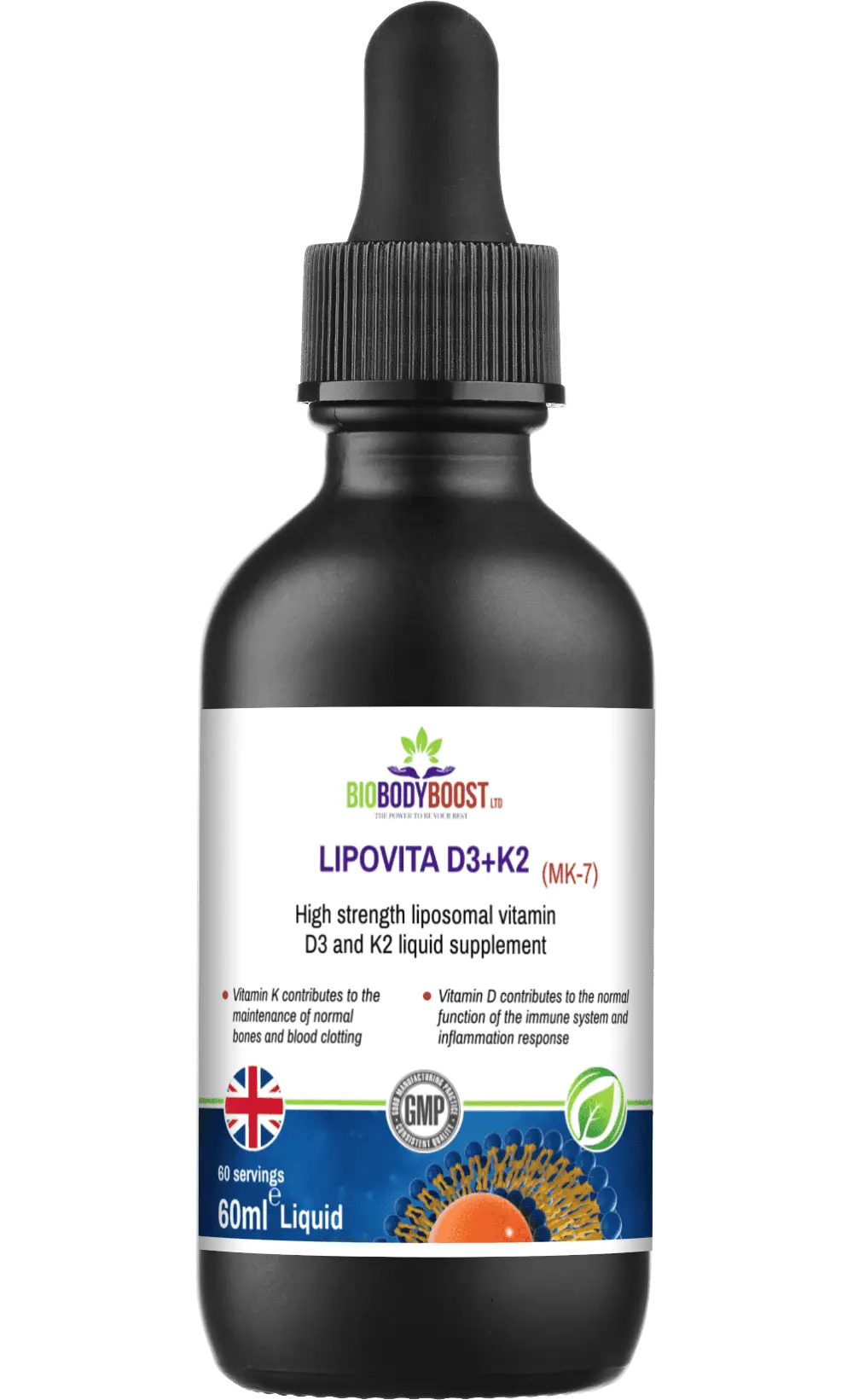
Lipovita D3+K2 by BioBodyBoost provides 4,000 IU lichen-derived D3 with 100mcg MK-7 K2 in liposomal liquid format — both in their optimal forms. Halal certified, vegan, no bovine gelatine softgel. Daily Multi Complex also includes vitamin K. Browse the full range.