Written by the BioBodyBoost Nutrition Team · Reviewed by a Registered Nutritionist (RNutr) · May 2026

Vitamin D deficiency is the most common nutritional deficiency in the United Kingdom. The Scientific Advisory Committee on Nutrition (SACN) estimates that approximately 1 in 5 UK adults have low vitamin D levels, with certain groups — darker skin tones, limited sun exposure, older adults, those who cover up for religious reasons — at significantly higher risk. Yet vitamin D is not simply “the sunshine vitamin.” It functions as a steroid hormone, regulating over 200 genes and affecting immunity, bone metabolism, muscle function, mood and cardiovascular health.
Why is vitamin D deficiency so common in the UK?
The UK sits between 50–61 degrees north latitude. At these latitudes, UVB radiation — the wavelength required for skin synthesis of vitamin D — is insufficient to trigger meaningful production from approximately October to April. This creates a 6–7 month annual window during which dietary and supplemental sources are the only reliable intake.
UK dietary sources of vitamin D are limited: oily fish, egg yolks, fortified foods and some mushrooms provide small amounts, but achieving the 400–4,000 IU daily required for optimal levels through food alone is practically impossible for most people. The NHS recommends everyone in the UK considers a daily vitamin D supplement of 400 IU, rising to 1,000 IU for those at higher risk of deficiency.
Symptoms of vitamin D deficiency
Many people are deficient without realising it, as symptoms are non-specific. Common signs include:
- Persistent fatigue that doesn’t improve with rest
- Frequent colds, infections or slow recovery from illness
- Bone pain or aching muscles, particularly in the lower back
- Low mood, especially in winter (seasonal affective disorder)
- Hair thinning or loss
- Poor wound healing
- Brain fog and difficulty concentrating
These symptoms overlap with many conditions, which is why testing is important rather than assuming deficiency from symptoms alone. Your GP can order a 25-hydroxyvitamin D blood test; private testing is also available from several UK labs.
What are optimal vitamin D levels?
| 25(OH)D Level | Status | Action |
|---|---|---|
| Below 25 nmol/L | Deficiency | GP intervention, high-dose supplementation |
| 25–50 nmol/L | Insufficiency | Daily supplementation 1,000–2,000 IU |
| 50–125 nmol/L | Optimal | Maintain with 400–1,000 IU daily |
| Above 250 nmol/L | Toxicity risk | Reduce dose; consult GP |
Why D3+K2 together is better than D3 alone
Vitamin D3 increases calcium absorption from the gut — which is exactly what you want for bone health. But calcium that is absorbed needs to be directed to bones and teeth rather than depositing in arteries, where it contributes to cardiovascular calcification. Vitamin K2 (specifically MK-7, the most bioavailable form) activates two proteins: osteocalcin, which deposits calcium into bone matrix, and matrix Gla protein (MGP), which actively removes calcium from soft tissue and arterial walls.
Research in Nutrients confirmed that vitamin K2 supplementation significantly improved arterial stiffness markers and reduced vascular calcification in post-menopausal women. The combination of D3+K2 addresses both calcium absorption and calcium trafficking — which is why they are increasingly recommended together rather than separately.
D2 vs D3: which form matters
Vitamin D supplements come in two forms: D2 (ergocalciferol, derived from plants/yeast) and D3 (cholecalciferol, traditionally derived from lanolin in sheep’s wool, or from lichen for vegan/halal versions). A comparative study found vitamin D3 is approximately 87% more effective than D2 at raising and maintaining blood 25(OH)D levels. D3 is the preferred form. For vegans and halal consumers, lichen-derived D3 provides identical efficacy to lanolin-derived D3.
Why liposomal D3 absorbs better
Vitamin D is a fat-soluble vitamin, meaning it requires dietary fat for absorption. Standard D3 tablets or capsules taken without food can have substantially reduced absorption. Liposomal delivery encapsulates D3 inside phospholipid spheres, enabling absorption that is largely independent of co-ingested fat — making it particularly useful for people who take supplements away from meals.
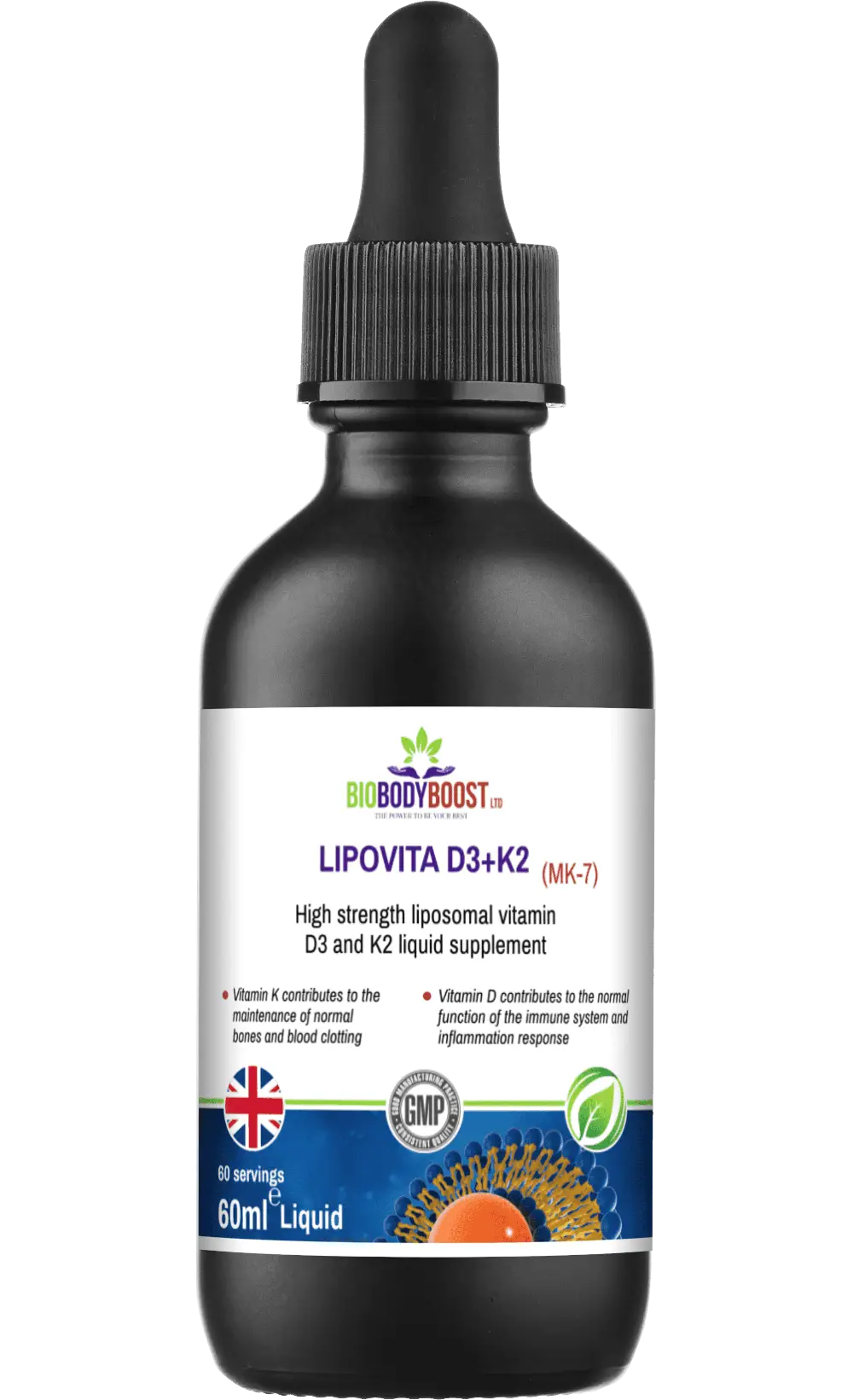
The BioBodyBoost Lipovita D3+K2 Drops provides 4,000 IU lichen-derived D3 with 100µg MK-7 K2 in MCT-based liposomal liquid — vegan, halal certified, kosher, UK made. Explore the full Immunity UK and Joints & Bones UK collections.
Food supplements should not replace a varied diet. Vitamin D above 4,000 IU daily should not be taken without GP supervision. Those with sarcoidosis, granulomatous conditions or hypercalcaemia should not supplement vitamin D without medical guidance. Consult your GP if taking heart medication.