
Vitamin D deficiency is the most common nutritional deficiency in the UK. According to the National Diet and Nutrition Survey, 1 in 5 UK adults has low vitamin D levels, rising to more than 40% during winter months. The NHS recommends everyone in the UK consider a vitamin D supplement from October to April — but most people don't know why, what symptoms to look for, or how to choose a supplement that actually works.
Why the UK Has a Vitamin D Problem
Vitamin D is primarily produced in the skin when UV-B radiation from sunlight triggers a conversion of 7-dehydrocholesterol. The problem in the UK is geography: at 50–61°N latitude, UV-B intensity from October to April is too low to trigger meaningful skin synthesis, regardless of how much time you spend outdoors. This creates a structural seasonal deficiency for the entire population.
Additional risk factors that worsen deficiency include:
- Darker skin tones — melanin reduces UV-B penetration, requiring 3–6x more sun exposure to produce the same amount of vitamin D
- Covering up outdoors for religious or personal reasons
- Working indoors during daylight hours
- Being over 65 — skin becomes less efficient at producing vitamin D with age
- Obesity — vitamin D is fat-soluble and gets sequestered in adipose tissue
Symptoms of Vitamin D Deficiency
Vitamin D functions as a steroid hormone, regulating over 200 genes involved in immunity, bone metabolism, muscle function and mood. Deficiency produces a wide range of symptoms that are often attributed to other causes:
- Persistent fatigue and low energy — not explained by sleep or lifestyle factors
- Bone pain and achiness — particularly in the lower back, hips and legs
- Muscle weakness — reduced grip strength, difficulty with stairs or prolonged standing
- Frequent infections — vitamin D is critical for the innate immune response; low levels correlate strongly with increased respiratory infections
- Low mood and depression — multiple meta-analyses confirm a correlation between vitamin D deficiency and depressive symptoms, with seasonal affective disorder directly linked to the winter deficiency period
- Hair loss — vitamin D receptors in hair follicles play a role in the hair growth cycle
Many of these symptoms are vague and overlap with other conditions, which is why vitamin D deficiency is frequently missed in GP consultations.
Understanding Your Blood Test Results
Vitamin D status is measured as serum 25-hydroxyvitamin D (25(OH)D) in nmol/L:
| Level | Classification | What it means |
|---|---|---|
| Below 25 nmol/L | Severe deficiency | Risk of rickets/osteomalacia. GP may prescribe loading dose. |
| 25–50 nmol/L | Deficiency | NHS supplementation recommended. 400–2,000 IU daily. |
| 50–75 nmol/L | Insufficiency | Sub-optimal. Supplementation beneficial. |
| 75–125 nmol/L | Optimal | Target range for most adults. |
| Above 250 nmol/L | Potential toxicity | Only possible with very high supplemental doses over extended periods. |
The NHS recommends 400 IU daily for general maintenance. The Scientific Advisory Committee on Nutrition (SACN) sets the upper safe level at 4,000 IU daily for adults, noting that people with confirmed deficiency often need higher doses to restore adequate levels.
Why Vitamin D3 Is Better Than D2
Two forms of vitamin D are available in supplements: D2 (ergocalciferol, derived from plants) and D3 (cholecalciferol, derived from lanolin or — for vegan/halal products — lichen). Research published in the American Journal of Clinical Nutrition found that vitamin D3 is 87% more effective than D2 at raising and maintaining blood 25(OH)D levels. Always check which form your supplement uses.
Why D3 Should Be Taken With K2
This is the most under-discussed aspect of vitamin D supplementation. Vitamin D3 dramatically increases calcium absorption from the gut. Without vitamin K2, that absorbed calcium has no destination signal and can accumulate in arteries and soft tissue rather than bones. K2 (specifically the MK-7 form, from natto fermentation) activates two critical proteins: osteocalcin, which deposits calcium into bone; and matrix Gla protein, which removes calcium from arterial walls.
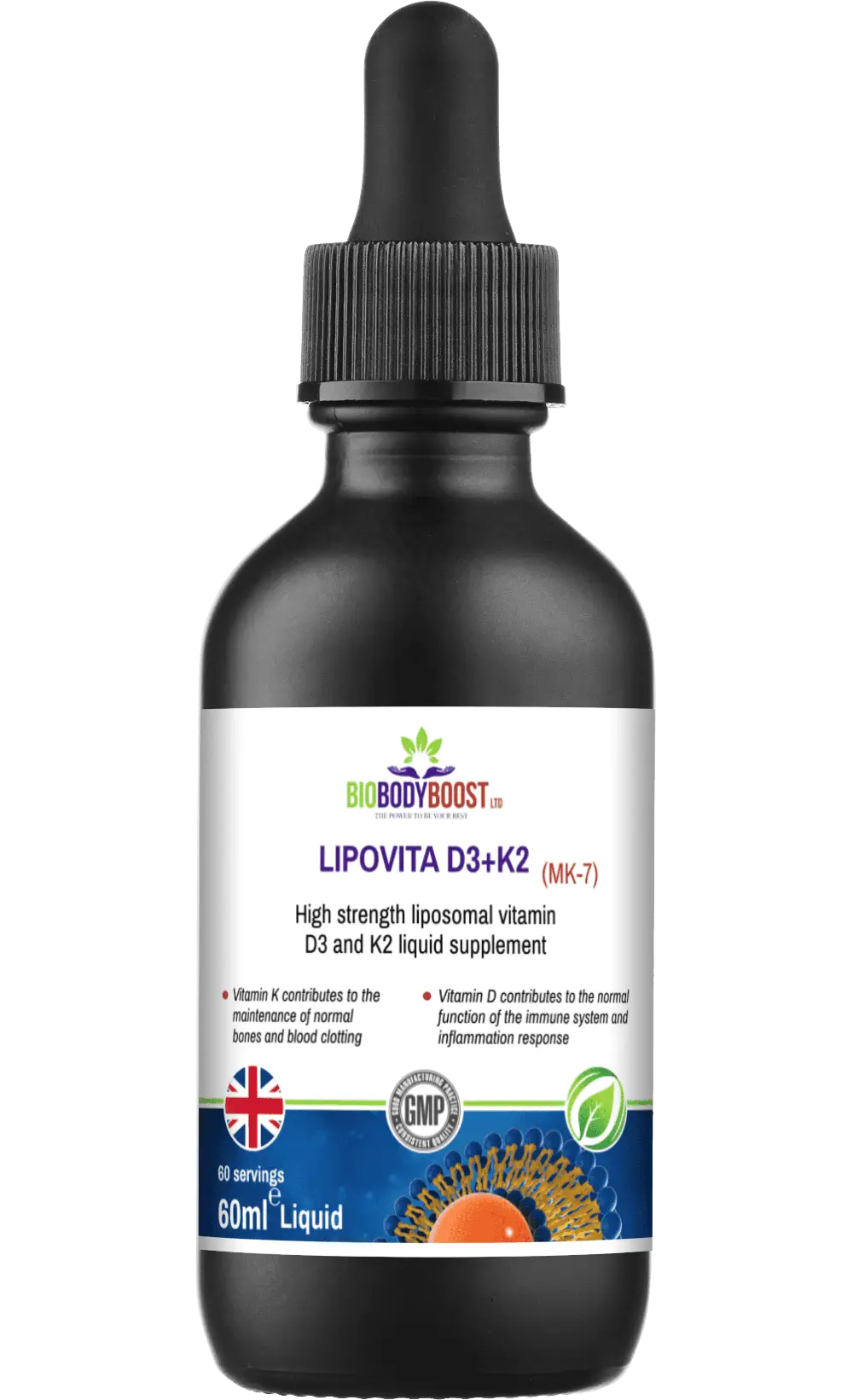
The MK-7 form of K2 has a 72-hour half-life versus MK-4's 1–2 hours, meaning it stays active in the body long enough to direct calcium properly. Lipovita D3+K2 by BioBodyBoost combines 4,000 IU lichen-derived D3 with 100mcg MK-7 K2 in a liposomal liquid format — the format with the highest absorption, halal certified, vegan and free from bovine gelatine.
View the immune support range — all halal certified and UK GMP manufactured.