Key takeaways
- Yes, vitamin C and probiotics can be taken together.
- Only the vitamins and minerals (C, D, zinc, selenium, B6) carry authorised immune claims.
- Keep total supplement vitamin C below about 1000mg a day.
- Halal: check elderberry is not an alcohol extract and the capsule is not gelatine.
In this guide
UK winter means colds, school bugs and long dark months. Immune supplements now go far beyond plain vitamin C.
Many add live cultures, elderberry, garlic and mushrooms. Here is what each brings, and what is just a nice-sounding extra.
What carries an authorised immune claim
| Ingredient | Authorised immune claim? |
|---|---|
| Vitamin C | ✅ Contributes to the normal function of the immune system |
| Vitamin D | ✅ Contributes to the normal function of the immune system |
| Zinc, selenium, B6 | ✅ Each contributes to normal immune function |
| Live cultures | ❌ No authorised claims in the UK |
| Elderberry, reishi, garlic | ❌ Traditional botanicals, no claims |
Check the wording on the GB claims register. Anything telling you probiotics or elderberry "boost immunity" goes beyond what UK law allows.
Why combine them at all?
Honestly: convenience. The vitamins and minerals do the regulated work. Cultures and botanicals suit people who want one capsule instead of several pots.
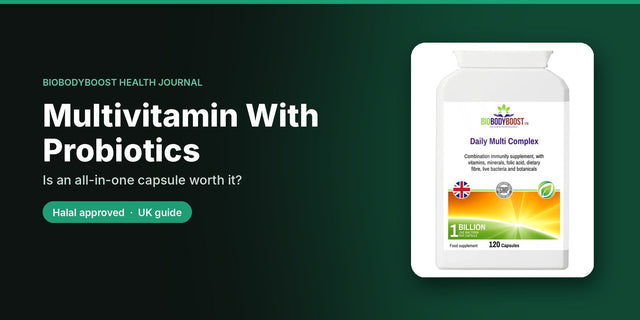
Vitamin C does not harm live cultures in a capsule, and there is no known problem combining them. If gut support is your main goal, a dedicated probiotic with billions of CFU and named strains is better. See our probiotic guide.
How much vitamin C is too much?
Adults need 40mg a day, mostly from food. The NHS says less than 1000mg a day from supplements is unlikely to cause harm. More can cause stomach pain, wind and diarrhoea (NHS: vitamin C).
Add up every product, including drinks and effervescent tablets. If high-dose vitamin C upsets your stomach, try our non-acidic vitamin C guide.

The halal checks
- Elderberry: syrups and tinctures often use alcohol. See are cold and flu remedies halal?
- Vitamin D3: usually from lanolin. Vegan D3 avoids the question. See is vitamin D3 halal?
- Capsule: HPMC rather than gelatine.
- Cultures: check the growth medium, or choose halal approval.
A halal approved vitamin C complex with cultures

Vegan · Halal & kosher approved
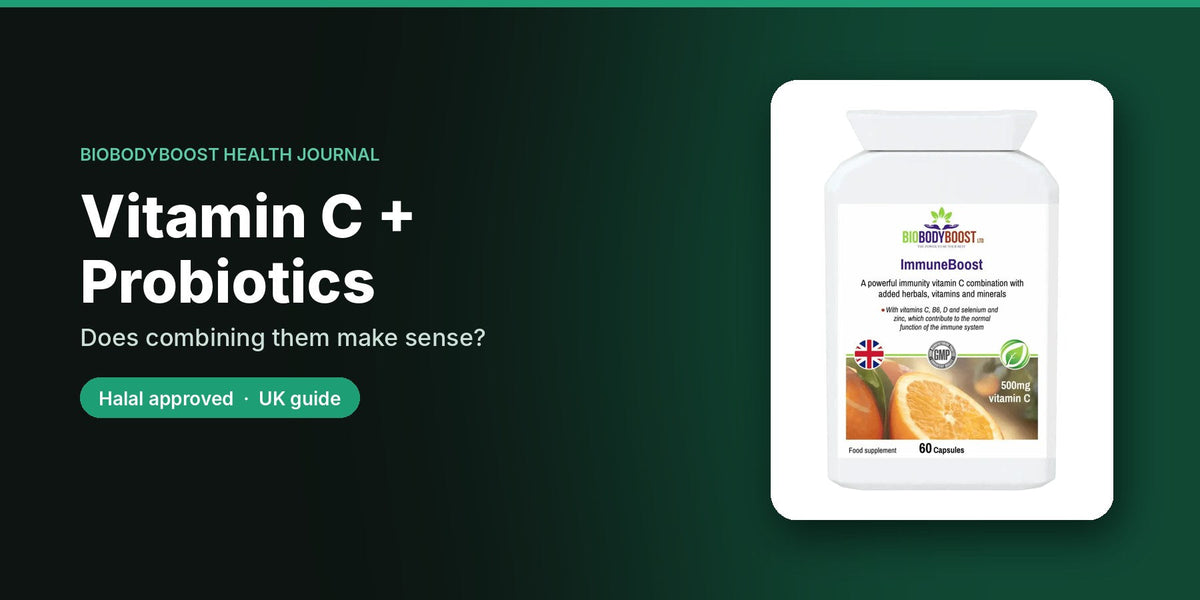
ImmuneBoost Vitamin C Complex
- 512mg vitamin C (640% NRV) from ascorbic acid and acerola
- 5 nutrients with immune claims: C, vegan D3, zinc, selenium, B6
- 12 botanicals incl. elderberry and reishi + 125 million CFU
HALAL10 10% off your first order
Shop ImmuneBoost →Each capsule has 512mg of vitamin C, so two a day keeps you around the 1000mg mark. Check your other supplements before taking three.
Questions people ask
Can I take vitamin C and probiotics at the same time?
Yes. There is no known problem, and many formulas combine them in one capsule.
Do probiotics help the immune system?
Probiotics have no authorised immune claims in the UK. Vitamins C, D, B6, zinc and selenium do.
Is elderberry halal?
The berry is plant-based. Many syrups and tinctures contain alcohol, so choose a capsule or alcohol-free product.
Is 512mg of vitamin C a day too much?
No. Under 1000mg a day from supplements is unlikely to cause harm, according to the NHS.
Is ImmuneBoost halal?
Yes, halal and kosher approved and vegan.
Sources: NHS: vitamin C · GB claims register
General information, not medical advice. Food supplements should not replace a varied diet and healthy lifestyle. Speak to your GP if you are pregnant or breastfeeding, have a medical condition or take medication.