Short answer
The active medicine in most cold and flu remedies is not the issue. The halal questions come from the extras: alcohol (ethanol) used as a solvent in some syrups, gelatine in capsule shells, and animal-derived additives such as glycerine, carmine (E120) or lactose. Major scholarly bodies allow medicines with a small amount of alcohol when no alcohol-free option exists, but you can often avoid the question altogether by choosing tablets, alcohol-free syrups or plant-based capsules. Your pharmacist can help you pick.
Updated October 2026 · BioBodyBoost Team
Why the halal question comes up every winter
Cold and flu remedies come in many formats: syrups, capsules, tablets, hot drink sachets, lozenges and nasal sprays. Each format needs different excipients — the inactive ingredients that dissolve, bind, coat, colour or sweeten the medicine. Those excipients are where animal-derived ingredients and alcohol usually appear.
Medicine labels in the UK do not carry halal logos, and very few pharmacy brands are halal approved. So it is up to you to check. The good news is that UK patient leaflets list every excipient, which makes checking easier than it is for many foods.
Alcohol in cough syrups: what scholars say
Some liquid cough and cold medicines use alcohol (ethanol) to dissolve ingredients or to preserve the liquid. In the UK, the patient leaflet must say if a medicine contains alcohol and how much is in each dose. The European Medicines Agency guidance on ethanol as an excipient sets out the standard wording that manufacturers use.
On the religious side, the International Islamic Fiqh Academy addressed this directly in Resolution No. 210 (2015), which adopted the 1995 position of the Islamic Organization for Medical Sciences. It states that there is no Shariah restriction on using modern medicines that contain alcohol as a small component, where no alcohol-free substitute is available, and leaves the permitted amount to health authorities.
In practice this gives a simple order of preference:
- First choice: an alcohol-free version or a different format (tablet, sachet) of the same medicine.
- If there is no alternative: most scholars allow the medicine with a small amount of alcohol.
- If you follow a specific school or scholar: ask them, especially for regular or long-term use.
Gelatine capsules: the less settled question
Many cold and flu capsules use a gelatine shell, and the leaflet usually does not say whether the gelatine is from pork or beef. Scholars are more divided on gelatine than on small amounts of alcohol. The same Fiqh Academy resolution chose not to rule on gelatine and referred it for further study. Some scholars accept gelatine on the basis of istihalah (complete transformation), while many others do not, particularly for pork gelatine.
The easy way around this is to choose the tablet or liquid version of the same medicine, which is almost always available. For supplements, look for plant-based HPMC capsules. Our guide to whether gelatine capsules are halal explains the capsule question in more detail.

Ingredients to check on cold and flu remedies
| Ingredient | Where you will find it | Halal question | Vegan? |
|---|---|---|---|
| Alcohol (ethanol) | Some cough syrups and night-time liquids | Allowed in small amounts by most scholars when no alternative exists | Yes |
| Gelatine | Capsule shells, some lozenges | Depends on source; pork gelatine is widely avoided | No |
| Glycerol / glycerine (E422) | Syrups, lozenges, soft capsules | Can be plant or animal derived; ask the manufacturer | Depends on source |
| Carmine / cochineal (E120) | Red or pink coatings, cherry-flavoured lozenges | Views differ; made from insects | No |
| Shellac (E904) | Tablet glazes and coatings | Widely accepted as halal; made from insect resin | No |
| Lactose | Tablet filler | Generally halal (from milk) | No |
| Honey | Honey and lemon remedies, lozenges | Halal | No |
| Magnesium stearate | Tablets and capsules (flow agent) | Plant or animal derived; ask the manufacturer | Depends on source |
For more on the last one, see is magnesium stearate halal?
How to check a medicine before you buy it
- Read the patient leaflet. Section 2 tells you if the medicine contains alcohol. Section 6 lists every inactive ingredient.
- Look it up online first. The electronic Medicines Compendium (emc) has the full leaflet for UK medicines, so you can check before you go to the shop.
- Ask the pharmacist. Ask for an alcohol-free, gelatine-free version of the same medicine. They can often suggest a tablet or sachet instead of a capsule or syrup.
- Contact the manufacturer. For glycerine, magnesium stearate or gelatine, only the manufacturer can confirm the source. Most have a medical information line.
- For prescriptions, tell your GP. Ask if there is a suitable alternative format. Do not stop a prescribed medicine without speaking to them.
Children: extra rules that matter more than halal status
- The MHRA advises that over-the-counter cough and cold medicines should not be used in children under 6. For children aged 6 to 12, they are sold in pharmacies where advice can be given.
- The NHS common cold page says not to give decongestants to children under 6, aspirin to children under 16, or honey to babies under 12 months.
Health comes first
Islamic law gives great weight to protecting health. If you genuinely need a medicine and there is no suitable alternative, scholars do not expect you to go without it. The checks in this guide are about choosing well when you have a choice — not about refusing treatment you need. If in doubt, speak to your pharmacist about the medicine and your imam or scholar about the ruling.
Where do supplements fit in winter?
It is worth being honest here. The NHS says there is little evidence that supplements such as vitamin C, echinacea or garlic prevent colds, and a Cochrane review of vitamin C and the common cold found that taking it regularly did not reduce how often people in the general population caught colds.
What supplements can do is help cover nutrients you may be short of through winter. Under the EU register of authorised health claims, vitamin C, vitamin D, zinc and selenium all contribute to the normal function of the immune system. Vitamin D in particular is hard to get from UK sunlight between October and March. Our halal winter supplements guide covers this in detail, and our guide to alcohol-free vitamins explains why liquid supplements need the same alcohol check as cough syrups.

Frequently asked questions
Are night-time cold and flu liquids halal?
Some contain alcohol as a solvent, so check section 2 of the leaflet. If it contains alcohol, ask the pharmacist for an alcohol-free alternative or a tablet version. If there is no alternative, most scholars allow a small amount of alcohol in medicine.
Is glycerine in cough syrup halal?
It depends on the source. Glycerine (E422) can be made from plant oils or animal fat, and the leaflet does not usually say which. Only the manufacturer can confirm, so contact their medical information line if this matters to you.
Are throat lozenges halal and vegan?
Many are, but check for gelatine, carmine (E120) and honey. Honey is halal but not vegan; carmine and gelatine raise both halal and vegan questions.
Does taking cough syrup break my fast in Ramadan?
In the view of most scholars, swallowing medicine during fasting hours breaks the fast. If you are ill, Islam allows you not to fast and make up the days later. For nasal sprays and inhalers, views differ, so ask your scholar.
Can I ask a pharmacist for a halal alternative?
Yes. Pharmacists will not usually know halal status, but they can find an alcohol-free or gelatine-free version of the same medicine, or a different format such as a tablet or sachet.
Where BioBodyBoost fits
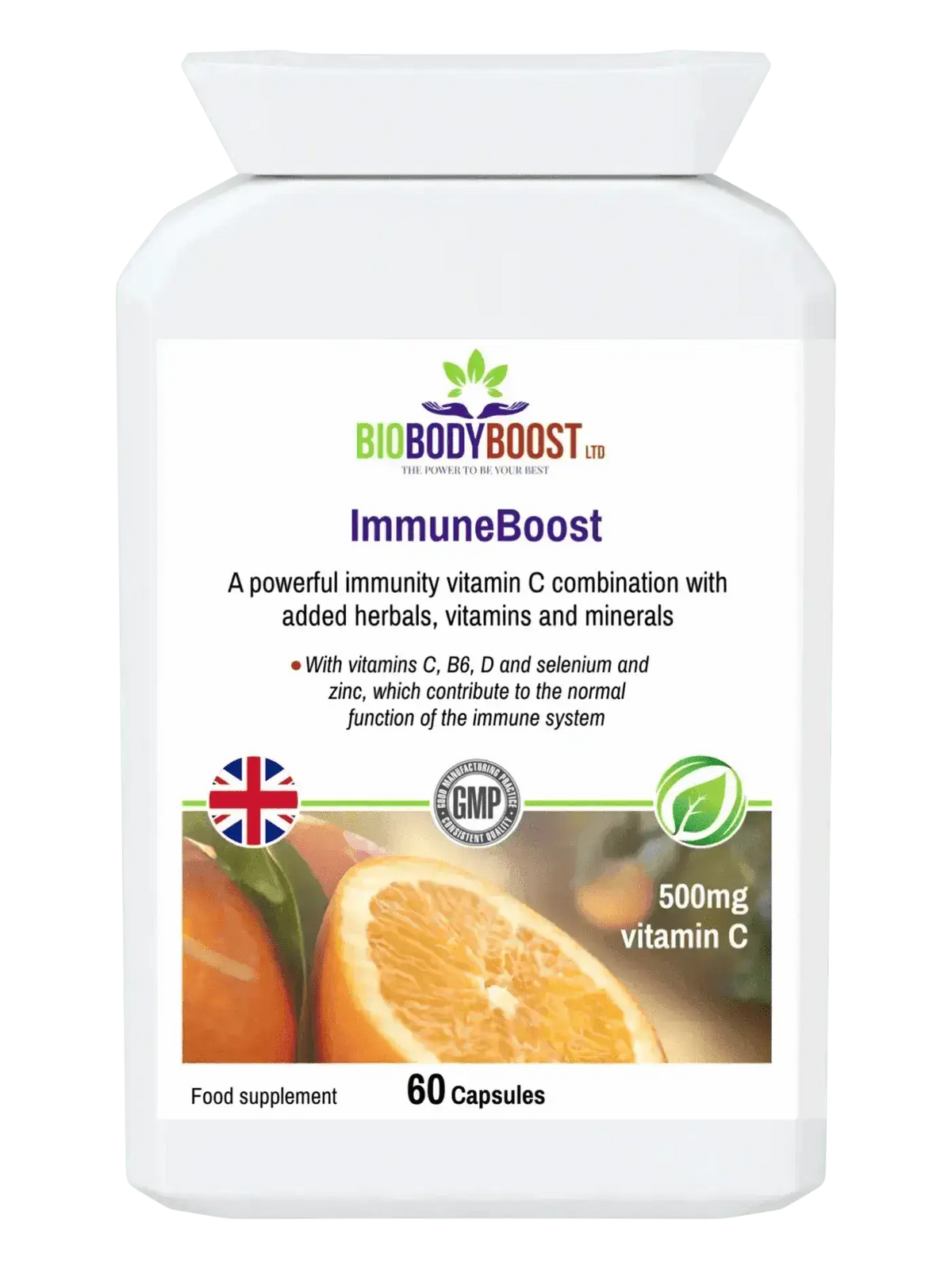
ImmuneBoost provides 512mg of vitamin C (640% NRV) per capsule with vitamin D, zinc, selenium and vitamin B6, all of which contribute to the normal function of the immune system. It comes in a plant-based HPMC capsule with no gelatine and no alcohol, and it is halal approved, kosher approved and vegan. If acidic vitamin C upsets your stomach, Bio-C gives 125mg of food-form vitamin C from acerola cherry with no ascorbic acid. Use code HALAL10 for 10% off your first order.
This article is general information about halal status and is not a religious ruling or medical advice. For personal guidance, speak to your pharmacist or GP about medicines and to your local imam or scholar about the ruling. Food supplements should not replace a varied, balanced diet and healthy lifestyle.