Vitamin B6 (pyridoxine) is required for over 140 enzymatic reactions in the body and is involved in neurotransmitter synthesis, hormonal regulation, immune function and haemoglobin production. It is also one of the few water-soluble vitamins where excessive supplementation causes toxicity — specifically peripheral neuropathy (nerve damage to the hands and feet). The MHRA issued formal guidance on this risk in 2023, following cases of B6-related neuropathy from UK supplements. Here is what you need to know.
What Does Vitamin B6 Do?
Vitamin B6’s active form, pyridoxal-5-phosphate (P-5-P), is a cofactor in over 140 enzymatic reactions. The most clinically significant:
- Neurotransmitter synthesis — P-5-P is required for the conversion of tryptophan to serotonin and the synthesis of GABA, dopamine and norepinephrine. This makes B6 central to mood regulation, anxiety management and sleep quality. The EU-authorised claim: B6 contributes to normal psychological function.
- Hormonal regulation — the EU-authorised claim that B6 contributes to the regulation of hormonal activity is linked to its role in steroid hormone receptor function and oestrogen metabolism. B6 is commonly recommended for PMS, with some RCTs showing modest reductions in mood-related PMS symptoms.
- Homocysteine metabolism — B6 (with B12 and folate) converts homocysteine to cysteine. Elevated homocysteine is a cardiovascular risk factor; adequate B6, B12 and folate keep it in the normal range.
- Immune function — B6 is required for lymphocyte proliferation and antibody production. Deficiency impairs immune response.
- Haemoglobin synthesis — B6 is a cofactor in haem synthesis; deficiency produces a specific anaemia distinct from B12 or iron deficiency anaemia.
What Are the Symptoms of Vitamin B6 Deficiency?
- Depression, irritability and anxiety — from impaired neurotransmitter synthesis
- Peripheral neuropathy (in moderate-severe deficiency) — numbness or tingling in hands and feet
- Cheilosis (cracked corners of the mouth) and glossitis (inflamed tongue)
- Microcytic anaemia — small red blood cells
- Weakened immune function
- Morning sickness during pregnancy (B6 supplementation at 10–25mg is an established treatment for pregnancy nausea)
Who Is at Risk of B6 Deficiency?
- People with kidney disease — B6 metabolism is impaired in renal insufficiency
- People taking certain medications — isoniazid (TB treatment), hydralazine and some other drugs deplete B6
- People with inflammatory bowel disease — malabsorption impairs B6 status
- Heavy alcohol users — alcohol impairs B6 absorption and metabolism
- Pregnant women — requirements increase during pregnancy
The MHRA Warning: What It Means and What It Doesn't
In 2023, the MHRA issued guidance that vitamin B6 supplements above 10mg per day taken long-term can cause peripheral neuropathy — painful nerve damage producing tingling, numbness and pain in the hands and feet, sometimes accompanied by impaired coordination.
This matters because UK supplements historically contained 50–200mg of B6 per serving — 50–200x the UK Reference Nutrient Intake of 1.2–1.4mg. Many people were taking this dose daily for months or years, unaware of the risk.
Key facts about B6 neuropathy:
- It occurs at doses above approximately 50mg daily in some people, though cases have been reported at lower doses in some individuals
- Symptoms are typically reversible on stopping supplementation, but recovery can take months
- The safe upper level established by the European Food Safety Authority (EFSA) is 25mg per day for adults
- The MHRA specifically highlighted that this can occur even without other symptoms and may be missed by GPs who do not ask about supplements
What Is a Safe Dose of Vitamin B6?
| Dose | Context | Safety |
|---|---|---|
| 1.2–1.4mg daily | UK RNI — minimum for normal function | Safe; found in multivitamins and B complex |
| 2–10mg daily | Standard supplemental maintenance dose | Safe for long-term use |
| 10–25mg daily | Upper of reasonable supplemental range | Safe for most adults (EFSA upper limit 25mg) |
| 25–50mg daily | High dose; historically in many UK supplements | Caution; approach upper safe limit |
| Above 50mg daily | Risk of peripheral neuropathy | Only under medical supervision; not for general supplementation |
If you take a B complex supplement or multivitamin, check the B6 dose on the label. Any product with more than 25mg B6 per daily dose requires reconsideration. Products with 1–10mg B6 are appropriate for regular use.
What Should You Do If You Have Taken High-Dose B6?
If you have been taking B6 supplements above 25mg daily and experience tingling, numbness or pain in hands or feet, stop the supplement and see your GP. Inform them of the specific B6 dose and duration. Symptoms usually improve after stopping, though recovery time varies.
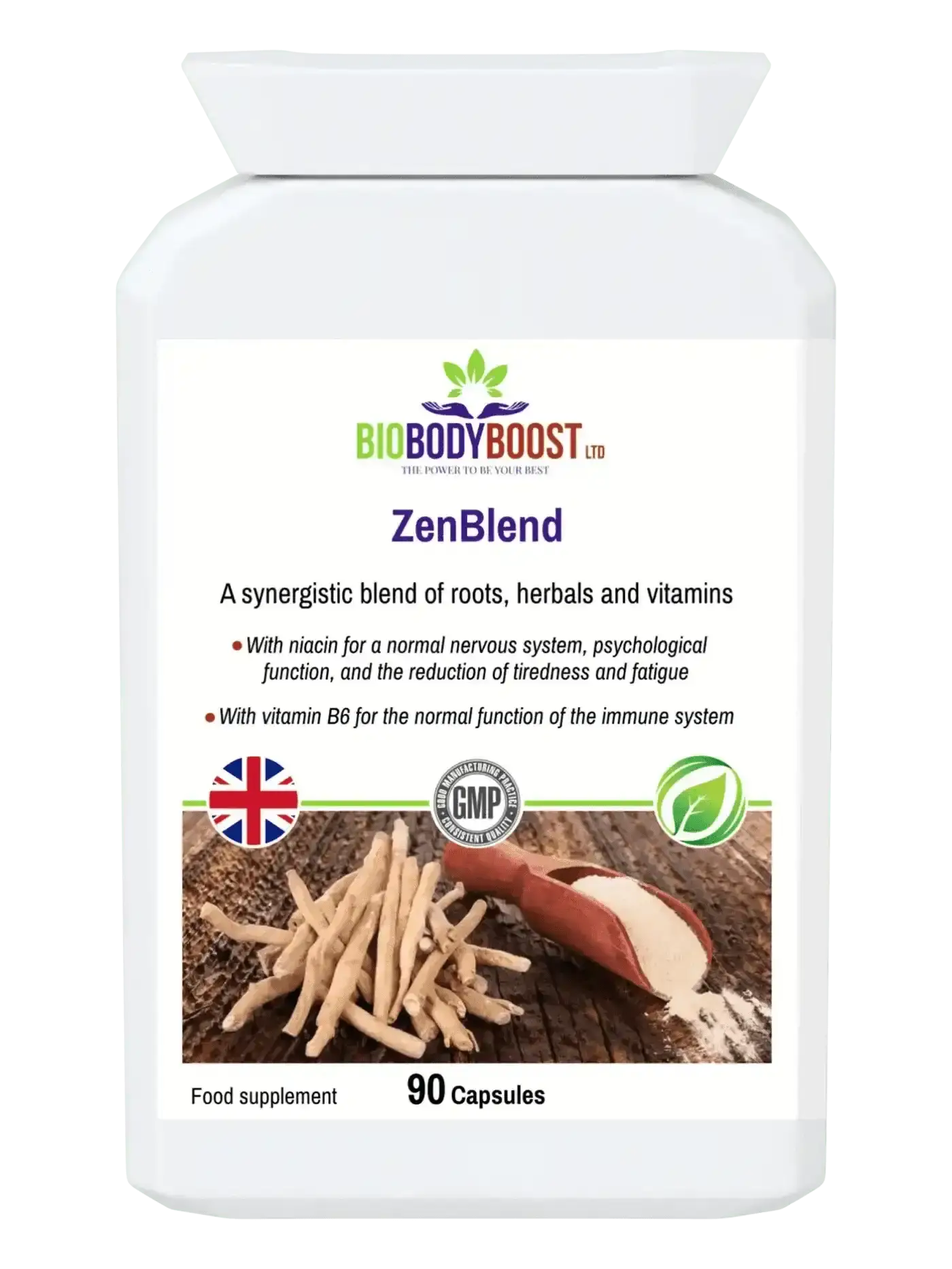
ZenBlend by BioBodyBoost includes B6 within the safe maintenance range — sufficient for neurotransmitter synthesis support without the overdose risk. Magnesium 3 Complex includes B6 at a dose that facilitates magnesium cellular uptake without exceeding safety thresholds. Both halal certified, vegan, UK GMP manufactured. Browse the full halal range.