Quick answer: the five hardest nutrients to source in genuinely vegan AND halal format are: vitamin D3 (most is lanolin-derived, not lichen-derived), omega-3 EPA+DHA (algae-derived solves the vegan issue but the softgel shell is often gelatine), collagen (most is bovine or porcine, marine is the halal-vegan-adjacent option), probiotics (fermentation growth media may be porcine-derived), and vitamin B12 (cyanocobalamin is fine, but the capsule shell remains the issue). This guide identifies where most UK brands fail on the vegan-halal overlap and what genuinely solves each gap.
The vegan-halal overlap: smaller than most people assume
Vegan and halal are not the same standard, but they share significant overlap. Both exclude porcine ingredients. Both require plant-derived or certified animal-derived capsule shells. But they diverge in important ways: vegan products exclude all animal-derived ingredients regardless of slaughter method; halal products permit animal-derived ingredients if the animal is permissible and slaughtered correctly. In the supplement context, the practical overlap is:
- Both require HPMC capsules (porcine gelatine fails both; bovine gelatine fails vegan but may be halal if certified)
- Both prefer lichen-derived D3 (lanolin fails vegan; most scholars permit lanolin for halal but some prefer lichen)
- Both need algae-derived omega-3 for EPA+DHA without animal sourcing concerns
- Collagen: vegan has no halal collagen solution (collagen is animal-only); marine collagen satisfies halal but not strict veganism
The five hardest gaps — and how they are solved
1. Vitamin D3 — the lanolin problem
The gap: approximately 95% of vitamin D3 in UK supplements is derived from lanolin (sheep wool wax). Lanolin-derived D3 is not vegan (from an animal byproduct, though no slaughter). Most scholars consider it permissible for halal, but some prefer complete avoidance of animal-derived ingredients.
The solution: lichen-derived D3 — produced from lichens (symbiotic algae and fungi) exposed to UV light. Chemically identical to lanolin D3. Unambiguously vegan. Unambiguously halal across all scholarly positions. Rare in UK supplements because it costs more to produce. BioBodyBoost Lipovita D3+K2 uses lichen-derived D3 specifically for this reason — liposomal liquid, no capsule required, third-party halal certified.
2. Omega-3 EPA+DHA — the softgel shell problem
The gap: fish oil is neither vegan nor automatically halal (depends on fish species and processing). Algae-derived omega-3 solves the vegan side — algae is where fish get their EPA+DHA from in the first place, making algae oil nutritionally equivalent. But algae oil and most halal fish oil products are packaged in softgel capsules whose shell is almost always gelatine — often porcine, rarely declared.
The solution: algae-derived EPA+DHA in HPMC softgel capsules, or halal-certified fish oil with the softgel shell specifically certified. A 2019 European Journal of Clinical Nutrition study confirmed algae-derived DHA is bioequivalent to fish oil DHA at matched doses. BioBodyBoost OmegaBalance uses a halal-certified capsule shell. For the strictest vegan-and-halal combination, algae DHA in HPMC is the unambiguous solution — currently rare in UK retail.
3. Collagen — the fundamental incompatibility
The gap: collagen is an animal-specific structural protein. Strict vegans cannot supplement collagen in any animal-derived form. For halal consumers, marine collagen (from fish skin and scales) is the appropriate option — fish are generally permissible across Islamic schools of jurisprudence without slaughter certification requirements. For people who are halal-observant but not strictly vegan, marine collagen is the optimal choice. For strict vegans: the alternative is a collagen-support formula providing the cofactors for endogenous collagen synthesis (vitamin C, glycine, zinc, copper) rather than pre-formed collagen — see our plant-based collagen alternatives guide.
The solution for halal: BioBodyBoost Marine Collagen Nourish — 9g hydrolysed Type I marine collagen from fish, with vitamin C, hyaluronic acid, MSM, biotin and zinc. Full halal certification of the supply chain. No bovine or porcine ingredients.
4. Probiotics — the fermentation growth medium problem
The gap: probiotic bacteria are grown on fermentation growth media during production. Standard growth media often contain porcine-derived peptone (from pork tissue). This is invisible on the finished product label but renders the product non-halal regardless of capsule type. Even products in HPMC capsules may fail halal certification if the growth media is not certified.
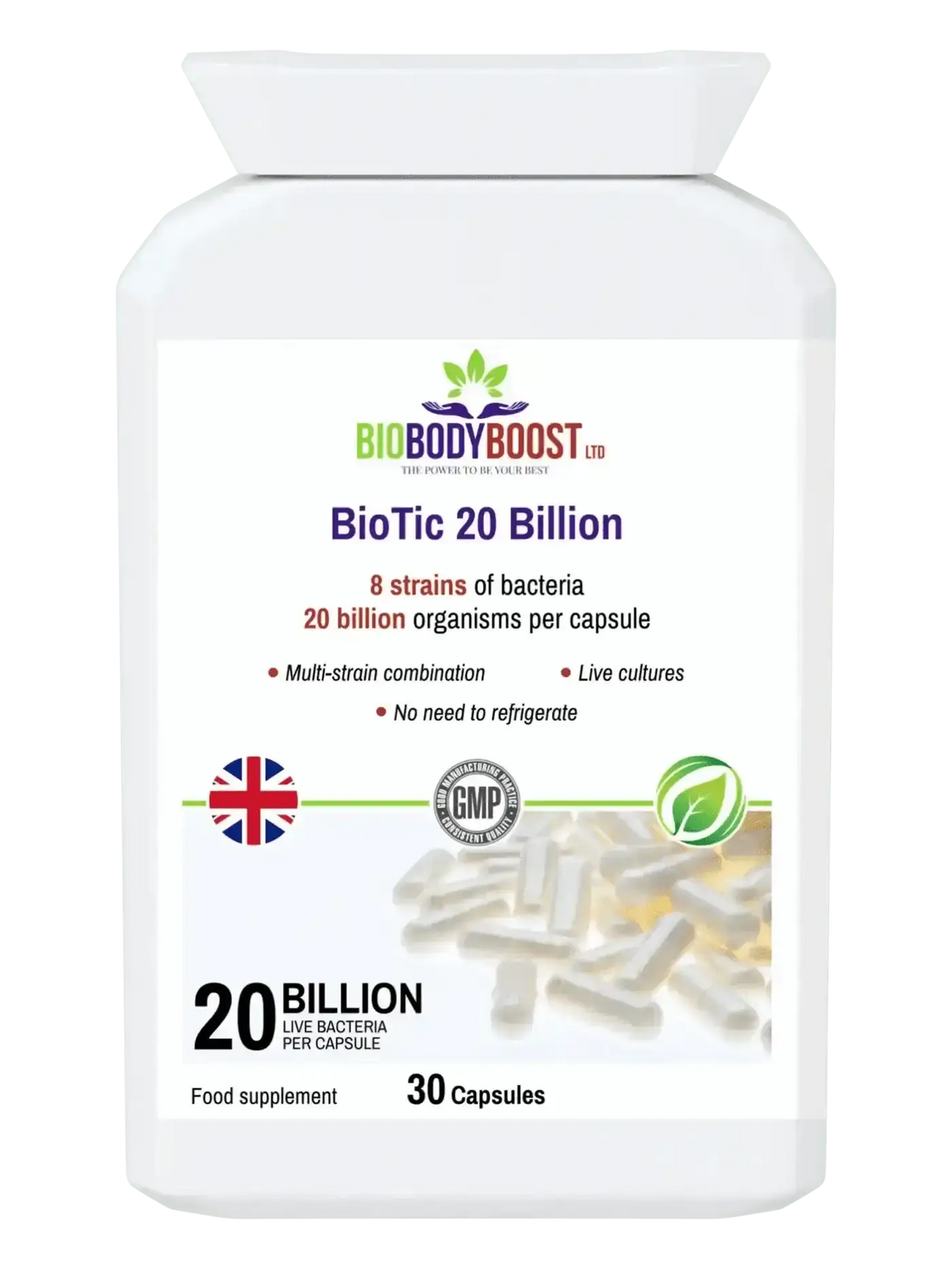
The solution: third-party halal certification of the finished probiotic product — this confirms the growth media, not just the capsule. A probiotic can only be genuinely certified halal if the certifying body has inspected the fermentation process. BioBodyBoost BioTic 20 Billion is halal certified from strain source to finished capsule, including growth media confirmation — 8 named strains, 20B CFU, HPMC capsule, vegan.
5. Vitamin B12 — the capsule problem persists
The gap: cyanocobalamin and methylcobalamin are both produced synthetically or via microbial fermentation with no inherent animal involvement. The B12 molecule itself is halal and vegan. But most standalone B12 supplements in the UK use gelatine capsules (often porcine) without disclosure. Sublingual drops and sprays bypass the capsule issue entirely.
The solution: B12 in HPMC capsules, sublingual tablets or liquid format. BioBodyBoost B-complex products including ZenBlend and BioBrain both include methylcobalamin in HPMC capsules with full halal certification.
Where most UK supplement brands fail the vegan-halal test
| Nutrient | Where brands typically fail | BBB solution |
|---|---|---|
| Vitamin D3 | Lanolin-derived (not vegan) | Lichen-derived D3 |
| Omega-3 | Porcine gelatine softgel shell | Halal-certified capsule shell |
| Collagen | Bovine/porcine without certification | Marine collagen, full halal supply chain |
| Probiotics | Porcine growth media (invisible on label) | Halal-certified from fermentation to capsule |
| B12 | Porcine gelatine capsule | HPMC capsule throughout |
Browse the full Halal Vitamins UK and Vegan Supplements UK collections.
Can a supplement be both vegan and halal?
Yes — many can, but fewer products achieve both than labelling suggests. The practical requirements: HPMC plant-derived capsule (satisfies both); lichen-derived D3 (satisfies both; lanolin satisfies halal but not vegan); algae-derived omega-3 in HPMC softgel (satisfies both; fish oil in HPMC satisfies halal but not vegan); plant or synthetic active ingredients (satisfies both); fermentation-derived ingredients certified halal including growth media (satisfies both). BioBodyBoost formulates the entire range to satisfy both standards simultaneously — HPMC capsules throughout, lichen D3, halal-certified fermentation processes.
Why is probiotic fermentation growth media a halal issue?
Probiotic bacteria are cultured on growth media during manufacturing — the nutrient solution they grow in before being harvested, dried and encapsulated. Standard microbiology growth media commonly use peptone (hydrolysed protein) which is often porcine-derived. This is a processing aid and does not appear on the finished product ingredient list, making it invisible to the consumer. Third-party halal certification of the finished product requires the certifying body to inspect the growth media and confirm it meets halal standards — this is why a halal logo on the finished probiotic capsule is meaningful, and why a brand’s own halal claim without third-party certification is insufficient for probiotics specifically.