

Quick answer: UK delivery drivers and postal workers do a physically brutal job that almost no supplement brand talks to directly. Amazon delivery drivers are commonly expected to complete up to 200 drops a shift across 10-11+ hour days, with limited time for proper meal or toilet breaks. Royal Mail posties walk multiple miles daily carrying loaded bags, in all weather, year-round. The physical demands — repetitive lifting, restricted hydration, irregular eating, prolonged sitting or standing, and joint-jarring in-and-out-of-vehicle movement hundreds of times a day — create specific, addressable nutritional gaps. This guide covers what the evidence actually supports for this exact kind of physical work, not generic "energy" marketing.
Why this job is harder on the body than it looks
Investigations into UK delivery driver working conditions have documented daily delivery targets of up to 200 parcels, shifts routinely running 11+ hours, and drivers reporting they have no time for proper toilet breaks or sit-down meals during a route. Whatever the employment arrangement, the physical pattern is consistent across couriers, Amazon Flex drivers, DPD and Evri contractors, and Royal Mail posties: repetitive lifting and carrying, constant micro-impacts on knees and ankles from getting in and out of a vehicle or stepping on and off kerbs, long hours with restricted access to water and food, and significant time pressure.
None of this is marketing exaggeration — it's the documented reality of the job, and it maps onto specific, well-understood physiological stress points that supplementation can meaningfully support.
1. Leg cramps and muscle fatigue — the most common driver complaint
Search any delivery driver forum or social platform and the same complaint recurs constantly: leg cramps, calf spasms, and muscle fatigue by the end of a shift. This isn't anecdotal noise — it has a clear physiological basis. Prolonged standing, repetitive stepping, restricted fluid intake and long hours without proper breaks all deplete magnesium, a mineral directly involved in muscle relaxation (it acts as a natural calcium-channel antagonist, allowing muscle fibres to release contraction).
The NHS identifies dehydration and overuse of muscles as common triggers for leg cramps — both of which describe a full shift of walking, stepping and lifting with limited water access. A magnesium deficiency amplifies neuromuscular excitability, making cramps and muscle twitching more likely, particularly late in the day.

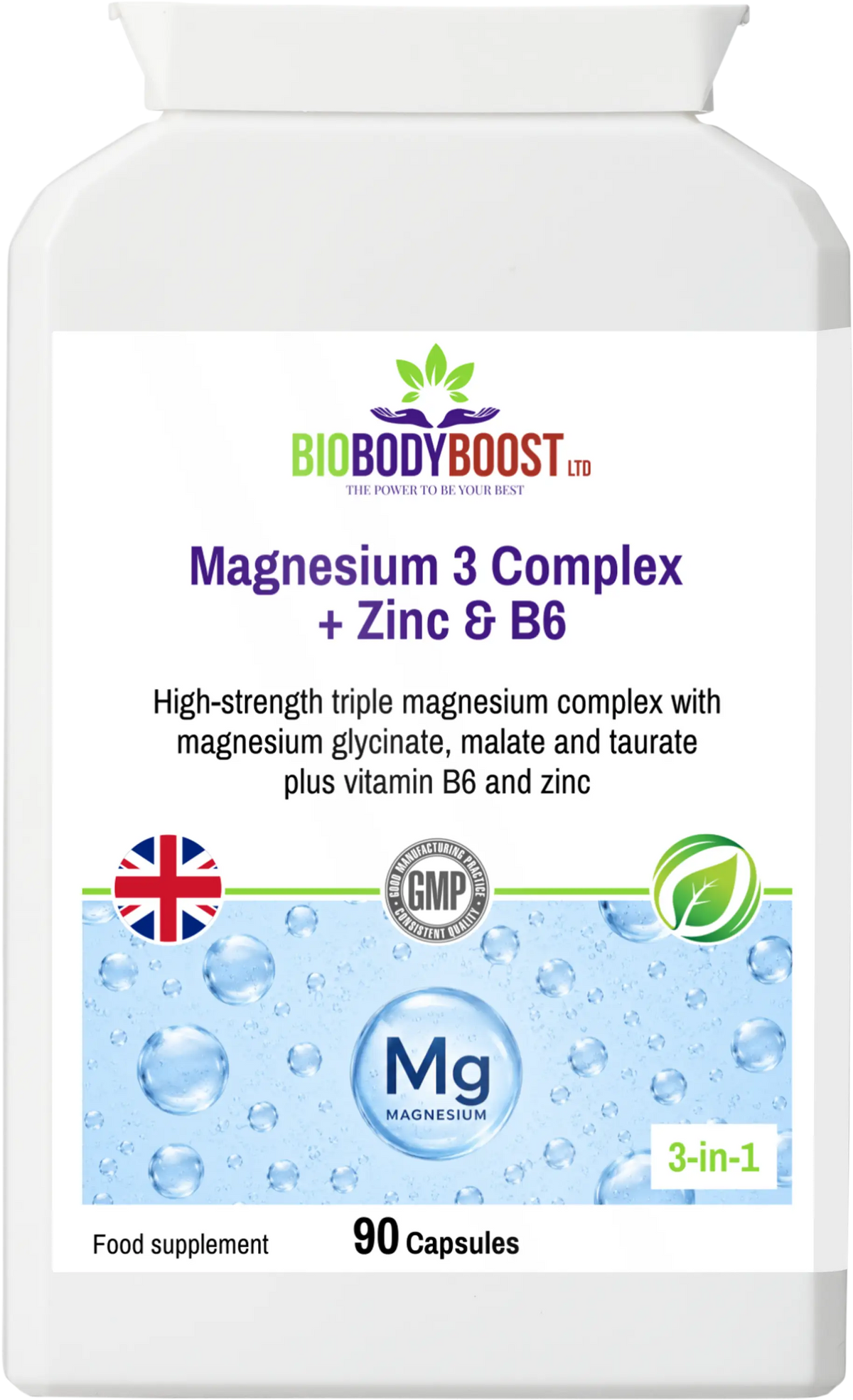
387mg elemental magnesium across three chelated forms — the mineral most directly tied to muscle cramp prevention.
Magnesium 3 Complex — glycinate, malate and taurate forms plus zinc and B6, halal approved, vegan. Taken consistently rather than only when a cramp strikes, since magnesium status builds over days, not minutes.
2. Dehydration from restricted bathroom access
Reduced fluid intake to avoid needing a bathroom mid-route is a well-documented pattern among delivery drivers under tight scheduling pressure. The problem: even mild dehydration (as little as 1-2% body water loss) measurably impairs concentration, reaction time and physical endurance — all safety-relevant for someone driving and lifting all day. Simply drinking more water without electrolyte replacement can also leave sodium and potassium depleted, particularly across a long, physically active shift.
Electro-Hidr8 — a balanced electrolyte drink mix (sodium, potassium, magnesium) that can be added to a water bottle at the start of a shift, giving a practical way to maintain hydration status across long hours without needing frequent stops. Halal approved, no E120, no artificial flavour carriers.
3. Joint strain from constant in-and-out, up-and-down movement
The single most repetitive physical action in this job isn't walking — it's the micro-impact of getting in and out of a vehicle, stepping up onto kerbs, and carrying loaded bags or crates hundreds of times a shift. This repeated loading is a known driver of knee and ankle joint stress over time, independent of any single injury event.

Glucosamine is a structural component of cartilage and synovial fluid. A 2020 Cochrane review confirmed glucosamine supplementation (1,500mg/day) significantly improved pain and function in knee osteoarthritis compared with placebo across multiple trials — relevant for anyone putting repetitive load through their knees for a living, not only people with a diagnosed condition.

Non-shellfish glucosamine HCl, MSM and turmeric together — the combination most relevant to repetitive joint loading.
Flexi-Time — fermentation-derived glucosamine HCl (non-shellfish, halal), MSM and turmeric. This is a 12-24 week commitment, not a same-day fix — cartilage-level effects build slowly.
4. Digestion and energy from eating on the move
Snatched meals eaten one-handed in a van, convenience food, and irregular meal timing are the practical reality of a route with a delivery target attached. This pattern commonly produces post-meal bloating and sluggish digestion — not because of what's eaten, but because of how quickly and irregularly it's eaten, giving digestive enzyme output little consistency to work with.
EnzymeXtreme — plant-derived digestive enzymes (protease, amylase, lipase, bromelain, papain) taken with a meal, designed for exactly this kind of fast, irregular eating pattern. Halal approved, vegan, HPMC capsule.
5. Micronutrient gaps from convenience eating
A diet built around whatever's fastest to eat between drops rarely covers the full spread of vitamins and minerals a physically demanding job burns through. B vitamins in particular have EU-authorised claims for normal energy-yielding metabolism and reduction of tiredness and fatigue — directly relevant to sustaining output across an 8-11+ hour shift.
Daily Multi Complex — full B vitamin matrix, iron, vitamin D and zinc in one daily capsule, halal approved. A practical baseline for anyone whose actual diet during work hours is largely convenience food.
6. Vitamin D — the surprising gap for outdoor and vehicle-based workers
It seems counterintuitive that people working outdoors much of the day could be vitamin D deficient, but the UK reality is more complicated. Postal workers spend genuine time outdoors, but much of it is early morning or under cloud cover outside the narrow April-to-September window when UK UVB is sufficient for synthesis. Delivery drivers, meanwhile, spend most of the shift inside a vehicle — and glass blocks the UVB wavelength needed for vitamin D synthesis almost entirely, so time spent driving does not count as meaningful sun exposure regardless of how sunny it looks outside.
The NHS recommends all UK adults consider a 10 microgram (400 IU) vitamin D supplement daily, particularly October to March — a recommendation that applies to this workforce as much as anyone office-based, and arguably more so for van-based drivers specifically.
Lipovita D3+K2 — lichen-derived vegan D3 with MK-7 K2, liposomal liquid drops, halal approved.
7. Stress and cortisol from route pressure and delivery targets
Tracked delivery windows, app-based performance monitoring and tight scheduling create a specific, sustained form of low-grade stress that's different from a physically demanding but self-paced job. Chronic cortisol elevation from this kind of pressure can worsen sleep quality, appetite regulation and recovery between shifts.
Ashwagandha KSM-66 at 600mg/day has been shown in a randomised controlled trial (Langade 2019, n=60) to significantly reduce serum cortisol by approximately 23% compared with placebo. ZenBlend — KSM-66 ashwagandha, rhodiola, L-theanine and niacin, halal approved.
The delivery driver and postal worker supplement stack
| Problem | Supplement | When |
|---|---|---|
| Leg cramps, muscle fatigue | Magnesium 3 Complex | Daily, evening |
| Dehydration, limited breaks | Electro-Hidr8 | Start of shift, in water bottle |
| Knee/ankle joint strain | Flexi-Time | Daily, 12-24 week commitment |
| Bloating from rushed eating | EnzymeXtreme | With meals |
| General nutrient gaps | Daily Multi Complex | Daily, with food |
| Low sun exposure (van-based or winter) | Lipovita D3+K2 | Daily, with food |
| Route pressure, target stress | ZenBlend | Daily, morning |
Frequently Asked Questions
Why do delivery drivers get leg cramps?
Prolonged standing and repetitive stepping, combined with restricted fluid intake during long shifts, are common triggers for leg cramps according to NHS guidance on cramp causes. Magnesium plays a direct role in muscle relaxation, and depletion from sweat and restricted hydration can make cramps more frequent, particularly toward the end of a shift.
Do van drivers get enough vitamin D from being outside all day?
Not necessarily. Glass in a vehicle windscreen and windows blocks most of the UVB wavelength needed for vitamin D synthesis, so time spent driving — even in bright sunshine — does not count as meaningful sun exposure. The NHS recommends a 400 IU vitamin D supplement for UK adults, particularly October to March, and this applies fully to vehicle-based delivery workers.
What's the best supplement for constant knee and joint pain from a delivery job?
Vegan glucosamine HCl combined with MSM is the most evidence-supported option for repetitive joint loading, with a 2020 Cochrane review confirming glucosamine significantly improves pain and function in knee osteoarthritis over 12-24 weeks of consistent use. This is a gradual-effect supplement, not a same-day painkiller — persistent or worsening joint pain should also be checked by a GP.
Are these supplements halal for Muslim delivery drivers?
Yes — all BioBodyBoost supplements referenced here are halal approved under UHA Certificate Ref. 24623, using HPMC plant-derived capsules (not gelatine), with no alcohol-based flavourings or E120 colouring. Suitable for use during Ramadan by adjusting timing to Suhoor and Iftar.
This article is for general information and does not constitute medical advice. Persistent joint pain, severe cramping or ongoing fatigue should be discussed with a GP. Food supplements should not replace a varied diet, adequate hydration or proper rest breaks.
BioBodyBoost — Halal Approved UK Supplements
Use code HALAL10 for 10% off your first order — halal approved under UHA Certificate Ref. 24623, vegan, UK made. Shop the full range →


