Approximately 3.5 million UK women take the combined oral contraceptive pill (COCP). It is one of the most effective contraceptive methods and generally safe — but it has documented effects on nutrient metabolism that are largely not discussed by prescribing GPs. Understanding which nutrients the pill depletes, which supplements reduce its effectiveness and which are safe to take alongside it is practical information that almost no supplement brand has bothered to explain.
The Supplement That Makes the Pill Less Effective — St John’s Wort
This is the most critical drug interaction and the one all UK women taking the COCP need to know:
St John's Wort (Hypericum perforatum) is a herbal supplement widely sold for mild depression and anxiety in UK pharmacies and health stores. It is a potent inducer of CYP3A4 — a liver enzyme that metabolises the synthetic oestrogen (ethinyl oestradiol) and progestin in combined pills. By accelerating this metabolism, St John's Wort significantly reduces contraceptive hormone blood levels — potentially to below the threshold needed for reliable contraception. Multiple cases of unintended pregnancy have been documented. The MHRA has issued formal guidance on this interaction since 2002.
If you take a combined contraceptive pill, do not take St John's Wort. There is no safe way to manage this interaction other than avoiding the combination.
Nutrients Depleted by the Contraceptive Pill
The combined pill depletes several nutrients through its effects on liver metabolism and intestinal absorption:
B vitamins — most significantly depleted
- Vitamin B6 — multiple studies confirm the pill significantly reduces B6 status. B6 deficiency produces depression, anxiety and irritability — symptoms frequently attributed to “the pill” but actually nutritional. B6 at 2–10mg daily addresses this without reaching neuropathy-risk doses.
- Folate (B9) — oestrogen impairs folate metabolism and reduces intestinal absorption. For women stopping the pill who want to conceive, this is particularly important — starting folate (preferably methylfolate for MTHFR-variant women) before stopping is recommended.
- Vitamin B12 — less severe depletion than B6 but documented. Particularly relevant for vegetarian and vegan women on the pill.
- Riboflavin (B2) — reduced levels documented in COCP users.
Zinc — significantly reduced
Oestrogen-containing contraceptives significantly reduce serum zinc levels in most studies. Zinc deficiency on the pill contributes to immune suppression, acne (a common complaint of pill users) and delayed wound healing. Zinc at 15–25mg daily is appropriate supplementation.
Magnesium — reduced intracellular levels
The pill reduces magnesium absorption and increases urinary excretion. Low magnesium contributes to the migraines, muscle cramps and mood changes some women experience on the pill. Magnesium glycinate at 300mg daily is appropriate.
Vitamin C — reduced levels
Oestrogen competes with vitamin C for cellular transport, reducing vitamin C accumulation in tissues. This is particularly relevant for immune function and collagen synthesis on long-term pill use.
Safe Supplements to Take Alongside the Pill
Supplements safe to take alongside the COCP with no significant interaction:
- Vitamin D3 + K2 — no interaction
- Omega-3 EPA/DHA — no interaction; actually reduces cardiovascular risk relevant to pill users
- Magnesium glycinate — no interaction; addresses documented depletion
- Probiotics — no interaction; support gut health affected by pill-related changes
- Marine collagen — no interaction; addresses reduced collagen synthesis from vitamin C depletion
- Iron (if deficient) — no interaction; periods on pill are lighter so iron deficiency less common
The Practical Pill-Compatible Supplement Stack
For UK women on the combined pill, the following stack addresses the documented depletions:
- B complex including B6 (2–10mg), B12 (methylcobalamin), folate (methylfolate) and B2
- Zinc 15–25mg elemental (check for zinc in your chosen B complex to avoid doubling up)
- Magnesium glycinate 300mg evening
- Vitamin C 200mg+ daily
- Vitamin D3 (UK standard for everyone October–April)
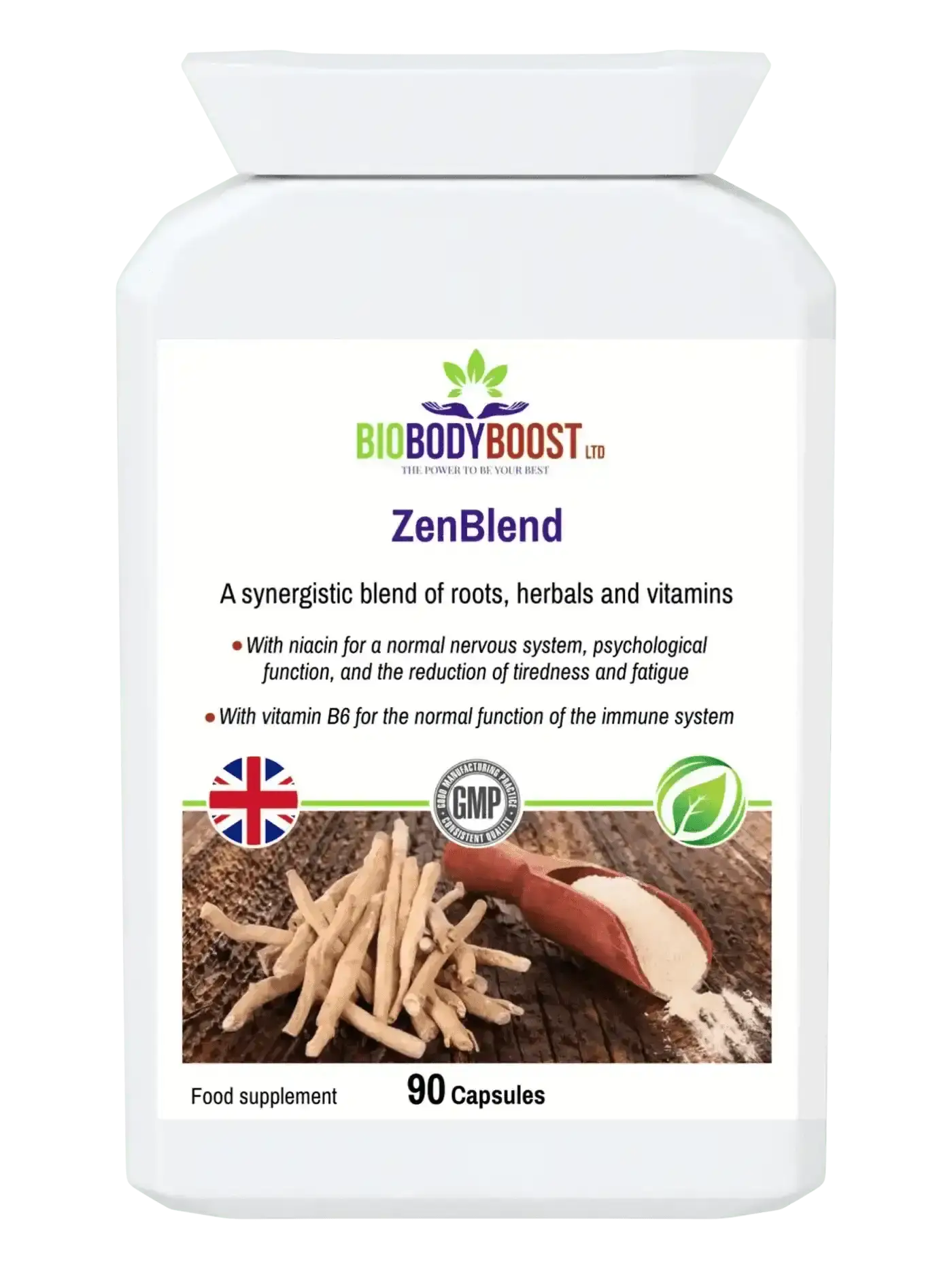
ZenBlend provides a full B-vitamin complex including B6, B12 and niacin. Magnesium 3 Complex addresses magnesium and zinc depletion together. Liposomal Vitamin C for vitamin C tissue replenishment. All halal certified, UK GMP. Browse the women’s range.