
Magnesium deficiency is one of the most underdiagnosed nutritional problems in the UK. Research published in Nutrients estimates that up to 45% of Western adults are magnesium deficient. Unlike iron deficiency, which shows up clearly in blood tests, standard NHS blood panels measure serum magnesium — which reflects only 1% of the body's total magnesium. You can have severely depleted cellular magnesium while showing a normal blood result. This is why most GPs don't flag it.
Why So Many UK Adults Are Deficient
Several modern factors deplete magnesium faster than diet can replace it:
- Soil depletion — UK agricultural soil has lost significant mineral content over the past 60 years. Foods that once contained meaningful magnesium now contain far less.
- Caffeine — Acts as a mild diuretic, increasing magnesium excretion through urine. High coffee intake is a consistent predictor of lower magnesium status.
- Alcohol — Significantly depletes magnesium. Even moderate regular consumption can push levels below the threshold.
- Stress — The body uses magnesium to produce stress hormones and run the HPA axis response. Chronic stress is one of the fastest ways to deplete magnesium stores.
- Processed food — Magnesium is primarily found in dark leafy greens, nuts, seeds and legumes. A diet high in processed food and low in these foods creates a chronic shortfall.
8 Symptoms of Magnesium Deficiency
1. Muscle cramps and twitches — especially at night
Magnesium and calcium work together to regulate muscle contraction and relaxation. When magnesium is low, muscles can contract but struggle to fully relax. This causes cramps (particularly in the calves at night), involuntary muscle twitches, and facial tics. If you regularly wake up with leg cramps, magnesium deficiency is one of the first things to investigate.
2. Poor sleep quality or difficulty falling asleep
Magnesium activates GABA receptors that quiet the nervous system at night. Deficiency leaves the brain in a state of heightened excitability — harder to switch off, more likely to wake during the night, and less time in deep restorative sleep stages.
3. Persistent fatigue despite adequate sleep
Magnesium is required for every step of ATP production — the process by which your cells generate energy. Low magnesium means inefficient energy metabolism at a cellular level. This produces a particular type of fatigue that doesn't respond to sleep because the problem isn't rest — it's energy production capacity.
4. Anxiety and irritability without clear cause
Magnesium plays a central role in regulating the stress response. It acts as a natural calcium antagonist in neuronal signalling — without it, neurons fire too easily and the nervous system becomes hyperreactive. People with low magnesium often experience disproportionate anxiety responses to ordinary situations, and a general sense of being wired but tired.
5. Frequent headaches or migraines
Magnesium deficiency is one of the most documented triggers for migraine. Studies show that migraine sufferers frequently have lower magnesium levels than the general population, and several clinical trials have shown magnesium supplementation reduces both migraine frequency and severity. The American Headache Society includes magnesium as a recommended preventative treatment.
6. Constipation
Magnesium regulates muscle contractions in the intestines. Low levels can slow peristalsis and reduce gut motility. Note: if you're taking magnesium oxide and experiencing the opposite problem (loose stools), that's not supplementation working — it's the oxide form acting as a laxative rather than being absorbed.
7. High blood pressure
Magnesium is a natural vasodilator. It relaxes smooth muscle in blood vessel walls, helping maintain healthy blood pressure. Studies consistently show a correlation between low magnesium intake and higher systolic/diastolic blood pressure. While it's not a substitute for medical treatment, optimising magnesium is a sensible first step for borderline readings.
8. Low mood and difficulty concentrating
Magnesium is a cofactor for the production of serotonin and dopamine. It also regulates NMDA receptors, which are involved in mood, learning and memory. Deficiency has been associated with depressive symptoms in multiple population studies — and some small clinical trials show magnesium supplementation produces improvements in mild-to-moderate depression comparable to antidepressants, without side effects.
What to Do If You Recognise These Symptoms
The most practical first step is a trial of a well-absorbed magnesium supplement for 6–8 weeks. Choose a chelated form — glycinate, malate or taurate — not oxide. Aim for 300–375mg of elemental magnesium daily.
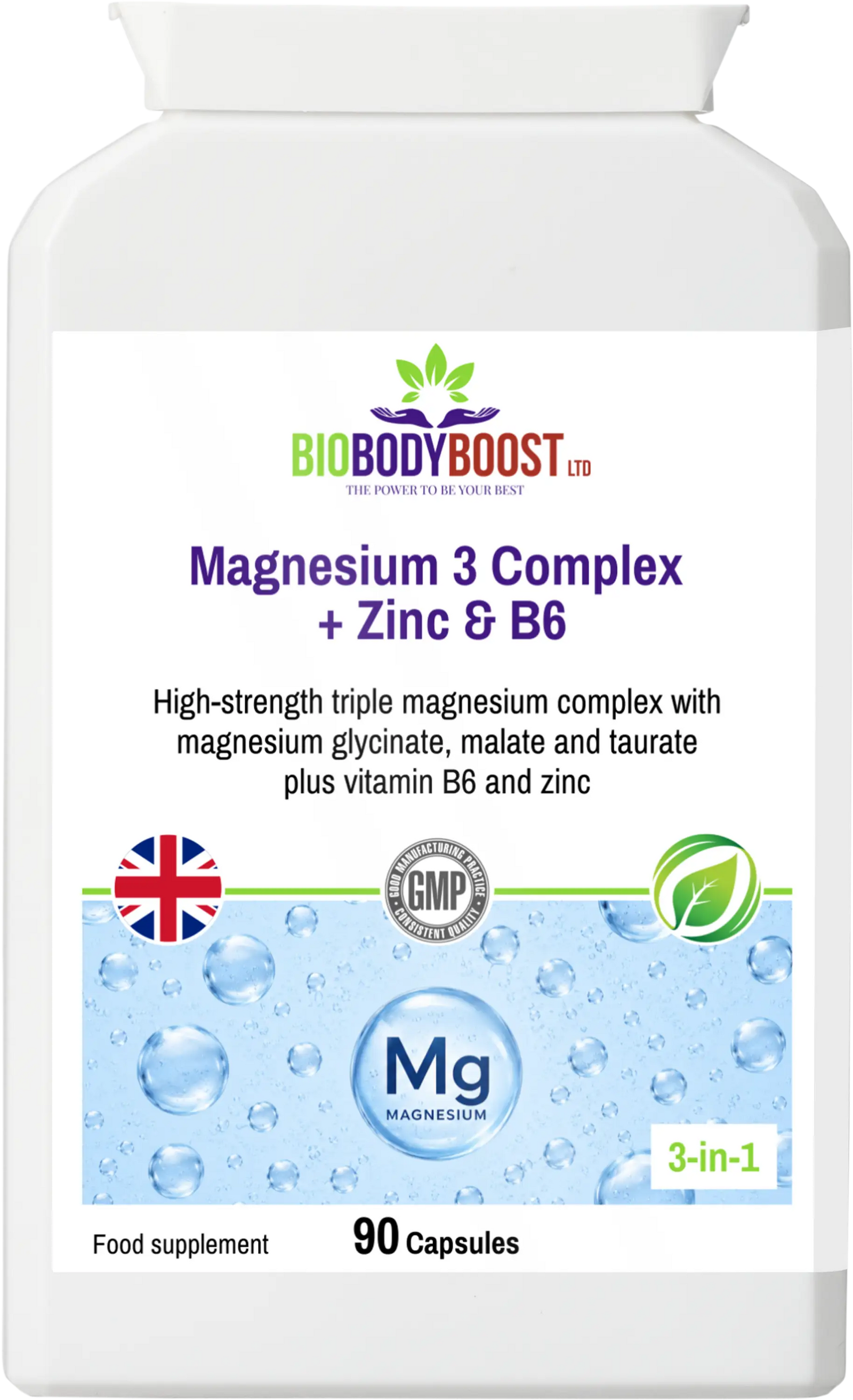
Magnesium 3 Complex by BioBodyBoost combines all three high-absorption forms — glycinate (sleep), malate (energy) and taurate (cardiovascular) — with zinc and B6, which are the essential cofactors that help magnesium actually enter cells. Halal certified, vegan, UK GMP manufactured. Browse the full range.