Quick answer: saffron (Crocus sativus) has a genuine and growing body of clinical trial evidence for mild-to-moderate depression, anxiety and sleep quality — more than most herbal mood supplements. The active compounds are safranal and crocin. Effective dose: 28–30mg standardised saffron extract daily, typically split into two 14–15mg doses. Most trials run 6–8 weeks. The evidence is strongest for mild-to-moderate depression, with two meta-analyses confirming antidepressant effects comparable to low-dose fluoxetine. For severe depression, saffron does not replace medical treatment.
What saffron actually contains
Saffron is the dried stigma of Crocus sativus — the most expensive spice in the world by weight, due to the labour-intensive hand-harvesting of approximately 150,000 flowers per kilogram. The primary bioactive compounds:
- Crocin and crocetin: carotenoid compounds responsible for saffron’s characteristic golden colour. Crocin has antioxidant and neuroprotective properties, and appears to modulate serotonin and dopamine reuptake in animal models.
- Safranal: the main volatile compound giving saffron its distinctive aroma. Has been shown to inhibit serotonin reuptake (similar mechanism to SSRI antidepressants, though much weaker) and GABA receptor modulation relevant to anxiety and sleep.
- Picrocrocin: responsible for the bitter taste. Hydrolises to safranal.
Quality supplements standardise for safranal or crocin content — the active fraction varies widely in raw saffron depending on origin and processing. Products without standardisation cannot guarantee active compound content.
What the clinical evidence shows
Depression — the strongest application
A 2014 meta-analysis in the Journal of Integrative Medicine (5 RCTs, n=313) found saffron supplementation at 30mg/day produced significantly greater reduction in depression scores than placebo, with effect sizes comparable to antidepressant medications in the same trials. Crucially, several of these trials directly compared saffron to fluoxetine (Prozac) or imipramine and found non-inferior outcomes for mild-to-moderate depression specifically.
A 2019 systematic review in Phytomedicine (11 RCTs) confirmed saffron significantly improved depressive symptoms across multiple validated depression scales (HAM-D, BDI, MADRS) vs placebo, with the additional finding that crocin specifically appeared to be the primary active fraction for antidepressant effects.
Mechanism: saffron and its metabolites inhibit serotonin reuptake (prolonging serotonin availability in synapses) and may also modulate dopamine and norepinephrine, giving it a multi-neurotransmitter action profile similar to — but much weaker than — pharmaceutical antidepressants.
Honest limit: all positive trials are in mild-to-moderate depression, not severe. Saffron is not a medically appropriate treatment for severe depression, suicidal ideation or treatment-resistant depression. For these conditions, medical treatment is necessary and supplement use should be discussed with a psychiatrist.
Anxiety
A 2021 RCT in the Journal of Affective Disorders (n=80) found saffron at 28mg/day for 8 weeks significantly reduced anxiety symptoms on the Hamilton Anxiety Rating Scale vs placebo. The GABA-modulatory effect of safranal (GABAergic agonism) is the proposed mechanism — similar to the mechanism of benzodiazepines but vastly weaker and without the dependency, tolerance or sedation concerns.
A 2022 review in Nutrients confirmed saffron has anxiolytic properties in both animal models and human trials, with the safranal fraction specifically showing the strongest anxiety-relevant neurochemistry.
Sleep quality
A 2020 double-blind RCT in the Journal of Clinical Sleep Medicine (Lopresti et al., n=55) found saffron extract at 28mg/day for 28 days significantly improved sleep quality, sleep onset time and sleep duration vs placebo in adults with self-reported poor sleep. The effect size was clinically meaningful — Pittsburgh Sleep Quality Index scores improved significantly more in the saffron group. The proposed mechanism: safranal’s GABA modulatory activity reduces sleep-onset neuronal hyperexcitability.
PMS and premenstrual mood symptoms
A 2008 RCT in BJOG (Agha-Hosseini et al., n=50) found saffron at 30mg/day significantly reduced PMS severity scores including depression, irritability, bloating and cravings vs placebo over two menstrual cycles. Effect was clinically meaningful. This is a specific application that no major UK supplement brand has built content around — and is particularly relevant to the BBB audience.
Is saffron halal?
Saffron itself is a plant — the dried stigma of Crocus sativus. It is entirely plant-origin and halal without question. Saffron has a long history of use in Islamic medicine and traditional Unani and Persian medical systems. The compliance check for saffron supplements: capsule shell (HPMC plant-derived = halal; standard gelatine = typically porcine), processing and manufacturing environment certification. Saffron is also kosher, and has no alcohol extraction concerns in quality solid-form supplements.
Dose and standardisation — what matters on the label
- Effective dose: 28–30mg standardised saffron extract daily — the dose used in virtually all positive trials. Products providing less than this may not reach the active threshold.
- Standardisation: look for products standardised for safranal (at least 2%) or crocin content. Unstandardised saffron extract has variable active compound content and cannot be reliably compared to trial doses.
- Split dosing: most trials used 14–15mg twice daily — morning and evening. This matches the pharmacokinetics of the active compounds better than once-daily dosing.
- Timeline: minimum 6 weeks before assessing mood effects; sleep effects often noticeable earlier (2–4 weeks).
Saffron vs other mood supplements
| Supplement | Mechanism | Evidence strength | Best for |
|---|---|---|---|
| Saffron 30mg | Serotonin reuptake, GABA modulation | Strong (multiple RCTs) | Mild-moderate depression, PMS mood, sleep onset |
| Ashwagandha KSM-66 | HPA axis, cortisol reduction | Strong (multiple RCTs) | Stress-driven anxiety, wired-but-tired, sleep quality |
| Magnesium glycinate | NMDA modulation, HPA axis, melatonin | Good (systematic review) | Background anxiety, sleep, muscle tension |
| Rhodiola rosea | Adaptogen, MAO inhibition | Good | Mental fatigue, burnout, cognitive energy |
| St John’s Wort | Serotonin/dopamine/norepinephrine reuptake | Strong but dangerous interactions | Mild depression — but interacts with contraceptive pill, warfarin, many drugs |
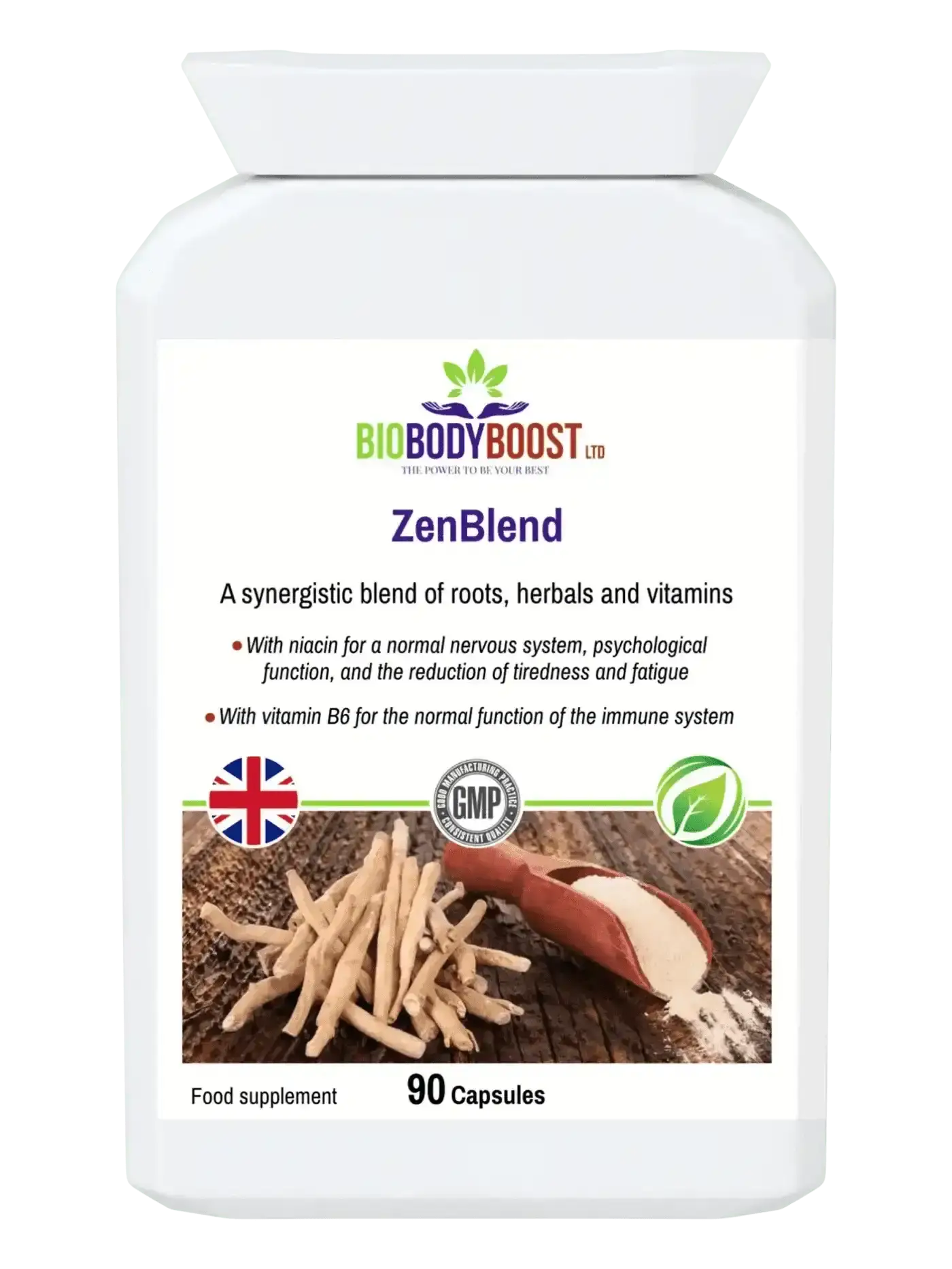
For a comprehensive stress and mood stack, ZenBlend combines KSM-66 ashwagandha, rhodiola, L-theanine, B vitamins and niacin — halal certified, HPMC capsule. Pairs with Magnesium 3 Complex for the NMDA/HPA axis component. Browse the Energy and Focus UK collection.
If you are experiencing significant depression or anxiety, please speak to your GP. Food supplements are not medicines and are not a substitute for medical care. The Samaritans are available 24/7 on 116 123.
Is saffron effective for depression?
For mild-to-moderate depression, yes — with meaningful clinical trial evidence. A 2014 meta-analysis (5 RCTs, n=313) found saffron at 30mg/day produced significantly greater reduction in depression scores than placebo, with effects comparable to low-dose fluoxetine in direct comparison trials. A 2019 systematic review (11 RCTs) confirmed these findings. Saffron is not appropriate for severe depression, bipolar disorder or treatment-resistant depression — these require medical management. For mild-to-moderate low mood, particularly where pharmaceutical side effects are a concern, saffron is one of the most evidence-supported herbal options available.
Does saffron interact with antidepressants?
Potentially, yes — and this requires GP discussion before combining. Saffron modulates serotonin reuptake. Combining with SSRIs (fluoxetine, sertraline, citalopram) or SNRIs theoretically increases the risk of serotonin syndrome (excessive serotonin activity — agitation, confusion, rapid heart rate, high blood pressure). The risk from saffron alone at 30mg/day is very low given its weak pharmacological activity, but the combination with pharmaceutical antidepressants has not been adequately studied. Do not add saffron to an existing antidepressant prescription without discussing with your GP or prescribing doctor.
Is saffron halal?
Yes — saffron is a plant (the dried stigma of Crocus sativus) with no animal-derived components and no alcohol involvement in the spice itself. It has a long history of use in Islamic medicine and traditional Unani practice. The compliance check for saffron supplements is the capsule shell (HPMC plant-derived = halal) and manufacturing environment. Saffron is also kosher with no concerns. It is one of the most culturally familiar herbal supplements in South Asian and Middle Eastern Muslim communities.
How long does saffron take to work for mood?
Most positive trials measure outcomes at 6–8 weeks of consistent daily use. Sleep quality improvements are often noticeable earlier — the 2020 sleep RCT showed significant improvements at 28 days. For mood and depression specifically, the neurochemical changes underlying antidepressant effects require sustained receptor-level adaptation — 6 weeks is the minimum meaningful assessment point. Dose: 28–30mg standardised extract daily, split into two doses. Do not assess at 2 weeks and conclude it doesn’t work.