Quick answer: genuine fatigue — the kind that doesn’t improve with more caffeine — is almost never caused by insufficient stimulants. It is caused by cellular energy deficits (magnesium, iron, B vitamins, mitochondrial function), HPA axis dysregulation (chronic stress depleting adrenal reserves), or blood glucose instability. The supplements with the best evidence for sustainable energy improvement without stimulants are: iron correction (if deficient), magnesium (ATP utilisation), B vitamins (EU-authorised energy metabolism claims), ashwagandha KSM-66 (cortisol normalisation), maca root (endocannabinoid energy pathway) and beetroot nitrates (mitochondrial efficiency). All halal certified.
Why caffeine is the wrong answer for most fatigue
Caffeine blocks adenosine receptors — it doesn’t generate energy, it suppresses the signal of tiredness. Adenosine continues accumulating; caffeine prevents you feeling it temporarily. When caffeine clears, adenosine floods the receptors and fatigue hits harder. This is the caffeine crash. More importantly, caffeine suppresses cortisol production when taken habitually — contributing to the HPA axis blunting seen in high caffeine consumers. For people already experiencing adrenal fatigue patterns (morning exhaustion, afternoon crash, wired but unrefreshed), caffeine frequently makes the underlying problem worse while masking the symptoms.
The NHS identifies nutritional deficiencies, poor sleep and chronic stress as primary reversible causes of fatigue — none of which caffeine addresses.
1. Iron correction — the most commonly missed energy fix
Iron is required for haemoglobin (oxygen transport to every cell) and for the mitochondrial cytochrome enzymes that power the electron transport chain. Iron deficiency — even without full anaemia — produces profound fatigue because it simultaneously reduces oxygen delivery AND mitochondrial ATP production capacity. UK NDNS data shows iron insufficiency in approximately 25% of premenopausal women. Request a serum ferritin test — fatigue from iron deficiency appears from ferritin below 30μg/L, not just below the 12μg/L anaemia cutoff. Daily Multi Complex provides 14mg iron (100% NRV) as ferrous fumarate. Halal certified.
2. Magnesium — the ATP cofactor
Every ATP molecule requires magnesium to be biologically active (Mg-ATP). Magnesium is also a cofactor for three Krebs cycle enzymes and for sodium-potassium ATPase (the pump maintaining cellular energy gradients). UK NDNS shows approximately 70% of UK adults consume below the RNI for magnesium. Low magnesium directly impairs cellular energy utilisation regardless of how much ATP the mitochondria produce. At 300mg elemental magnesium glycinate daily, most people notice a difference in energy and sleep quality within 2–3 weeks. Magnesium 3 Complex — halal certified. Full magnesium-energy guide.
3. B vitamins — EU-authorised energy metabolism claims
Multiple B vitamins carry EU/UK-retained authorised health claims for “normal energy-yielding metabolism” and “reduction of tiredness and fatigue”: B1 (thiamine), B2 (riboflavin), B3 (niacin), B5 (pantothenic acid), B6, B9 (folate) and B12. These are not marketing — they are cofactors for the enzymes that convert food to usable energy (acetyl-CoA entry into the Krebs cycle, NADH production, ATP synthesis). Vegan and vegetarian diets are at highest risk for B12 deficiency, which causes megaloblastic anaemia and profound fatigue. Daily Multi Complex provides all B vitamins at 100–200% NRV.
4. Ashwagandha KSM-66 — cortisol reset for HPA fatigue
The “wired but tired” pattern — anxious, exhausted, can’t switch off — reflects HPA axis dysregulation where cortisol is chronically elevated (suppressing sleep quality and depleting energy reserves) but the adrenal response is becoming blunted. Ashwagandha KSM-66 significantly reduces cortisol (Langade 2019: 23% reduction vs placebo) and significantly improves energy, sleep and stress tolerance. This is the correct intervention for stress-driven fatigue — not more caffeine. Onset: 4–8 weeks. ZenBlend — KSM-66 + rhodiola + L-theanine + niacin. Halal certified.
5. Maca root — endocannabinoid energy pathway
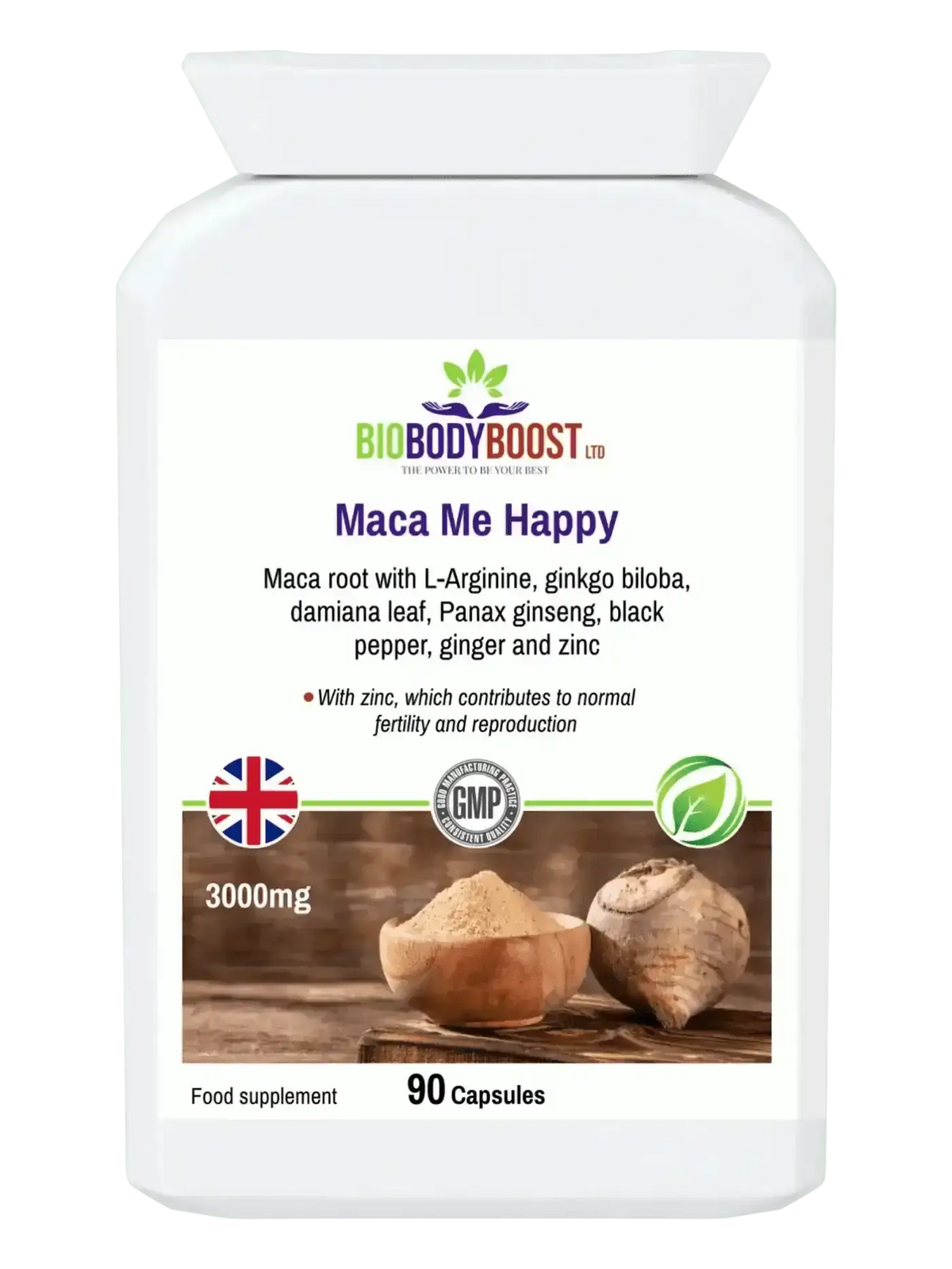
Maca’s macamides inhibit FAAH (fatty acid amide hydrolase), increasing anandamide — the body’s endogenous energy and mood molecule. A 2009 Journal of Ethnopharmacology cycling study found maca supplementation significantly improved 40km time trial performance and subjective energy vs placebo at 14 days. The energy mechanism is distinct from caffeine (no adenosine blocking) and from B vitamins (no direct metabolic cofactor role) — it operates via endocannabinoid tone. Maca Me Happy — 3,000mg maca + zinc + Korean ginseng. Halal certified.
6. Beetroot nitrates — mitochondrial efficiency
Beetroot dietary nitrates convert to nitric oxide, which modulates cytochrome c oxidase (Complex IV of the electron transport chain) — reducing the oxygen cost of ATP production by approximately 19% (Bailey 2009, JAP). This is not stimulant energy but genuine mitochondrial efficiency improvement — more energy output per unit of cellular effort. Most relevant for people who feel fatigued during physical activity specifically. Red Punch — 2,250mg beetroot + Montmorency cherry. Halal certified.
The caffeine-free energy stack
| Supplement | Energy mechanism | Best for |
|---|---|---|
| Daily Multi Complex | Iron + B vitamins (EU-authorised energy claims) | Nutritional deficiency fatigue |
| Magnesium 3 Complex | Mg-ATP cofactor + Krebs cycle | General fatigue (70% UK adults deficient) |
| ZenBlend (KSM-66) | HPA axis normalisation, cortisol ↓ | Stress-driven fatigue, wired-but-tired |
| Maca Me Happy | Endocannabinoid (FAAH inhibition) | General vitality and sustained energy |
| Red Punch | Nitric oxide → Complex IV efficiency | Exercise fatigue, physical performance |
Why am I tired all the time even without caffeine?
Persistent fatigue without caffeine usually has one or more of these causes: (1) iron deficiency — serum ferritin below 30μg/L impairs both oxygen delivery and mitochondrial ATP production; request a ferritin test not just haemoglobin; (2) magnesium insufficiency — affecting approximately 70% of UK adults; impairs all ATP utilisation; (3) B12 deficiency — especially in vegetarians and vegans; causes megaloblastic anaemia and profound fatigue; (4) thyroid dysfunction — both hypo and hyperthyroidism cause fatigue; (5) chronic stress and HPA axis dysregulation; (6) poor sleep quality even with adequate duration. The NHS lists common reversible causes of fatigue and recommends GP assessment if fatigue is persistent — blood tests for ferritin, thyroid, B12, vitamin D and HbA1c are the starting point.
What gives energy without caffeine UK?
The most evidence-supported non-stimulant energy supplements: (1) magnesium glycinate 300mg — corrects the ATP cofactor deficiency in 70% of UK adults; (2) iron + B vitamins (Daily Multi Complex) — addresses the most common nutritional energy deficit; (3) ashwagandha KSM-66 (ZenBlend) — reduces cortisol and HPA axis fatigue over 4–8 weeks; (4) maca root (Maca Me Happy) — endocannabinoid pathway energy without adenosine blocking; (5) beetroot nitrates (Red Punch) — mitochondrial efficiency improvement, particularly during physical activity. These address root causes rather than masking fatigue.