Quick answer: nattokinase is a serine protease enzyme derived from natto (fermented soybeans) that directly degrades fibrin — the protein that makes blood clots solid and sticky. It is one of the most evidence-supported natural cardiovascular supplements, with human RCT data on blood pressure reduction, fibrinolytic activity and blood viscosity. On the halal question: natto is fermented soybeans, and fermentation is generally permissible in Islam. The key certification check is the fermentation growth media (must not contain porcine-derived peptones) and the capsule shell. BioBodyBoost CardioVital contains nattokinase 2000 FU and is halal approved.
What nattokinase is and where it comes from
Natto is a traditional Japanese fermented food made from soybeans inoculated with Bacillus subtilis natto. During fermentation, the bacteria produce nattokinase — a 275-amino acid serine protease enzyme with potent fibrinolytic (clot-dissolving) activity. Sumi et al. (1987, Experientia) first identified and characterised nattokinase, naming it for its discovery in natto. The enzyme is extracted, purified and standardised to fibrinolytic units (FU) for supplemental use.
The typical supplement dose is 2,000 FU daily — the dose used in most positive human trials and the amount in BioBodyBoost CardioVital.
What nattokinase does to the cardiovascular system
Fibrinolysis — the primary mechanism
Fibrin is the structural protein of blood clots. The body’s primary fibrinolytic enzyme is plasmin, which breaks down fibrin. Nattokinase acts as a plasmin analogue — it directly cleaves fibrin, breaks down clots, and also activates the body’s own plasminogen (plasmin precursor). It additionally degrades plasminogen activator inhibitor-1 (PAI-1) — the main inhibitor of the body’s fibrinolytic system. This dual action (direct fibrinolysis + removing the brake on endogenous fibrinolysis) makes nattokinase particularly potent for reducing blood viscosity and clot burden.
Blood pressure
Kim et al. (2008, Hypertension Research, double-blind RCT, n=86) found nattokinase at 2,000 FU daily for 8 weeks significantly reduced systolic BP by 5.5mmHg and diastolic BP by 2.84mmHg vs placebo. This is a clinically meaningful reduction — comparable to low-dose antihypertensive medication. The proposed mechanism: nattokinase degrades angiotensinogen and angiotensin I/II (components of the renin-angiotensin-aldosterone system that regulates blood pressure), providing an ACE-inhibitor-like effect via a different mechanism. The NHS identifies high blood pressure as a major risk factor for heart attack and stroke — both disproportionately prevalent in UK South Asian communities.
Atherosclerotic plaque
A 2017 Korean RCT (Ren et al., n=76) found nattokinase supplementation at 6,000 FU daily for 26 weeks significantly reduced carotid intima-media thickness (a marker of atherosclerotic plaque progression) vs control. Preliminary evidence, single trial — but mechanistically consistent with nattokinase’s fibrinolytic action at the plaque surface.
The South Asian cardiovascular context
UK South Asians have significantly elevated cardiovascular disease risk beyond the general UK population. The British Heart Foundation notes that South Asians are 50% more likely to die prematurely from coronary heart disease than the general UK population, and South Asian men develop heart disease approximately 5–10 years earlier. Elevated fibrinogen and more active platelet aggregation are among the biological factors contributing to this risk — both of which nattokinase addresses mechanistically.
Is nattokinase halal?
Natto itself is fermented soybeans — a plant-origin food. Fermentation in Islam is generally permissible when the substrate and process do not involve haram substances. The key compliance considerations for nattokinase supplements:
- Fermentation growth media: industrial fermentation uses growth media that can include peptone (protein hydrolysate). Peptone can be sourced from porcine (haram), bovine (requires slaughter certification) or plant-derived sources. Halal certification of the fermentation process confirms the growth media is from permissible sources.
- Capsule shell: HPMC plant-derived = halal. Standard gelatine = typically porcine. CardioVital uses HPMC capsules.
- Manufacturing environment: GMP-certified UK facility with halal audit confirming no cross-contamination.
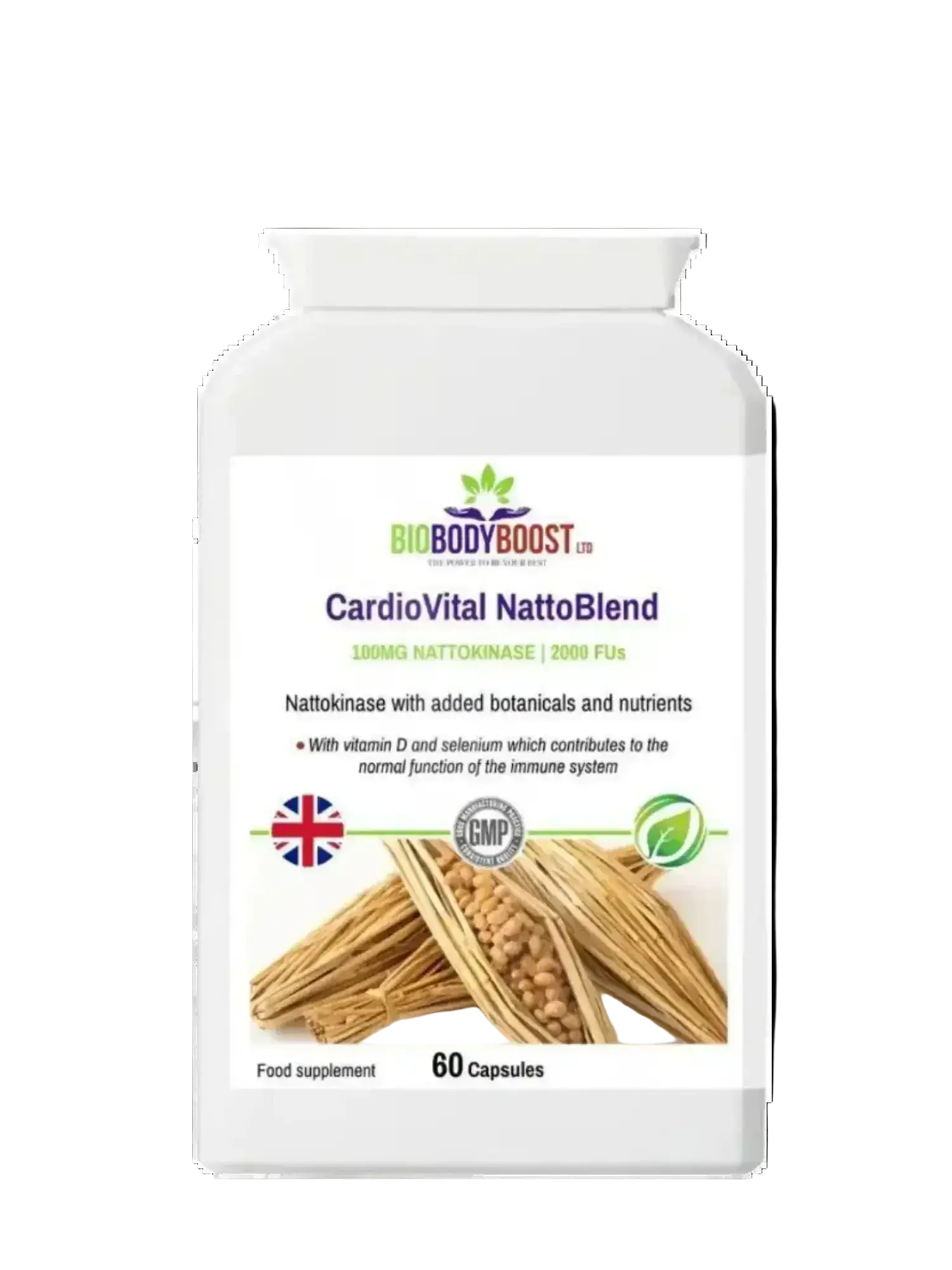
BioBodyBoost CardioVital — nattokinase 2000 FU + selenium (EU-authorised claim for normal thyroid function and antioxidant protection) + vitamin D3. Halal approved, UK GMP manufactured, HPMC capsule.
Who should NOT take nattokinase
Important caution: nattokinase has genuine fibrinolytic activity. This means it is contraindicated or requires GP supervision in several situations:
- Anyone taking anticoagulant medication (warfarin, apixaban, rivaroxaban, dabigatran) — nattokinase may potentiate anticoagulant effects
- Anyone taking antiplatelet medication (aspirin, clopidogrel) — same concern
- Pre- and post-surgery (within 2 weeks)
- Anyone with bleeding disorders
- Pregnancy
Always inform your GP if you take any anticoagulant or antiplatelet medication and are considering nattokinase. For healthy adults not on these medications, 2,000 FU daily has a good safety record in the trial data. Browse the Halal Vitamins UK collection.
What does nattokinase do for the heart?
Nattokinase has three cardiovascular mechanisms: (1) direct fibrinolysis — it cleaves fibrin (the structural protein of clots), directly reducing clot burden and blood viscosity; (2) PAI-1 degradation — it breaks down plasminogen activator inhibitor-1, removing the primary brake on the body’s own clot-dissolving system; (3) BP reduction via angiotensinogen degradation — providing an ACE-inhibitor-like blood pressure effect. A 2008 RCT (Kim et al., n=86) found 2,000 FU daily for 8 weeks reduced systolic BP by 5.5mmHg and diastolic by 2.84mmHg. These are meaningful effects from a single food supplement compound with a good safety record at the standard dose.
Is nattokinase halal UK?
Nattokinase is derived from fermented soybeans (natto) — a plant substrate. Fermentation is generally permissible in Islam. The compliance checks are: the fermentation growth media (must not be porcine peptone), the capsule shell (must be HPMC, not gelatine), and the manufacturing environment (halal audit of the production facility). BioBodyBoost CardioVital provides nattokinase 2000 FU in HPMC capsules with full third-party halal approval. This is one of the very few UK nattokinase products with confirmed halal certification — most competitors carry no certification despite being soy-derived.
Can I take nattokinase with aspirin or blood thinners?
No — not without GP supervision. Nattokinase has genuine fibrinolytic (blood-thinning) activity. Combining it with anticoagulants (warfarin, apixaban, rivaroxaban) or antiplatelet medications (aspirin, clopidogrel) may potentiate their effects and increase bleeding risk. The NHS provides guidance on anticoagulant interactions. If you take any blood-thinning medication, always discuss nattokinase with your GP before starting. For healthy adults not on these medications, 2,000 FU daily is the standard well-studied dose with a good safety record in trial data.