Written by the BioBodyBoost Team · August 2026 · Our standards →
Quick answer: glycinate and citrate deliver the same mineral — the difference is the carrier and the side effects. Magnesium glycinate is bound to glycine, gentle on the stomach and the usual pick for sleep and relaxation. Citrate is well-absorbed but osmotically active, meaning it draws water into the bowel — useful if you're constipated, unhelpful if you're not. For sleep specifically, glycinate wins on tolerability; for regularity, citrate is doing double duty.
Why the form changes the experience
Elemental magnesium can't be absorbed alone — it needs a carrier compound, and that carrier determines absorption, stomach comfort and the side-effect profile. Oxide (the cheapest form in supermarket tablets) is poorly absorbed and mostly acts as a laxative. Citrate absorbs well but keeps a mild laxative pull. Glycinate absorbs well with essentially none — and its glycine carrier is itself studied for sleep quality, which is why the sleep conversation keeps landing on this form. The evidence on that pairing is covered in our review of whether magnesium glycinate actually helps sleep.
Which form for which goal
Sleep and evening wind-down: glycinate — gentle, no bathroom disruption, glycine bonus. Browse the full Sleep & Relaxation collection for the night-time options.
Constipation-leaning digestion: citrate — the osmotic effect becomes the feature.
Reduced tiredness and general top-up: either well-absorbed form; magnesium contributes to the reduction of tiredness and fatigue and normal muscle function at ≥15% NRV.
Avoid: oxide-only products sold on price — you're buying a laxative with a magnesium label.
The combination route for sleep
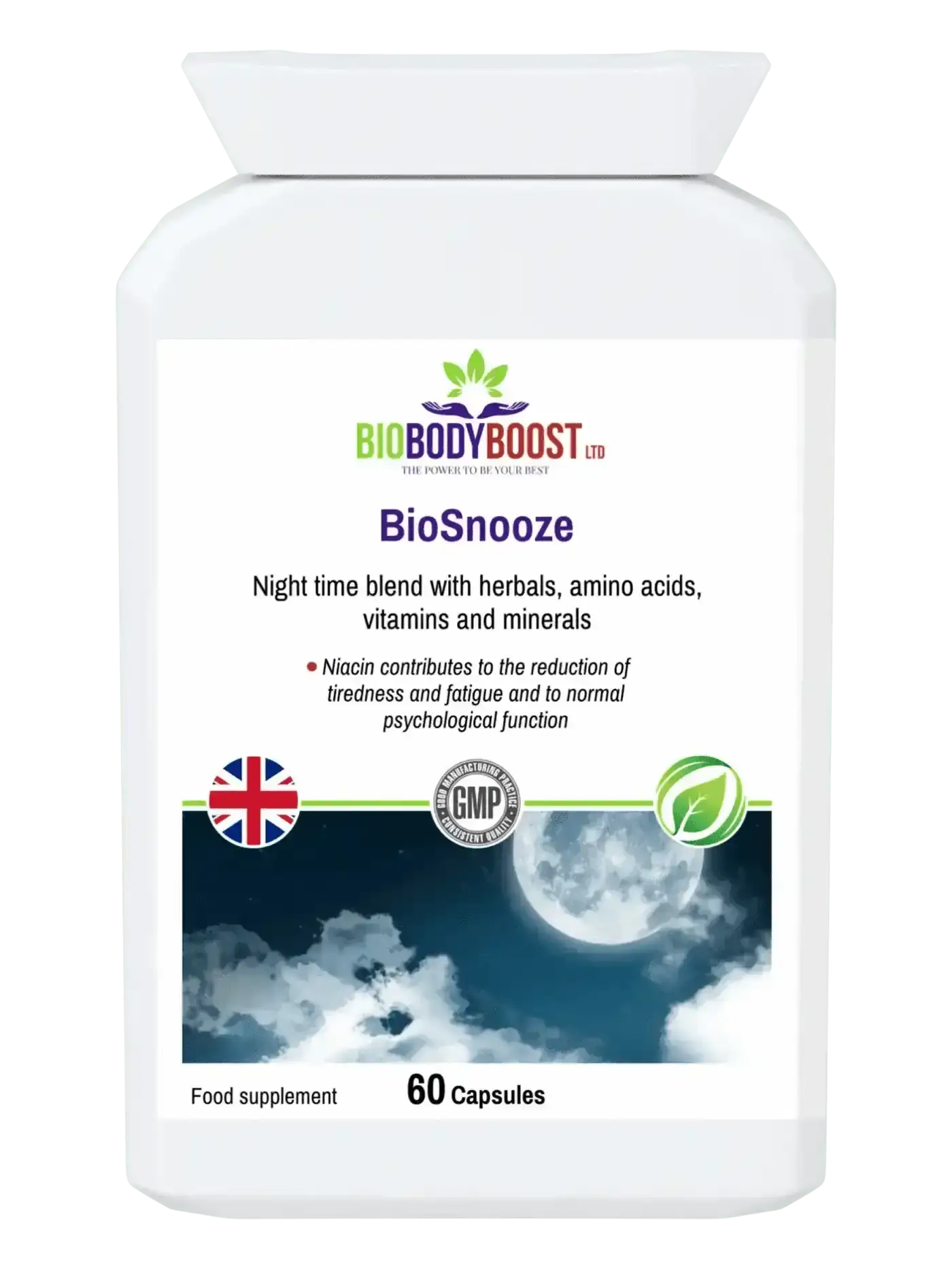
Magnesium rarely works alone in sleep formulas because the mineral fixes a shortfall rather than sedating you. BioSnooze pairs magnesium with ashwagandha and calming botanicals in a night-time formula — halal approved, vegan, UK made — built for the wind-down rather than a single-mineral approach.
Dose and timing
Typical supplemental doses run 100–375mg elemental magnesium daily (375mg is the EU NRV); more is not better and high doses of any form loosen digestion. For sleep, take it 30–60 minutes before bed. Check the elemental magnesium figure on the label — "magnesium glycinate 1000mg" contains roughly 100–140mg of actual magnesium.
Frequently asked questions
Can I take magnesium every night?
Yes, at label doses — it's a top-up of a mineral your diet should supply, not a sedative you build tolerance to.
Does magnesium interact with medication?
It can reduce absorption of certain antibiotics and thyroid medication — separate doses by 2–4 hours and check with a pharmacist.
Is magnesium glycinate halal?
The mineral salt is synthetic/mineral-derived; the capsule and any glycine source are the checkpoints. BioBodyBoost magnesium-containing formulas are halal approved with plant-derived capsules.
Explore Sleep & Relaxation and Halal Vitamins UK.
Food supplements should not replace a varied diet or healthy lifestyle. If you have kidney disease, consult your GP before magnesium supplementation.