Quick answer: magnesium glycinate is magnesium bound to glycine — an amino acid chelate. It has significantly better bioavailability than the most common cheap form (magnesium oxide, approximately 4% absorption) and is the best-tolerated form for people with sensitive stomachs. It does not cause the osmotic laxative effect that magnesium oxide and citrate produce at higher doses. If you have been taking magnesium and not noticing results, the form is almost certainly the problem. Glycinate is also the form with the strongest evidence for sleep quality and anxiety reduction specifically.
Why magnesium form matters more than most people realise
Magnesium supplements are not interchangeable. The mineral is always bound to a carrier compound, and the carrier determines how much elemental magnesium actually crosses the gut wall into circulation. The forms on the UK market:
- Magnesium oxide: approximately 4% bioavailability — the most common form in cheap multivitamins and pharmacy own-brand magnesium. Stays mostly in the gut, drawing water osmotically. Effective as a laxative. Near-useless for raising tissue magnesium levels.
- Magnesium citrate: approximately 25–30% bioavailability. A significant improvement over oxide. A 2003 study in Magnesium Research found citrate produced 4x higher serum magnesium than oxide at equivalent elemental doses. Causes loose stools at higher doses (above approximately 200mg elemental).
- Magnesium glycinate (bisglycinate): approximately 40–60% bioavailability. Chelated form — magnesium is bound to two glycine molecules, which protect it from competing with calcium and phytates for absorption in the gut. Does not cause osmotic laxative effects at therapeutic doses. The form of choice for raising cellular magnesium without GI side effects.
- Magnesium malate: well absorbed, preferred for energy metabolism applications (malic acid is involved in the Krebs cycle). Less studied than glycinate for sleep and mood.
- Magnesium taurate: taurine is concentrated in cardiac tissue. Preferred for cardiovascular applications. Good bioavailability with specific affinity for heart and brain tissue.
- Magnesium L-threonate: specifically crosses the blood-brain barrier more effectively than other forms. Developed for cognitive applications. Significantly more expensive. Most relevant for brain-specific magnesium applications.
What magnesium actually does — the full biochemical picture
Magnesium is a cofactor in over 300 enzymatic reactions. The most clinically relevant:
- ATP synthesis: every ATP molecule must be bound to magnesium to be biologically active. All energy production — whether aerobic or anaerobic — requires magnesium. Low magnesium directly impairs cellular energy availability.
- NMDA receptor modulation: magnesium ions block NMDA glutamate receptors at rest, preventing excessive neuronal excitation. Low magnesium reduces this block, increasing cortisol reactivity and neuronal hyperexcitability — the mechanism behind the wired-but-tired, anxious-but-exhausted state many magnesium-deficient people describe.
- HPA axis regulation: magnesium modulates cortisol release from the adrenal glands. Deficiency amplifies the stress response; adequate magnesium blunts it.
- Melatonin synthesis: magnesium is required for the enzymes that convert serotonin to melatonin. Low magnesium reduces melatonin production independent of light exposure.
- Muscle contraction and relaxation: calcium triggers muscle contraction; magnesium is the physiological antagonist that enables relaxation. Magnesium deficiency causes muscle cramps, tension and twitching.
- Insulin signalling: magnesium is required for insulin receptor tyrosine kinase activity. Deficiency impairs insulin sensitivity — relevant for PCOS, type 2 diabetes risk and metabolic health.
UK deficiency: how widespread is it really?
UK NDNS 2019 data shows approximately 70% of UK adults consume below the Reference Nutrient Intake for magnesium (270mg/day women, 300mg/day men). This is one of the most prevalent micronutrient insufficiencies in the UK population — more common than vitamin D deficiency in real terms.
Contributing factors: modern food processing removes magnesium from grains (up to 80% lost in refining); UK soils have declining mineral density; high sugar, alcohol and caffeine intake all increase urinary magnesium excretion; and exercise — particularly high-volume training — significantly increases magnesium requirements through sweat loss.
What the evidence shows for magnesium glycinate specifically
Sleep quality
A 2012 double-blind RCT in the Journal of Research in Medical Sciences (Abbasi et al., n=46 elderly adults with insomnia) found magnesium supplementation significantly improved subjective sleep quality, sleep efficiency, sleep onset latency and early morning awakening vs placebo, with significant increases in serum melatonin and significant reductions in cortisol. A 2022 meta-analysis in BMC Complementary Medicine and Therapies (5 RCTs) confirmed magnesium supplementation significantly improved sleep quality and sleep onset in adults with sleep disturbance.
Why glycinate specifically for sleep: the glycine component has independent evidence for sleep quality. A 2012 study in Frontiers in Neurology found glycine supplementation at 3g reduced daytime sleepiness and improved polysomnography-measured sleep quality, with glycine-receptor activation in the suprachiasmatic nucleus (the brain’s circadian clock) as the proposed mechanism. Magnesium glycinate provides both the magnesium and a meaningful glycine dose simultaneously.
Anxiety and stress
A 2017 systematic review in Nutrients (Boyle et al., 18 studies) found magnesium supplementation significantly improved subjective anxiety in mildly anxious adults. Effect was most pronounced in people with low baseline magnesium. The NMDA receptor mechanism (magnesium blocks excessive excitation) and cortisol-blunting effect are both well-characterised. Glycinate’s superior absorption means more magnesium actually reaches the brain — relevant for the neurological applications specifically.
Muscle function and cramps
EU-authorised claim: magnesium contributes to normal muscle function. A 2017 Journal of Sports Science study found magnesium supplementation at 350mg elemental/day significantly reduced fatigue and cramp frequency in cyclists over 4 weeks vs placebo. For women with menstrual cramps specifically: a 2001 study in the British Journal of Obstetrics and Gynaecology found magnesium supplementation significantly reduced menstrual pain — a less-discussed but clinically meaningful application.
Blood pressure
A 2016 meta-analysis in Hypertension (34 RCTs, n=2,028) found magnesium supplementation significantly reduced systolic BP by 2mmHg and diastolic by 1.78mmHg. Modest individual effect, but significant at population scale and a meaningful component of a cardiovascular risk management stack alongside omega-3 and beetroot.
Who needs magnesium glycinate most
- Poor sleep, high stress, wired-but-tired pattern: magnesium glycinate before bed. 200–300mg elemental magnesium glycinate 30–60 minutes before sleep.
- Athletes and high-volume training: 300–400mg elemental daily to compensate for sweat losses.
- Women with PCOS: magnesium deficiency significantly more prevalent in PCOS; insulin sensitivity mechanism directly relevant.
- Muscle cramps, tension, twitching: magnesium deficiency is the most common reversible cause.
- People who took magnesium oxide and “it didn’t work”: try glycinate at equivalent or higher elemental doses for 4–6 weeks.
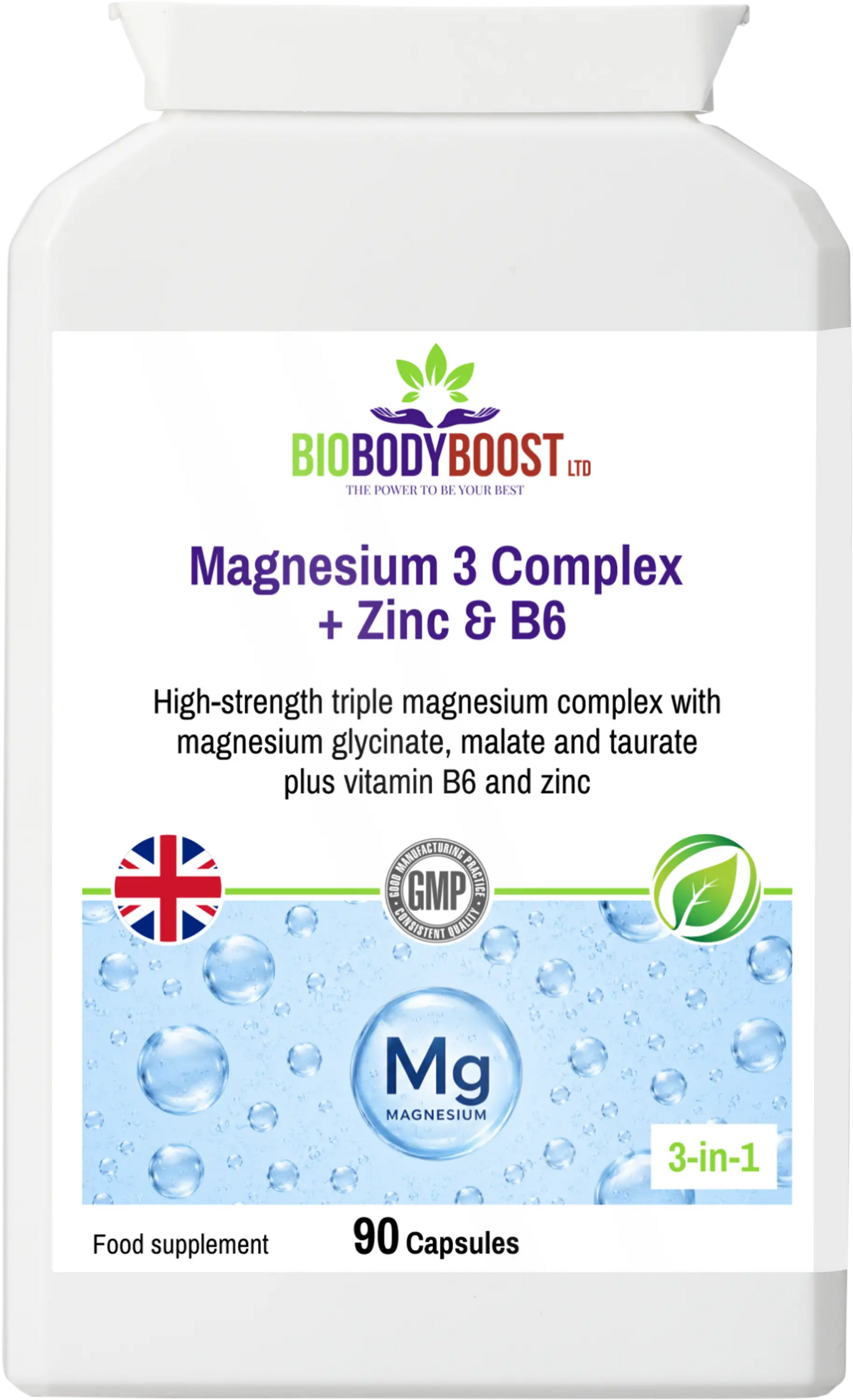
Our Magnesium 3 Complex provides 300mg elemental magnesium as glycinate + malate + taurate combined, with zinc 10mg and B6 — HPMC capsule, halal certified, vegan, kosher. The three-form combination covers sleep/anxiety (glycinate), energy (malate) and cardiovascular (taurate) simultaneously. Browse the full Halal Vitamins UK collection.
What is the difference between magnesium glycinate and magnesium citrate?
Bioavailability and GI tolerance. Glycinate has approximately 40–60% absorption vs citrate’s 25–30%. More importantly, glycinate does not cause the osmotic laxative effect that citrate does at doses above approximately 200mg elemental. People who get loose stools from citrate typically tolerate glycinate well at equivalent or higher doses. Glycinate also has the added benefit of glycine — an amino acid with independent evidence for sleep quality. For sleep, anxiety and general magnesium repletion without GI effects, glycinate is the superior form. For acute constipation relief, citrate or oxide are more effective.
When should I take magnesium glycinate?
For sleep and anxiety: 30–60 minutes before bed. For muscle function and athletic recovery: post-exercise or with the evening meal. For general daily maintenance: any consistent time — with food is slightly better as it reduces the small risk of GI discomfort. There is no established circadian optimal timing for magnesium absorption, but the sleep-quality application specifically benefits from evening dosing when melatonin synthesis is most active. Effective dose: 200–400mg elemental magnesium from glycinate. Check elemental content on the label, not compound weight.
Is magnesium glycinate halal?
Yes. Magnesium glycinate is magnesium bound to glycine — an amino acid that is either synthetically produced or fermentation-derived, with no animal involvement in either route. The elemental magnesium is mineral-origin. The compliance check is the capsule shell (HPMC plant-derived = halal; standard gelatine = typically porcine) and manufacturing environment certification. BioBodyBoost Magnesium 3 Complex uses HPMC capsules and carries third-party halal certification.
How long does magnesium glycinate take to work?
For sleep quality: improvements are often noticeable within 1–2 weeks of consistent evening dosing. For anxiety and stress response: 4–6 weeks to measurably reduce HPA axis reactivity. For muscle cramps: typically 1–2 weeks. For blood pressure effects: 6–12 weeks in the meta-analysis protocols. If you notice no change after 6 weeks at 300–400mg elemental magnesium glycinate daily, test serum magnesium and red blood cell magnesium (a better indicator of cellular magnesium status than serum alone) before assuming magnesium is not the issue.