Written by the BioBodyBoost Nutrition Team · Reviewed by a Registered Nutritionist (RNutr) · May 2026

Walk into any health shop and count the magnesium products on the shelf. Oxide. Citrate. Glycinate. Malate. Taurate. The variety is not marketing noise — it reflects a genuine biochemical reality. Different forms of magnesium behave differently in the body, absorb differently, and produce different effects. Choosing the wrong form means paying for a supplement that doesn’t address what you actually need.
Research published in Nutrients estimates that up to 45% of Western adults are deficient in magnesium, with UK dietary surveys consistently showing average intake below the recommended 300–375mg daily. Magnesium is a cofactor in over 300 enzymatic reactions covering energy production, nerve conduction, muscle function, sleep regulation and cardiovascular health.
Why magnesium form matters more than dose
Most cheap magnesium supplements use magnesium oxide — the form with the highest magnesium content by weight (60%) but the lowest bioavailability. A comparative study in Magnesium Research found magnesium oxide had only 4% bioavailability versus 55–70% for chelated forms. You can take 500mg of magnesium oxide and absorb less actual magnesium than 150mg of magnesium glycinate.
Magnesium glycinate — for sleep, anxiety and nervous system support
Magnesium glycinate binds magnesium to glycine, an inhibitory neurotransmitter with calming properties. Clinical research shows glycine supplementation significantly improves sleep quality and reduces daytime fatigue — making glycinate a synergistic formula where both the magnesium and the glycine contribute to sleep support.
Glycinate is the most widely studied chelated form for sleep and anxiety. It crosses the blood-brain barrier more readily than other forms and avoids the laxative effect associated with citrate and oxide at higher doses.
Best for: insomnia, poor sleep quality, evening anxiety, stress, restless legs at night.
Magnesium malate — for energy, fatigue and muscle function
Magnesium malate binds magnesium to malic acid, an organic acid central to the Krebs cycle — the cellular process that generates ATP, the body’s primary energy currency. The NHS confirms magnesium contributes to normal energy-yielding metabolism and the reduction of tiredness and fatigue. Malate is the preferred form in fibromyalgia research, where it has shown improvements in pain and fatigue scores.
Best for: chronic fatigue, daytime energy, post-exercise muscle soreness, those who take supplements in the morning.
Magnesium taurate — for heart health and blood pressure
Magnesium taurate combines magnesium with taurine, an amino acid with specific cardioprotective properties. Research in Nutrients found the magnesium-taurine combination produced greater reductions in blood pressure than either alone, and taurine supports the electrical stability of heart muscle cells.
Best for: cardiovascular health, blood pressure support, heart rhythm irregularities.
The three forms compared
| Form | Primary benefit | Best taken | Bioavailability |
|---|---|---|---|
| Glycinate | Sleep, anxiety, nervous system | Evening | High ✓ |
| Malate | Energy, fatigue, muscle recovery | Morning / midday | High ✓ |
| Taurate | Heart health, blood pressure | Any time with food | High ✓ |
| Oxide | Laxative only | Avoid for daily use | Very low (4%) ✗ |
Why a triple magnesium formula works best for most people
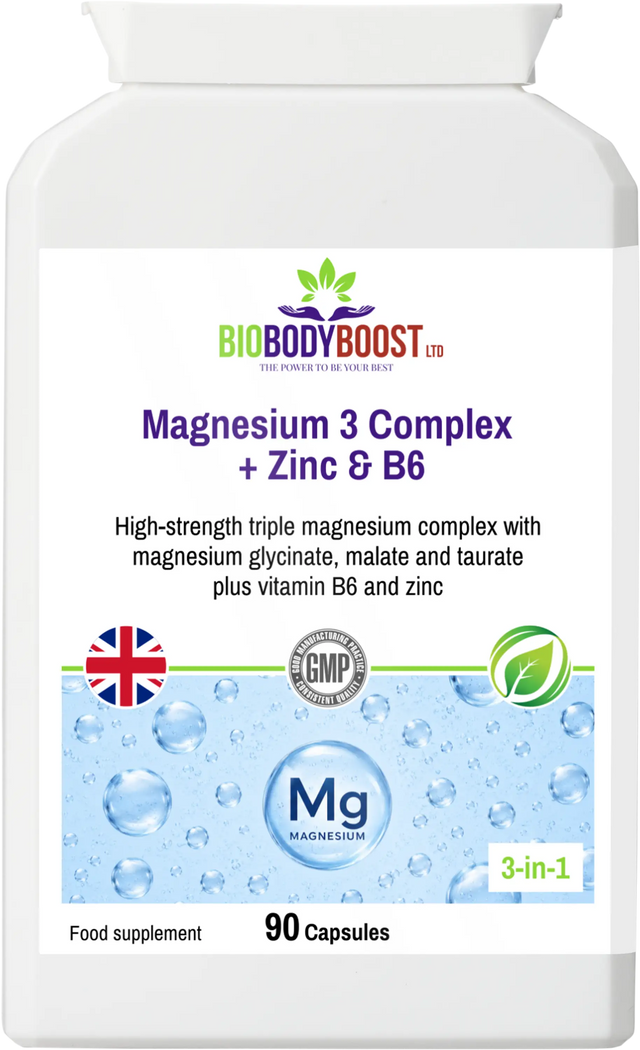
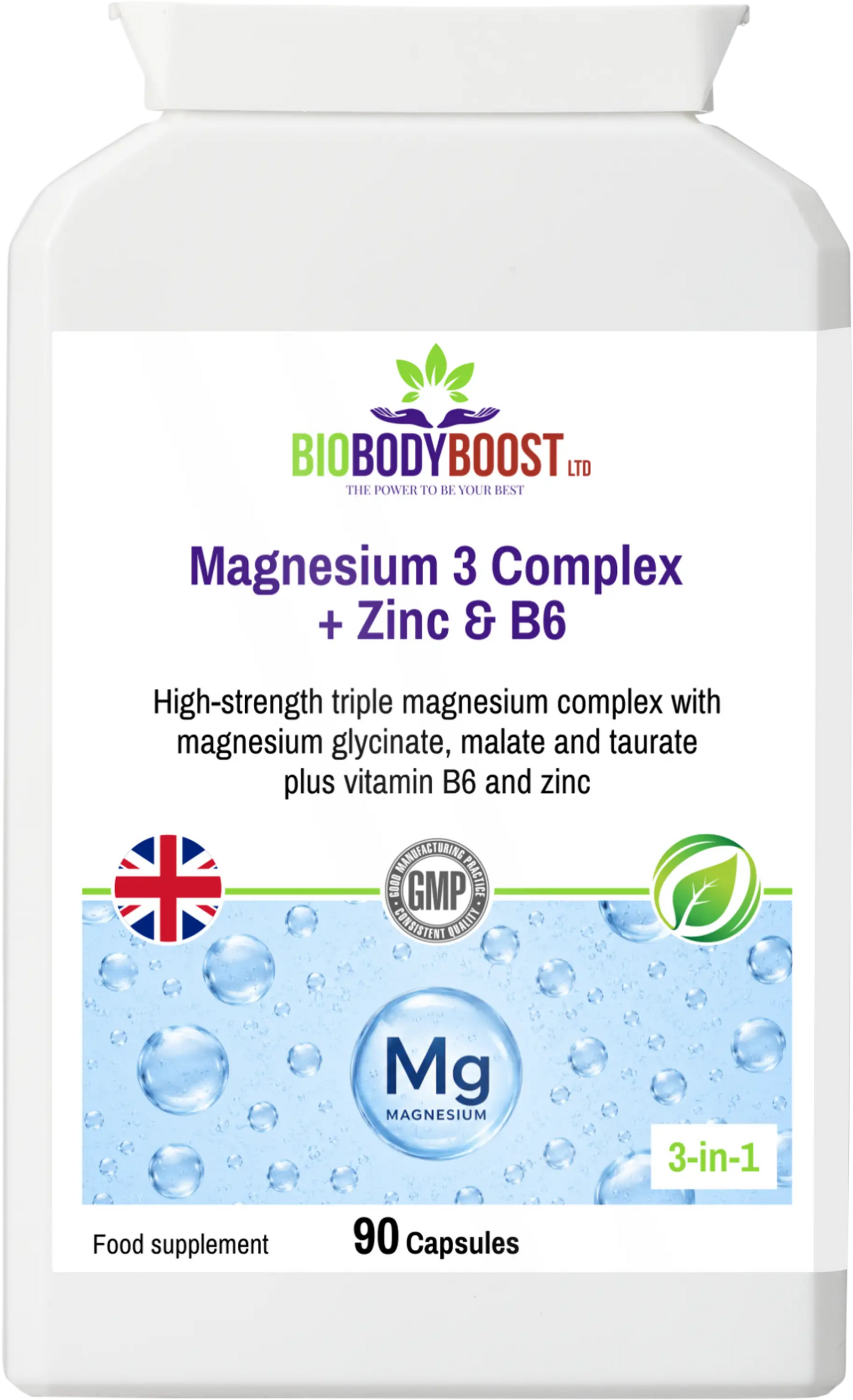
Most adults have overlapping reasons to supplement magnesium — not purely sleep, or purely energy, or purely cardiovascular. The BioBodyBoost Magnesium 3 Complex combines glycinate, malate and taurate in a single halal certified, vegan capsule, with zinc and vitamin B6 added as required cofactors for magnesium metabolism.
Signs you might be deficient
- Difficulty falling or staying asleep
- Muscle cramps or twitches, particularly at night
- Persistent tiredness despite adequate sleep
- Anxiety or irritability without clear cause
- Frequent headaches or migraines
- High stress, high caffeine or alcohol intake (all deplete magnesium)
Explore the full Sleep & Relaxation UK and Immunity & Minerals UK collections.
Food supplements should not replace a varied diet. Consult your GP before use if pregnant, breastfeeding, taking prescription medication or managing kidney or heart conditions.