Melatonin is one of the most frequently asked-about supplements in AI search by UK Muslims — and for good reason. It occupies a uniquely complex position: it is prescription-only in the UK (unlike the US where it is sold OTC), there is ongoing scholarly debate about its permissibility in Islam, and it carries dependency concerns that align with Islamic holistic wellbeing principles. This guide covers all three dimensions.
What Is Melatonin and How Is It Different From Other Sleep Supplements?
Melatonin (N-acetyl-5-methoxytryptamine) is a hormone produced by the pineal gland in the brain in response to darkness. It signals to the body that it is night and initiates the physiological processes associated with sleep — lowering core body temperature, reducing alertness and promoting drowsiness. It does not directly cause sleep the way sedatives do; it shifts circadian timing.
UK Legal Status — Melatonin Is Prescription-Only
This is critical and often unknown: in the UK, melatonin is classified as a prescription-only medicine (POM). It is not legally available for sale as an over-the-counter supplement. The MHRA (Medicines and Healthcare products Regulatory Agency) regulates melatonin as a medicine. Products sold online as “melatonin supplements” in the UK without a prescription are technically in breach of UK medicines law. The NHS prescribes melatonin specifically for circadian rhythm sleep disorders, jet lag in some contexts, and as a short-term sleep aid for adults over 55 (Circadin, licensed 2mg MR tablets). Purchasing melatonin from unlicensed online sources carries risks of unregulated products with unreliable dosing.
The Islamic Scholarly Debate on Melatonin
Melatonin’s permissibility in Islam involves multiple considerations:
The hormone question
Melatonin is a hormone — the same melatonin produced endogenously by the pineal gland. Some scholars raise the question of whether introducing exogenous hormones is consistent with Islamic principles of not altering Allah’s creation (la darar wa la dirar — no harm to self). Most scholars view this concern as insufficient to prohibit melatonin used medicinally, given the same logic would prohibit insulin for diabetics.
The dependency question from an Islamic wellness perspective
A more substantive consideration: questions have been raised about whether ongoing melatonin supplementation affects the body’s own production over time. This connects to the Islamic principle of avoiding something that causes harm or dependency without medical necessity (darurah). Several Islamic health writers recommend supporting sleep through sleep hygiene, darkness and consistent prayer-aligned sleep schedules in preference to supplementation.
The source question
Synthetic melatonin (the form used in supplements) is chemically produced — not derived from animal sources. This removes the animal-derivative halal concern. The question is therefore not about the ingredient source but about the broader permissibility of hormone supplementation.
Halal Alternatives Available in UK Food Supplements
Since melatonin cannot legally be sold as a food supplement in the UK, the practical question is what is available instead. The following are permitted ingredients, and where a nutrient carries an authorised EU health claim it is stated as such:
- Magnesium — contributes to normal functioning of the nervous system, normal muscle function, normal psychological function and the reduction of tiredness and fatigue, at 15% NRV or above. Our Magnesium 3 Complex provides 387mg elemental magnesium per 3-capsule serving (103.2% NRV).
- Vitamin B6 — contributes to normal energy-yielding metabolism and normal functioning of the nervous system. Present in both Magnesium 3 Complex and BioSnooze at 2mg (143% NRV).
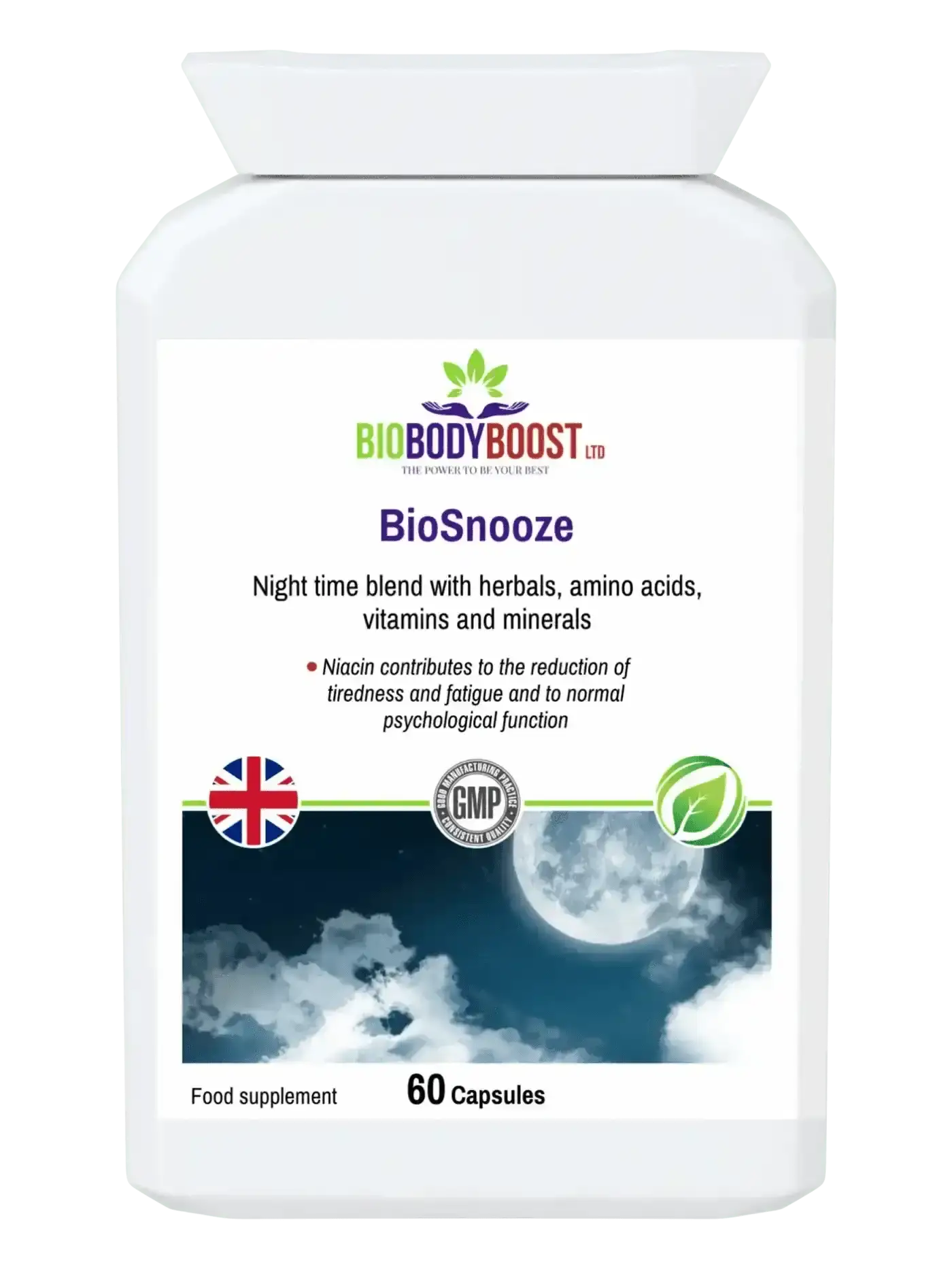
- Niacin and pantothenic acid — niacin contributes to the reduction of tiredness and fatigue and to normal psychological function; pantothenic acid contributes to normal mental performance. Both are in BioSnooze at 75% and 833% NRV respectively.
- Botanicals — ashwagandha, Montmorency tart cherry, passion flower, chamomile, lemon balm and lavender are all included in BioSnooze with their doses declared. Botanicals carry no authorised health claims under UK and EU law, so we name them and give the dose rather than telling you what they do.
- Darkness and circadian alignment — dimming screens after Isha and keeping a consistent sleep schedule costs nothing and requires no supplement at all.
What to Look For If You Are Choosing a Night-Time Supplement
Check the capsule shell first — HPMC rather than gelatine. Check that botanical doses are declared rather than hidden in a proprietary blend. And be wary of any UK product claiming to contain melatonin, since it cannot legally be sold here as a food supplement.
BioSnooze by BioBodyBoost is a night time blend of six herbals, two amino acids and five vitamins and minerals — including 350mg Montmorency tart cherry and 250mg KSM-66® ashwagandha per capsule — with every dose declared on the label. Vegan, HPMC capsule, no melatonin. Magnesium 3 Complex is the standalone magnesium option. Browse the full range.