Key takeaways
- Cod is a fish, and fish is halal in all the main schools of thought. The oil itself is not the problem.
- The problem is usually the capsule: most softgels are gelatine, often from pork or non-halal beef unless the pack says otherwise.
- Liquid cod liver oil, gelatine-free capsules, or a halal approved product avoid that issue.
- Cod liver oil contains vitamin A. The NHS says do not take it when pregnant, and do not exceed 1.5mg of vitamin A a day.
In this guide
Yes, cod liver oil is halal in itself, because it comes from a fish. Whether a particular product is halal depends on the capsule shell and any added ingredients, so check for gelatine or choose a halal approved product.
Cod liver oil is one of the UK's best-selling supplements, and a winter habit in many families. The big retailers sell plenty of it. Few explain the halal side, or the vitamin A catch.
Is the oil itself halal?
Yes. The Qur'an (5:96) makes game from the sea, and food from it, lawful.
Scholars differ on some sea creatures. The Hanafi school, for example, accepts only fish. But cod is a true fish with scales, so it is halal across the Sunni schools and in Shia rulings on fish with scales.
That means the cod liver oil itself raises no halal question. What surrounds it might.
The capsule is the real question
Most cod liver oil capsules are softgels. Softgels are made from gelatine, plus glycerol to keep them soft.
- Gelatine is commonly made from pork or from beef not slaughtered the halal way. Unless the pack names a halal or fish source, assume it is not halal.
- Glycerol (E422) can come from animal fat or plants.
- Flavoured liquids (orange, lemon) may contain flavourings with an alcohol carrier.
There are three easy ways round it:
- Liquid cod liver oil with no capsule, and ideally unflavoured.
- Gelatine-free or fish-gelatine capsules, clearly stated on the label.
- A product with halal approval or certification, which covers the shell and every ingredient.
Our guide to gelatine capsules explains the shell types in more detail.
Cod liver oil vs fish oil
They sound alike, but they are not the same product.
| Cod liver oil | Fish oil | |
|---|---|---|
| Comes from | The liver of cod | The body of oily fish |
| Omega-3 (EPA, DHA) | Yes | Yes |
| Vitamin A | Yes, naturally | Not usually |
| Vitamin D | Yes, naturally | Not usually |
| In pregnancy | NHS: do not take | Ask your midwife or GP |
So if you mainly want omega-3, a fish oil avoids the vitamin A load. If you mainly want vitamin D in winter, a vitamin D supplement does that job on its own.
To compare omega-3 sources for halal status, see halal omega-3: fish, krill and algae compared. To read the EPA and DHA numbers properly, see how to read an omega-3 label.
The vitamin A warning
This is the part most cod liver oil marketing skips.
Pregnant? The NHS says: "Do not take cod liver oil or supplements containing vitamin A (sometimes called retinol) when you're pregnant." (NHS: vitamins in pregnancy)
Everyone else: the NHS advises that your daily vitamin A intake from food and supplements should not exceed 1.5mg. This matters most for women after the menopause and older men, who are at higher risk of osteoporosis (NHS: vitamin A). Do not double up with a multivitamin that also contains vitamin A, and speak to your GP or pharmacist if you take blood-thinning medication.
The NHS also advises not eating liver or liver products, such as pâté, more than once a week, because liver is so rich in vitamin A.

Children and family use
Many parents grew up with a spoonful of cod liver oil in winter. Today the NHS advice for young children is more specific.
Children aged 1 to 4 should have a daily supplement with 10 micrograms of vitamin D. The NHS recommends vitamin drops with vitamins A, C and D for children from six months to five years (NHS: vitamins for children).
If your child already takes those drops, adding cod liver oil doubles up on vitamin A. Check with your health visitor, GP or pharmacist first.
For adults, the NHS says everyone should consider 10 micrograms of vitamin D a day in autumn and winter. It adds that people with dark skin, including those with a south Asian background, and people who cover most of their skin outdoors may not make enough from sunlight (NHS: vitamin D). Our guide to vitamin D and the hijab covers this, and is vitamin D3 halal? explains the source question.
Food comes first. The NHS recommends at least two portions of fish a week, including one oily fish such as salmon, sardines or mackerel (NHS: fish and shellfish).
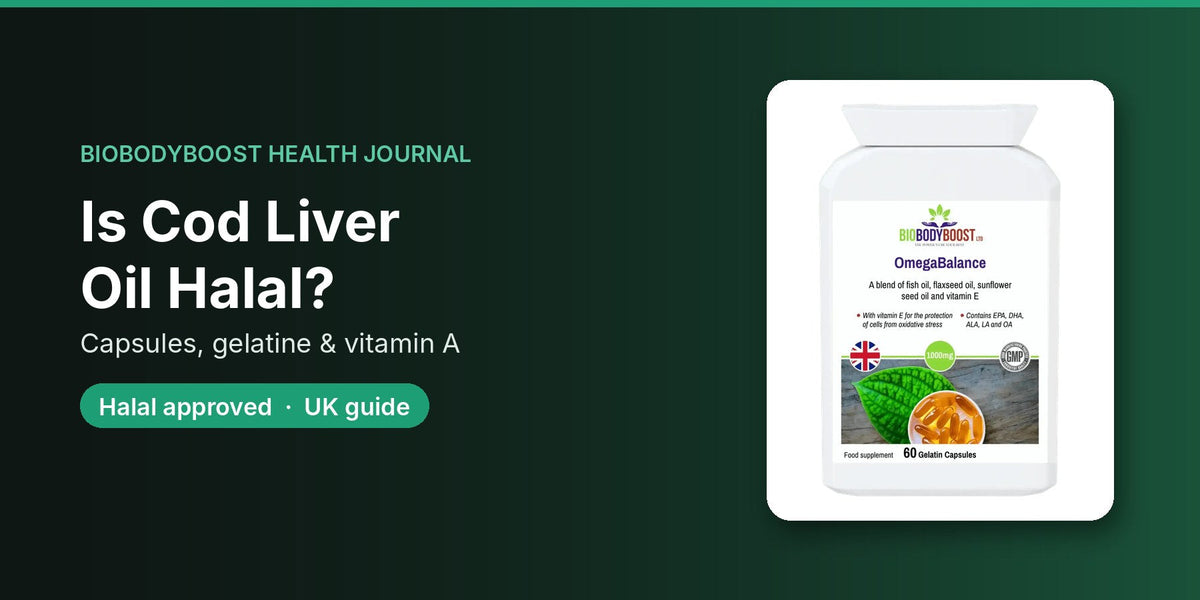
A halal approved fish oil, without the vitamin A

Halal approved · Contains fish
OmegaBalance Omega 3 6 9
- Fish oil, organic flaxseed oil and sunflower oil, 1000mg per capsule
- Three capsules a day give 285mg EPA and DHA; EPA and DHA contribute to the normal function of the heart (with 250mg a day)
- Fish body oil, not liver oil, so no added vitamin A load; gelatin capsule, halal approved
HALAL10 10% off your first order
Shop OmegaBalance →It is not vegetarian or vegan. Not sure you need omega-6 and 9 as well? Read omega 3-6-9 vs omega-3.
Common questions
Is cod liver oil halal?
The oil is halal because cod is a fish. Check the capsule: standard gelatine softgels are often not halal. Choose liquid, gelatine-free or halal approved.
Is Seven Seas cod liver oil halal?
It depends on the product, as formats and capsules differ. Check the specific pack for gelatine and its source, or contact the brand.
Is fish gelatine halal?
Fish gelatine is generally considered halal, since it comes from fish. The label should say "fish gelatine" clearly.
Can I take cod liver oil while pregnant?
No. The NHS says not to take cod liver oil or supplements containing vitamin A (retinol) when pregnant.
Is cod liver oil better than fish oil?
Not better, different. Cod liver oil adds vitamins A and D. Fish oil gives omega-3 without the vitamin A, which suits more people.
Can children take cod liver oil?
Check with your health visitor or pharmacist first, especially if they already take vitamin drops containing vitamin A.
Sources: NHS: vitamins in pregnancy · NHS: vitamin A · NHS: vitamin D · NHS: vitamins for children · NHS: fish and shellfish · Regulation (EU) 432/2012, authorised health claims
General information, not medical or religious advice. For a religious ruling, ask a scholar you trust. Food supplements should not replace a varied diet and healthy lifestyle. Do not exceed the recommended daily intake. Not suitable for under-18s, or during pregnancy, unless advised by a health professional. Contains fish. Speak to your GP or pharmacist before use if you take blood-thinning medication, have epilepsy, or have a medical condition.