Quick answer: most mainstream pre-workout supplements require careful halal scrutiny — alcohol-based flavouring carriers, gelatine capsules, non-certified creatine sourcing and beta-alanine fermentation sources are all common issues. The most effective approach for Muslim athletes is a transparent stack of individually certified halal ingredients: caffeine (200mg, 30 minutes pre-workout), creatine monohydrate (3–5g daily), beetroot nitrates (2–3 hours before training) and electrolytes for sessions over 60 minutes.
The halal compliance problems in mainstream pre-workouts
1. Alcohol as a flavouring carrier
Many artificial and natural flavourings use ethanol as a carrier solvent. In UK/EU food law, ethanol used as a processing aid in flavourings does not require declaration on the ingredients list as alcohol — it is typically present in trace quantities in the finished product. The majority UK scholarly position (supported by major bodies including the Muslim Council of Britain) is that trace incidental alcohol from non-grape/date fermentation sources in processed food is permissible as it is not present in intoxicating quantity. However, some scholars and consumers prefer to avoid any alcohol-derived ingredient. For absolute certainty, contact the manufacturer to confirm flavouring carrier source or choose unflavoured products with halal certification.
2. Creatine sourcing
Standard synthetic creatine monohydrate is produced from sarcosine and cyanamide — both petrochemical/synthetic sources, not animal-derived. Synthetic creatine is inherently vegan and halal by ingredient. Some older or cheaper production methods used animal-derived sarcosine. Halal-certified creatine products confirm synthetic production. Always look for a halal certificate rather than assuming from the ingredient alone.
3. Gelatine capsules
Some pre-workout products are in capsule form using standard gelatine — almost always porcine unless explicitly certified halal bovine or plant-derived HPMC. Powder-format pre-workouts in sachets or tubs avoid this issue entirely.
4. Beta-alanine fermentation source
Beta-alanine is produced by microbial fermentation. The fermentation growth medium and organisms used determine halal status — porcine-derived growth media would render the ingredient non-halal. Third-party halal certification of beta-alanine specifically confirms the fermentation process meets halal standards.
5. Proprietary blends hiding individual doses
Beyond halal concerns, proprietary blends are a quality issue for all buyers: when individual ingredient amounts are not disclosed, the formula almost always contains underdosed ingredients. A blend listing "citrulline, beta-alanine, taurine, arginine (3,000mg total blend)" is insufficient — effective citrulline malate alone requires 6–8g.
What actually works: the evidence-based ingredients
| Ingredient | Effective dose | Effect | Evidence |
|---|---|---|---|
| Caffeine | 3–6mg/kg body weight | Alertness, power output, endurance, reduced RPE | Very strong — hundreds of RCTs |
| Citrulline malate | 6–8g | Vasodilation, reduced fatigue, increased rep volume | Strong |
| Beta-alanine | 3.2–6.4g/day (not just pre-workout) | Reduces muscle acidosis in high-rep or endurance work; causes harmless tingling (paraesthesia) | Strong for reps 60–240 seconds |
| Creatine monohydrate | 3–5g/day (timing irrelevant) | Phosphocreatine replenishment, power and strength, recovery | Very strong — strongest natural performance supplement |
| Beetroot/nitrates | 300–600mg dietary nitrate (2–3 hrs before) | Nitric oxide, improved O2 efficiency, pump, endurance | Strong |
| L-theanine + caffeine | 100–200mg L-theanine | Smooth focus, reduces caffeine jitteriness and anxiety | Strong |
What research shows on creatine: a 2017 meta-analysis in the Journal of the International Society of Sports Nutrition (300+ studies reviewed) confirmed creatine monohydrate significantly improves strength, power output and high-intensity exercise capacity. A 2004 study confirmed creatine reduces post-exercise muscle damage markers (creatine kinase, LDH). The JISSN position stand confirms creatine monohydrate as the most effective ergogenic nutritional supplement available.
What research shows on citrulline: a 2016 RCT in the European Journal of Nutrition (n=41) found 5.6g citrulline malate significantly improved peripheral blood flow and reduced muscle soreness after resistance training vs placebo at 4 weeks.
What pre-workout ingredients are not worth the cost
- BCAAs in pre-workout: redundant if you eat adequate total protein. Useful only for training in a fully fasted state.
- Taurine at typical doses (500mg): studies use 1–6g for meaningful effects. Standard pre-workout inclusion is decorative.
- Vitamin B12 in pre-workout: no acute performance effect. Useful for vegans as daily supplementation, not pre-workout timing.
- Arginine at standard doses: oral arginine is substantially broken down in the gut and liver before reaching circulation (first-pass metabolism). Citrulline raises plasma arginine far more effectively than arginine itself.
The practical halal pre-workout stack
Building from individually halal-certified components is more transparent and often more effective than relying on a pre-formulated blend:
- Coffee or halal-certified caffeine (200mg, 30 min pre-workout) — black coffee is inherently halal; no certification needed
- Creatine monohydrate (3–5g daily, any time) — timing relative to training is largely irrelevant; daily consistency is what matters
- Red Punch beetroot + cherry (2–3 hours before training) — nitrate delivery for vasodilation and oxygen efficiency
- Electrolytes during training (for sessions over 60 minutes) — particularly in heat or high-sweat conditions
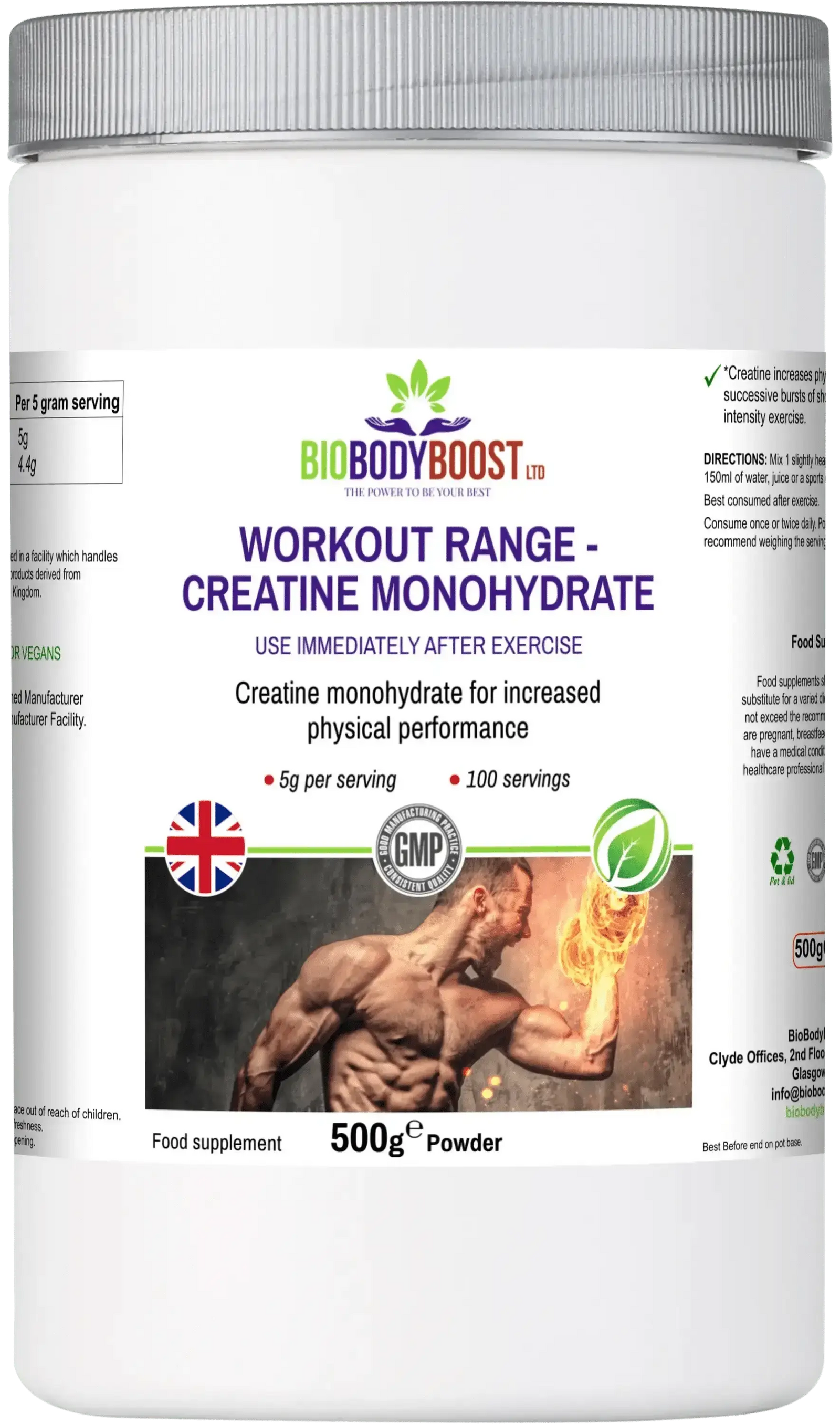
Our Creatine Monohydrate — 100% pure, halal certified, no fillers. Our Red Punch — concentrated beetroot + Montmorency cherry, B6, halal approved. Our Electro-Hidr8 electrolyte mix. Browse the full Sports Nutrition UK collection.
Is creatine halal?
Standard synthetic creatine monohydrate — the form used in virtually all commercial sports supplements — is produced from sarcosine and cyanamide, both synthetic petrochemical sources with no animal involvement. Synthetic creatine is inherently vegan and halal by ingredient. The halal certification confirms the production process, manufacturing environment and that no haram substances were introduced at any stage. Our creatine monohydrate is halal certified. Full detail: is creatine halal guide.
What pre-workout ingredients are haram?
No ingredient is automatically haram in theory — the halal status depends on sourcing and production method. The main risk categories: gelatine capsules (standard gelatine is typically porcine — choose HPMC or powder format); alcohol-based flavouring carriers (a grey area — majority UK scholarly opinion permits trace incidental alcohol, but some avoid entirely); beta-alanine and other fermented amino acids (fermentation growth media must be halal-certified); and taurine (often synthetic, but fermentation-derived versions require source confirmation). The safest approach is third-party halal certification of the finished product or individual certified ingredients assembled into your own stack.
Does pre-workout break my fast during Ramadan?
Any supplement containing calories (protein, carbohydrate, fat, BCAAs) breaks the fast. Pure caffeine at zero calories does not break the fast in the majority scholarly opinion. Creatine monohydrate at zero calories is generally considered not to break the fast — though some scholars take a stricter view on any ingested substance. Electrolytes dissolved in water: zero-calorie electrolytes (sodium, potassium, magnesium) are generally considered permissible during fasting by most scholars for maintaining mineral balance, though this varies by scholarly opinion. Consult your imam for a fatwa specific to your school of thought. Full guidance: supplements for athletes during Ramadan.
Is beta-alanine tingling normal and safe?
Yes — the tingling (scientific term: paraesthesia) is a well-documented, harmless side effect of beta-alanine supplementation caused by binding to sensory nerve receptors in the skin. It typically affects the face, neck, hands and upper body and lasts 15–60 minutes after dosing. It is not an allergic reaction or sign of harm. The tingling reduces or disappears with sustained daily use as the body adapts. Splitting the daily dose (e.g. 1.6g twice daily rather than 3.2g at once) significantly reduces paraesthesia intensity. Slow-release beta-alanine formulations also minimise the effect.