Quick answer: most mainstream UK pre-workout supplements are not halal — the compliance issues are caffeine source (some pre-workouts use caffeine from animal or uncertified sources), artificial colourings (E120 carmine from insects is common in red/pink products), gelatine capsules where applicable, flavouring systems with alcohol carriers and manufacturing facilities without halal audit. The performance ingredients themselves (caffeine from green tea, creatine, beta-alanine, citrulline, BCAAs) are all inherently halal by source. The stack approach — combining individual certified products — is more reliable than trying to find a ready-made halal pre-workout blend.
What pre-workout ingredients actually work
Caffeine — the primary ergogenic
Astorino and Roberson (2010, Journal of Strength and Conditioning Research, meta-analysis of 29 studies) confirmed caffeine significantly improves performance across aerobic endurance, strength and power output with an average improvement of 12%. EU-authorised claim: “caffeine contributes to an increase in endurance performance and capacity.” Effective dose: 3–6mg per kg body weight, 30–60 minutes pre-exercise. Green tea extract (standardised for caffeine) is inherently halal. Pure anhydrous caffeine is synthetically produced and halal.
Creatine — phosphocreatine buffer
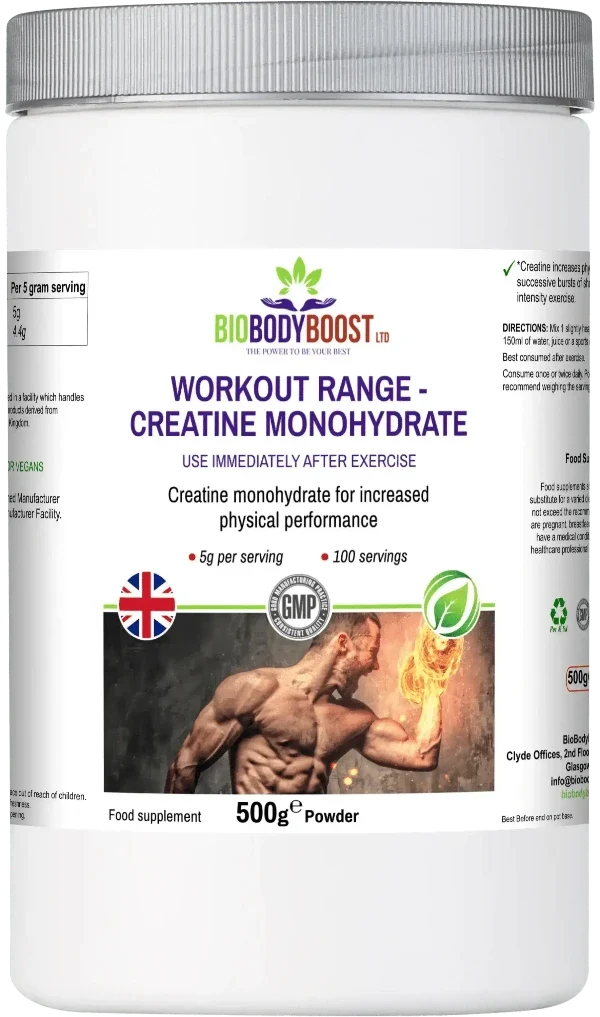
Synthetically produced, inherently halal. 3–5g daily increases phosphocreatine stores for high-intensity effort. EU-authorised claim for “physical performance in successive bursts of short-term high-intensity exercise.” Can be taken pre or post-workout — timing is less important than consistency. Creatine Monohydrate — halal certified, vegan.
BCAAs — intra-workout muscle support
Branched-chain amino acids (leucine, isoleucine, valine at 2:1:1 ratio) taken before or during training reduce exercise-induced muscle protein breakdown. Howatson et al. (2012, Journal of the International Society of Sports Nutrition) found BCAA supplementation significantly reduced muscle damage markers and muscle soreness after eccentric exercise. BCAAs are produced by fermentation (check growth media for halal certification). BioBodyBoost BCAA — 5.6g 2:1:1 BCAA + citrulline, halal certified, vegan.
Citrulline — nitric oxide and pump
L-citrulline increases arginine availability and nitric oxide production, improving blood flow to muscle. Pérez-Guisado and Jakeman (2010, Journal of Strength and Conditioning Research) found citrulline malate significantly improved repetition count and reduced muscle soreness vs placebo. Included in BioBodyBoost BCAA formula (citrulline malate component).
Beta-alanine — endurance buffer
Beta-alanine increases muscle carnosine levels, buffering hydrogen ions during high-intensity exercise and extending time to fatigue. EU-authorised claim for “normal muscle function.” Causes a temporary skin tingling (paraesthesia) at doses above 800mg — normal and harmless. Synthetically produced, halal. Not currently in the BBB range specifically but an inherently compliant ingredient.
What to check in any UK pre-workout
| Ingredient concern | Halal risk | What to look for |
|---|---|---|
| E120 / Carmine colouring | Haram (insect-derived) | Common in red/pink products — check E-codes |
| Flavouring system | Alcohol carrier possible | Halal certification confirms permissible carrier |
| Creatine source | Inherently halal (synthetic) | No concern |
| BCAA source | Fermentation — check growth media | Halal certification confirms fermentation compliance |
| Caffeine source | Green tea or synthetic — halal | No concern in most cases |
The halal pre-workout stack (build your own)
30 minutes before training: Creatine 3–5g + BCAA Drink Mix 10g in water. Add a cup of green tea or black coffee for the caffeine component (inherently halal, no compliance concern). This stack covers phosphocreatine buffer (creatine), muscle protein protection (BCAAs), nitric oxide and citrulline, and caffeine ergogenics — matching any commercial pre-workout formula in evidence-based ingredients with full halal certification. Browse Sports Nutrition UK for the full certified range.
Is pre-workout halal?
Most mainstream UK pre-workout supplements (including MyProtein, Optimum Nutrition, PhD, Applied Nutrition pre-workouts) are not halal certified. Common compliance failures: E120 carmine colouring (haram), alcohol-based flavouring carriers, and manufacturing facilities without halal audit. The performance ingredients themselves (creatine, BCAAs, citrulline, caffeine) are all halal by source. The most reliable halal pre-workout approach is building a stack from individually halal-certified products: BioBodyBoost Creatine Monohydrate + BCAA Drink Mix + natural caffeine from green tea. Both BBB products carry full third-party halal certification.
Can I take pre-workout during Ramadan?
Caffeinated pre-workout supplements break the fast and should not be taken during fasting hours. If training during the fasting window, creatine (which has no caloric effect on the fast under most scholarly positions) could be taken before the fasting window begins. Most Ramadan training is best scheduled at Iftar or post-Taraweeh, when normal pre-workout use is appropriate. Creatine taken at Suhoor maintains muscle phosphocreatine stores through the day. BCAA taken at Suhoor reduces muscle protein breakdown during the fasting period, which is particularly relevant for athletes training at high volumes during Ramadan.