
Electrolytes are minerals that carry an electrical charge when dissolved in body fluid. The five primary electrolytes are sodium, potassium, chloride, magnesium and calcium — each maintaining distinct functions in nerve signalling, muscle contraction, fluid balance and pH regulation. You lose electrolytes through sweat, urine and respiration. For most sedentary people drinking adequate water, food provides enough electrolytes to replace losses. For athletes, in hot conditions, during illness or on certain diets, supplementation becomes genuinely necessary.
What Do Each of the Main Electrolytes Do?
- Sodium — the primary extracellular electrolyte. Regulates fluid volume outside cells, blood pressure and nerve impulse transmission. The most critical electrolyte for hydration — water follows sodium across cell membranes.
- Potassium — the primary intracellular electrolyte. Regulates membrane potential in every cell, enabling muscle contraction and nerve firing. Critically important for cardiac rhythm regulation.
- Chloride — pairs with sodium in fluid balance. Also required for gastric acid production (hydrochloric acid) and CO2 transport in red blood cells.
- Magnesium — required for over 300 enzymatic reactions including ATP production, muscle relaxation and nerve signalling. Depleted significantly through sweat during intense exercise.
- Calcium — regulates muscle contraction, nerve signalling and blood clotting. Tightly regulated in blood; bone acts as a calcium reservoir.
When Do You Actually Need Electrolyte Supplements?
For sedentary healthy adults, a balanced diet provides adequate electrolytes. Supplementation is genuinely needed in these situations:
| Situation | Why electrolytes are needed | Primary electrolytes lost |
|---|---|---|
| Exercise over 60 minutes | Sweat losses significantly exceed plain water replacement capacity | Sodium, potassium, magnesium, chloride |
| Exercise in heat | Sweat rate can reach 1–2L/hour; sodium losses of 0.5–2g/hour | Sodium (primary), potassium, chloride |
| Vomiting and diarrhoea | Rapid GI losses of all electrolytes, particularly sodium and potassium | Sodium, potassium, chloride |
| High-intensity daily training | Cumulative daily sweat losses compound even without single-session intensity | Sodium, magnesium, potassium |
| Low-carbohydrate or ketogenic diet | Reduced insulin lowers renal sodium retention; significantly increased sodium and potassium excretion | Sodium (primary), potassium, magnesium |
| Fasting (Ramadan or intermittent) | Extended food restriction reduces electrolyte intake; increased urine losses during fasting | Sodium, potassium, magnesium |
When Electrolyte Supplements Are NOT Needed
- Sedentary office work in normal UK temperatures — ordinary food provides adequate electrolytes
- Exercise under 60 minutes at low-moderate intensity — plain water is sufficient for most people
- As a general health supplement without the above triggers — electrolyte supplements at rest in normal conditions are not necessary
Why Water Alone Is Not Enough for Long or Intense Exercise
Drinking large amounts of plain water during intense or prolonged exercise without electrolyte replacement causes a condition called exercise-associated hyponatraemia — dilution of blood sodium. Symptoms range from nausea and headache to seizures and, in severe cases, cerebral oedema. This is more common in endurance events where people drink excessive water. Adding sodium to hydration fluid prevents this by maintaining the osmotic gradient that allows cells to retain appropriate water content.
What Should You Look for in an Electrolyte Supplement?
- Sodium — the most important for hydration. Look for 300–500mg sodium per serving for exercise use
- Potassium — 100–300mg per serving complements sodium
- Magnesium — 30–50mg supports muscle function (chelated forms preferred for absorption)
- No artificial colours or excessive sugars — clean electrolytes without unnecessary additives
- Halal certification — check for animal-derived carriers in flavourings
The Keto/Low-Carb Electrolyte Requirement
This is the most commonly overlooked electrolyte situation. When carbohydrate intake drops below approximately 50g per day, insulin levels fall sharply. Low insulin significantly reduces renal sodium reabsorption — kidneys excrete substantially more sodium and, by cascade, more potassium and water. The fatigue, headaches, muscle cramps and brain fog of “keto flu” are predominantly electrolyte deficiency symptoms — not a metabolic adaptation effect. Supplementing 2,000–4,000mg sodium, 1,000–3,500mg potassium and 300mg magnesium daily during low-carb eating resolves most keto flu symptoms within 24–48 hours.
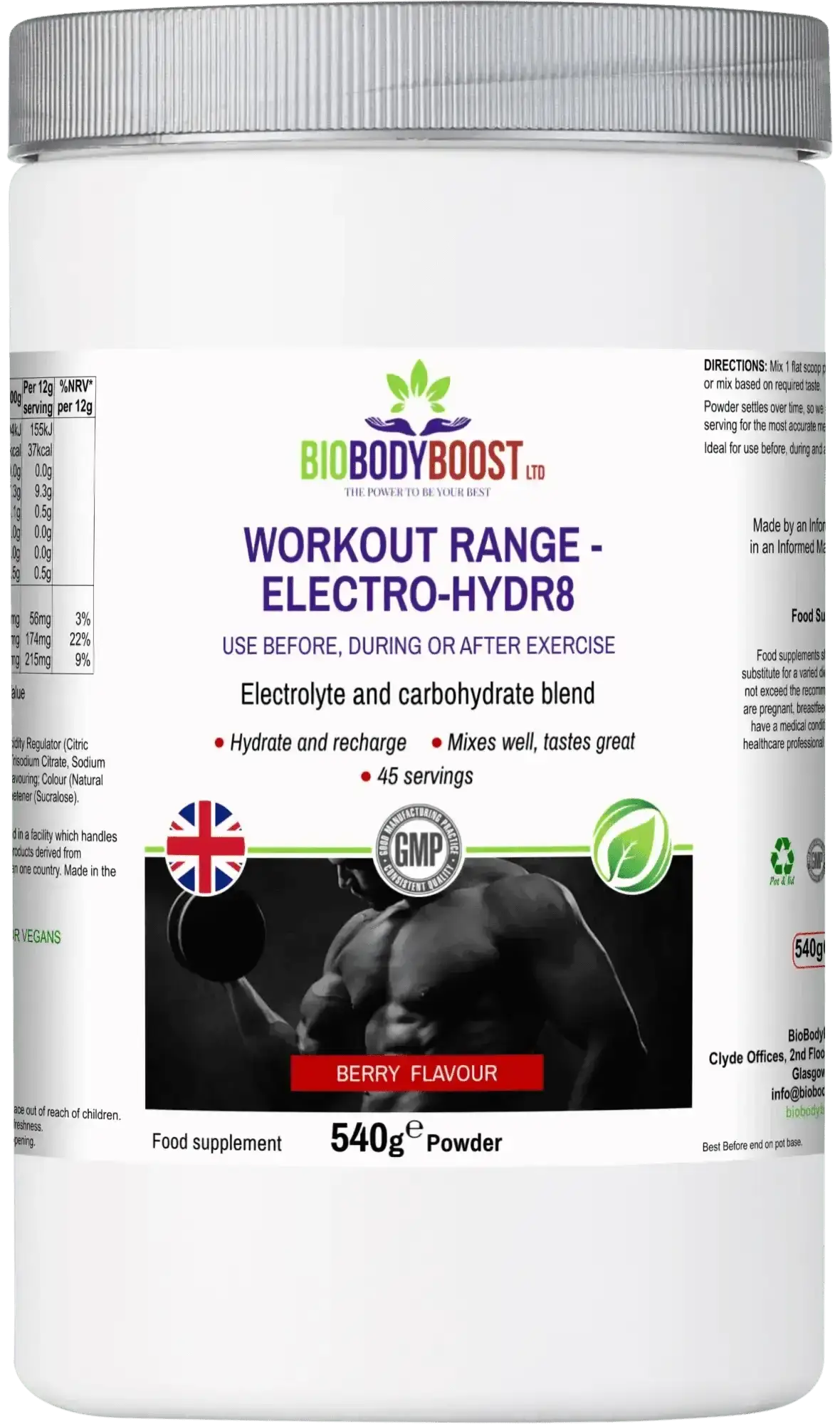
Electro-Hidr8 by BioBodyBoost provides sodium, potassium and chloride in a clean, halal certified electrolyte drink mix — no artificial colours, no unnecessary sugars. Designed for exercise, hot conditions and low-carb diets. Pair with Magnesium 3 Complex for comprehensive magnesium coverage alongside electrolytes. Browse the sports range.