Written by the BioBodyBoost Nutrition Team · Reviewed by a Registered Nutritionist (RNutr) · May 2026

Searches for “electrolyte powder UK” have grown nearly 2,000% year-on-year according to 2026 data, driven partly by social media and partly by a genuine shift in how active people think about hydration. Plain water is no longer seen as sufficient for intensive training, hot weather or high-stress lifestyles. But the market now ranges from genuinely functional sports nutrition products to expensive flavoured water. Here is how to tell the difference.
What electrolytes actually are
Electrolytes are minerals that carry an electrical charge when dissolved in water. The key ones for human physiology are sodium, potassium, chloride, magnesium, calcium and phosphate. They regulate fluid balance between cells and bloodstream, enable nerve impulse transmission, drive muscle contraction (including the heart), and maintain blood pH. The NHS confirms that electrolyte imbalances can cause symptoms ranging from muscle cramps and fatigue to more serious cardiac effects in severe cases.
When does plain water fall short?
Water alone is sufficient for sedentary adults under normal conditions. But several circumstances increase electrolyte requirements meaningfully:
- Exercise over 60 minutes: sweat contains sodium (0.9g/L on average) and chloride, plus smaller amounts of potassium and magnesium. Beyond 60 minutes of moderate-to-intense exercise, electrolyte losses become physiologically significant
- Hot weather or high heat exposure: increased sweating rate amplifies losses even at rest
- Low-carbohydrate or ketogenic diets: insulin suppression reduces sodium reabsorption in the kidneys, causing accelerated sodium and potassium excretion. This is why “keto flu” symptoms are largely an electrolyte deficiency
- High caffeine consumption: caffeine is a mild diuretic and increases urinary sodium and magnesium excretion
- Post-illness rehydration: vomiting and diarrhoea cause rapid electrolyte depletion alongside fluid loss
The sodium question
The most important electrolyte in hydration science — and the most misunderstood in the UK context — is sodium. UK public health messaging has rightly emphasised reducing dietary sodium for blood pressure management in sedentary people. But the fitness world is a different context: research in the British Journal of Sports Medicine found sodium supplementation during prolonged exercise significantly improved fluid retention and performance compared to water alone. Without sodium, the kidneys excrete much of the water you drink before cells can absorb it. Sodium is the critical signal that tells the body to hold onto the fluid.
What the EU-authorised health claims actually cover
The EU authorises health claims for specific electrolytes at specific thresholds. Products meeting these thresholds can legally state: sodium and chloride “contribute to normal muscle function”; potassium “contributes to normal muscle function and maintenance of normal blood pressure”; magnesium “contributes to electrolyte balance”. These claims require the nutrients to be present at 15% NRV per serving — providing a minimum quality benchmark.
Who does NOT need an electrolyte supplement
- Sedentary adults eating a balanced diet with adequate fruit and vegetables in normal UK weather
- People doing light exercise under 45 minutes in cool conditions
- People whose diet already provides adequate sodium, potassium and magnesium
For this group, an electrolyte supplement adds cost without meaningful benefit. Hydration from water and food is sufficient.
What makes a good electrolyte formula
| Factor | What to look for | Red flag |
|---|---|---|
| Sodium content | 200–500mg per serving for sport | Under 50mg = glorified flavoured water |
| Potassium | 150–300mg per serving | Missing entirely |
| Sweetener | Natural or minimal artificial sweetener | High sugar defeats hydration benefits |
| Certification | Halal certified, vegan-friendly | Undeclared colouring agents |
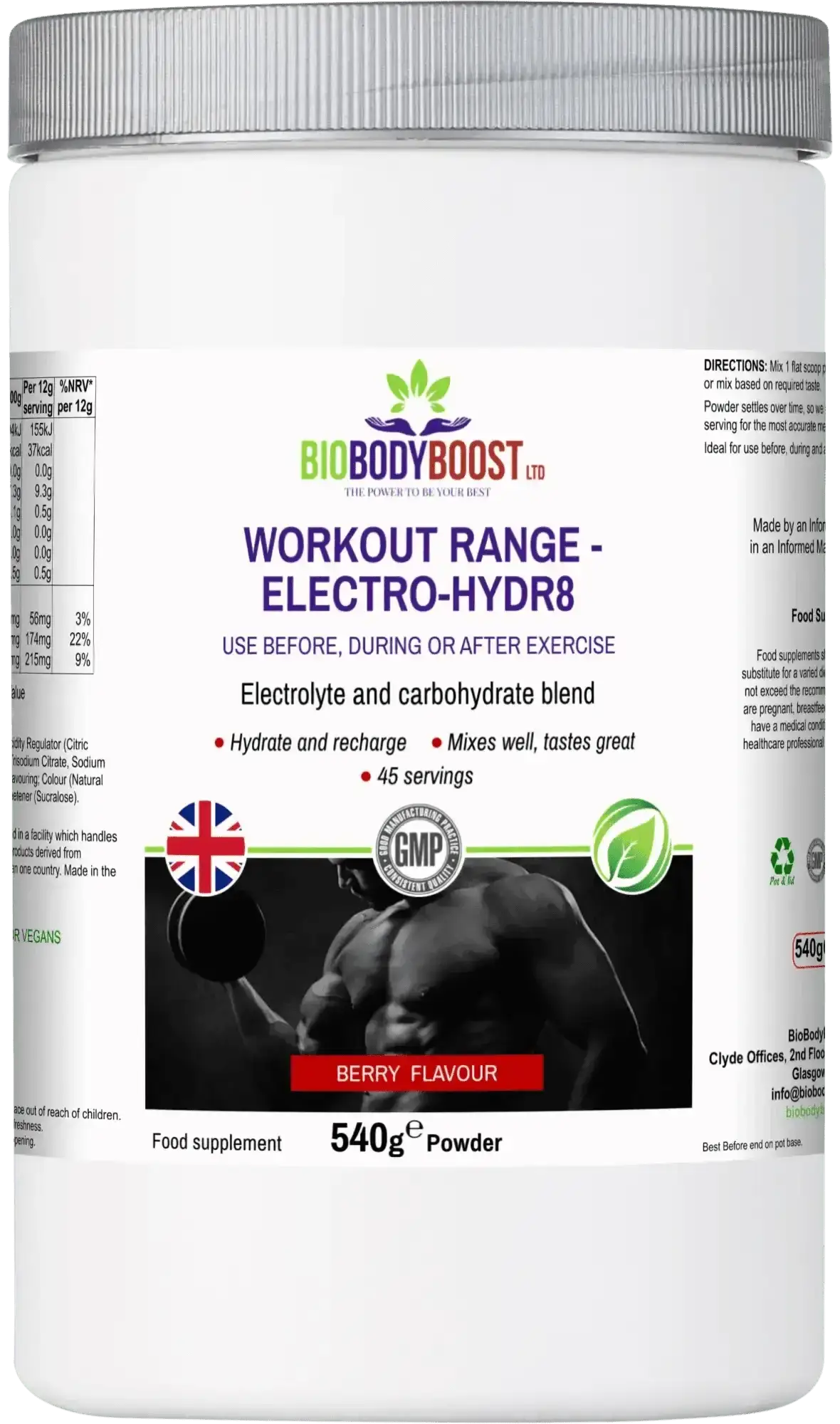
The BioBodyBoost Electro-Hidr8 provides sodium, potassium and chloride at exercise-relevant doses in a light berry flavour with no artificial sweeteners. 540g provides 45 servings. Halal certified, vegan-friendly, UK made. Pair with Creatine Monohydrate for a complete training stack. Explore the full Sports Nutrition UK collection.
Food supplements should not replace a varied diet. Electrolyte supplementation is not recommended as a replacement for medical rehydration therapy. Consult your GP if experiencing severe symptoms of dehydration or electrolyte imbalance.