Semaglutide (Ozempic for diabetes, Wegovy for obesity) and related GLP-1 drugs have become one of the most significant pharmaceutical developments in a generation — producing 15–20% body weight loss in clinical trials. NHS prescriptions for GLP-1 drugs in the UK are expanding rapidly. As millions of UK adults lose substantial weight quickly, a new conversation is emerging: how to support skin elasticity and muscle preservation during this process. Collagen supplementation has specific, evidence-based relevance here.
Why Rapid Weight Loss Affects Skin Differently From Gradual Loss
The skin has a remarkable ability to contract as weight is lost gradually. This elasticity depends on two proteins:
- Collagen — the structural scaffold of the dermis, providing tensile strength. Type I collagen makes up 70–80% of dermal dry weight.
- Elastin — the protein that allows skin to snap back after stretching, like a rubber band.
When weight loss occurs slowly (0.5–1kg per week), the skin has time to gradually remodel — collagen and elastin production catches up with the reducing volume beneath. When weight loss is rapid (2–5kg per week, as can occur with GLP-1 drugs), the skin cannot remodel quickly enough. The result is excess, lax skin — most visibly in the face (the “Ozempic face” phenomenon described in dermatology journals), neck, abdomen, upper arms and thighs.
The Three Mechanisms Behind GLP-1-Related Skin Changes
- Volume loss faster than skin remodelling rate — the most significant factor. The dermis cannot produce new collagen and elastin fast enough to match the pace of fat volume reduction beneath it.
- Muscle loss alongside fat loss — GLP-1 drugs suppress appetite broadly; without adequate protein intake and resistance training, significant muscle mass is lost alongside fat. Muscle volume beneath the skin provides structural support — loss of muscle accelerates visible skin laxity.
- Nutrient restriction effects on collagen synthesis — GLP-1 drugs severely reduce appetite. Unless protein and vitamin C intake are actively maintained (vitamin C is the mandatory cofactor for collagen synthesis), caloric restriction during rapid weight loss can impair the body’s own collagen production.
What Does the Evidence Show for Collagen During Weight Loss?
Collagen peptides for skin elasticity — strong clinical evidence
Multiple RCTs confirm hydrolysed collagen peptide supplementation improves skin elasticity, reduces wrinkle depth and improves skin hydration. A landmark 2014 study in Skin Pharmacology and Physiology found bioactive collagen peptides (2.5–5g daily for 8 weeks) significantly increased dermal collagen density and skin elasticity versus placebo. The mechanism: hydrolysed collagen peptides (particularly containing Pro-Hyp dipeptides) are absorbed intact from the gut and directly stimulate fibroblast activity in the dermis — triggering the skin’s own collagen synthesis. This is not just replacing dietary collagen — it is actively signalling the skin to produce more of its own.
Collagen with creatine for muscle preservation
Muscle preservation during GLP-1-induced weight loss is as important as skin support. Creatine monohydrate has the strongest evidence of any supplement for maintaining muscle mass during caloric restriction — it maintains phosphocreatine stores that drive resistance training performance, and resistance training is the most effective intervention for preventing muscle loss during rapid weight loss. The combination of adequate protein (1.6g/kg minimum), creatine (5g daily) and collagen peptides addresses both aspects of GLP-1 body composition concerns.
Vitamin C — the collagen synthesis cofactor
Vitamin C is absolutely required for collagen synthesis — it is the cofactor for prolyl hydroxylase and lysyl hydroxylase, the enzymes that stabilise collagen’s triple-helix structure. During appetite-suppressed periods, vitamin C intake may fall. Ensuring adequate vitamin C alongside collagen supplementation is not optional — without it, supplemental collagen peptides cannot be incorporated into new collagen tissue efficiently.
The Practical GLP-1 Supplement Protocol for Skin and Muscle
For UK adults on semaglutide, liraglutide or similar GLP-1 drugs:
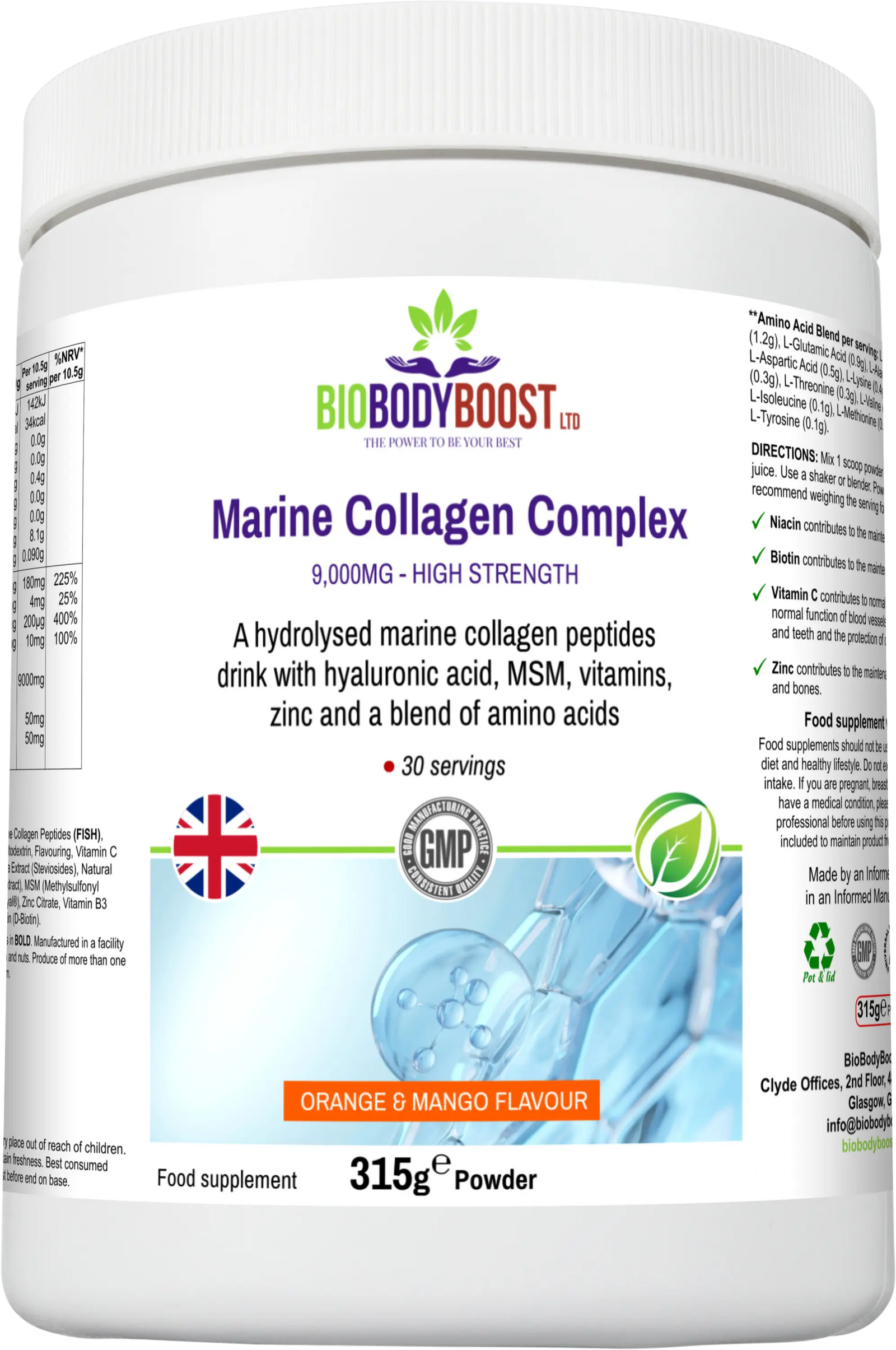
- Marine collagen peptides — 5–10g daily. Taken with vitamin C in warm water morning or evening. Type I marine collagen is most relevant for skin (same collagen type as human dermis).
- Vitamin C — 200–500mg with collagen dose.
- Creatine monohydrate — 5g daily alongside resistance training to preserve muscle mass.
- Protein — maintain minimum 1.6g/kg body weight daily despite reduced appetite. Prioritise protein within reduced calorie intake.
- Resistance training — 2–3 sessions per week. No supplement replaces the muscle-preserving effect of loading muscles against resistance.
Is This Relevant Beyond GLP-1 Drugs?
Yes — the same principles apply to anyone losing weight rapidly through any method: very low calorie diets, bariatric surgery or aggressive caloric restriction. The skin elasticity and muscle preservation challenge is dose-dependent on the rate of weight loss, not specific to GLP-1 drugs.
Marine Collagen Nourish by BioBodyBoost — 9g Type I hydrolysed marine collagen with vitamin C, biotin and hyaluronic acid per serving. The exact combination required for skin elasticity support during weight loss. Halal certified, no bovine or porcine derivatives. Creatine Monohydrate for muscle preservation. Liposomal Vitamin C for collagen synthesis cofactor support. Browse the beauty range.