Key takeaways
- Heavy-meal bloating is usually portion size, fat, eating speed, lentils and onions, not one food.
- The biggest easy win: rice or roti, not both, and a short walk after eating.
- Saunf after meals is a harmless tradition many people find helpful.
- Many digestive enzymes use pancreatin from pig pancreas. Choose plant-derived.
In this guide
Sunday dinner at your parents'. A wedding. Eid. Or just a generous Tuesday-night daal.
For many South Asian families in the UK, second helpings are not optional, and an hour later comes the tight, full, uncomfortable stomach. Here is why it happens and what genuinely helps.
Why heavy South Asian meals cause bloating
| Factor | Why it matters |
|---|---|
| Portion size | Rice plus roti adds up fast. A very full stomach empties more slowly. |
| Ghee and oil | Fat slows stomach emptying, so rich curries sit heavier. |
| Lentils, chana, rajma | Fermentable carbohydrates that gut bacteria turn into gas. |
| Onion and garlic | The base of most curries, rich in fermentable fibres (fructans). |
| Eating fast and late | Swallowed air, then lying down soon after. |
| Fizzy drinks | A takeaway regular that adds gas directly. |
7 everyday habits that help
- Rice or roti, not both. One change, noticeable difference.
- Half the plate sabzi or salad. Same satisfaction, less heavy carbohydrate.
- Soak pulses and discard the water. A pinch of hing is a traditional addition.
- Eat slowly. Fullness signals take time to arrive.
- Walk 10 to 15 minutes after eating. Easy to do as a family.
- Swap fizzy drinks for water or lassi.
- Leave two to three hours before bed where you can.
The saunf tradition
A small spoonful of saunf (fennel seeds), often with misri, after a meal is a habit across South Asia. Many restaurants keep a bowl by the door.
Fennel, caraway, ginger and peppermint are traditional digestive herbs. They carry no authorised health claims, but the ritual helps many people stop eating and feel comfortable.

When bloating is not just a big meal
See your GP if bloating is persistent or happens most days, or comes with pain, unexplained weight loss, changes in bowel habit, blood in your stool, or difficulty swallowing.
The NHS lists causes and warning signs on its bloating page. Coeliac disease, lactose intolerance and IBS are common and worth ruling out properly. Our bloating by cause guide explains the main patterns.
Digestive enzymes: the halal check
Many people try a digestive enzyme with heavy meals. If you eat halal, check the source first.
A large share of enzyme products use pancreatin, derived from pig pancreas, often listed simply as "pancreatin" or "pancreatic enzymes". Halal and vegan alternatives are plant and microbial enzymes: bromelain (pineapple), papain (papaya) and fungal amylase, protease and lipase. More in halal digestive enzymes.

Plant-derived · Vegan · Halal approved
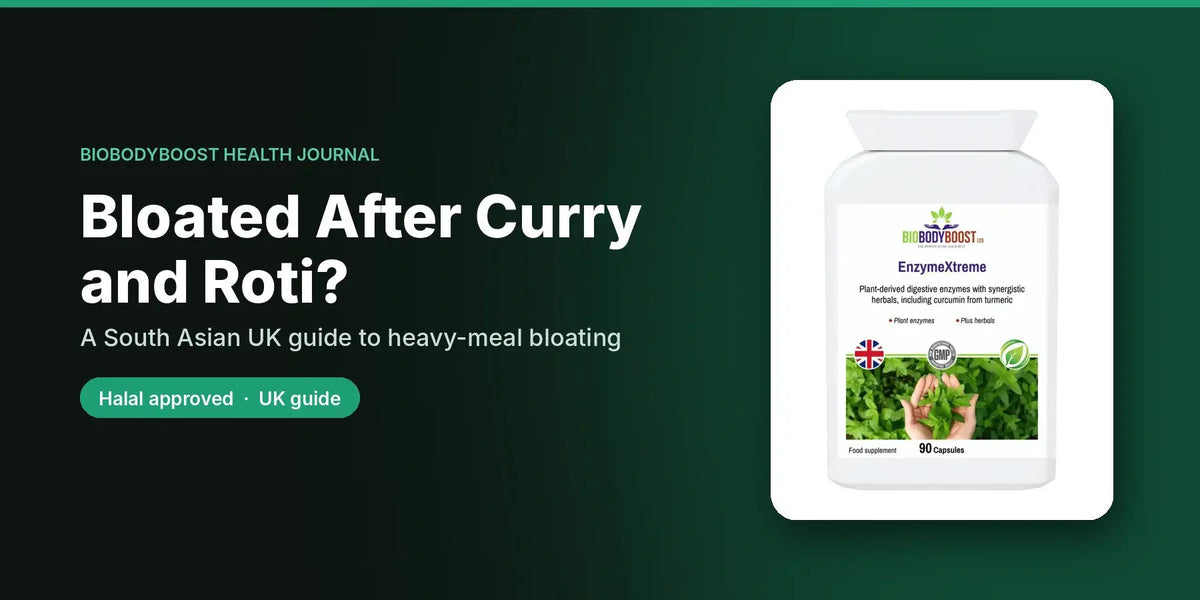
EnzymeXtreme Plant Digestive Enzymes
- 6 plant and microbial enzymes with activity units declared, no pancreatin
- Turmeric 421mg, betaine HCl and apple cider vinegar
- Fennel, caraway, chamomile, peppermint and more
HALAL10 10% off your first order
Shop EnzymeXtreme →Digestive enzymes and herbs carry no authorised health claims, so think of a supplement as part of the habits above, not instead of them.
Questions people ask
Why do I get bloated after eating daal?
Lentils contain fermentable carbohydrates that gut bacteria break down into gas. Soaking, cooking well, smaller portions and adding hing or ginger help many people.
Is it normal to feel bloated after a big meal?
Occasionally, yes. See your GP if it happens most days or comes with pain, weight loss or changes in bowel habit.
Does saunf help digestion?
Fennel seeds are a traditional digestive herb. They carry no authorised claim, but chewing a little after meals is a harmless habit.
Are digestive enzymes halal?
It depends on the source. Pancreatin comes from pig pancreas and is not halal. Plant and microbial enzymes are halal and vegan.
Is EnzymeXtreme halal?
Yes. It is halal approved and vegan, using plant and microbial enzymes rather than pancreatin.
Sources: NHS: bloating · NHS: eight tips for healthy eating
General information, not medical advice. Food supplements should not replace a varied diet and healthy lifestyle. Speak to your GP if you are pregnant or breastfeeding, have a medical condition or take medication.