Quick answer: BCAAs and creatine do completely different things — there is no meaningful “vs” between them. Creatine increases the phosphocreatine energy buffer for high-intensity efforts and supports muscle building long-term. BCAAs provide amino acids (leucine, isoleucine, valine) that reduce muscle protein breakdown during and after training. Most people who train seriously benefit from both. If choosing one: creatine has deeper evidence for strength and body composition outcomes. BCAAs are most valuable for fasted training, caloric deficit, or high-volume sessions. Both are halal-certifiable, but BCAAs require more careful compliance checking than creatine.
What creatine does (in brief)
Creatine monohydrate increases muscle phosphocreatine (PCr) stores by 20–30%. PCr is the immediate ATP buffer for the first 10–30 seconds of maximal effort. More PCr = more reps at a given weight, faster recovery between sets, greater training volume over time. Additionally stimulates mitochondrial biogenesis via PGC-1α in older adults. EU-authorised claim: creatine “increases physical performance in successive bursts of short-term, high-intensity exercise.” 3–5g daily consistently — timing largely irrelevant. Creatine Monohydrate — halal certified, vegan. Is creatine halal? Full guide.
What BCAAs do (in brief)
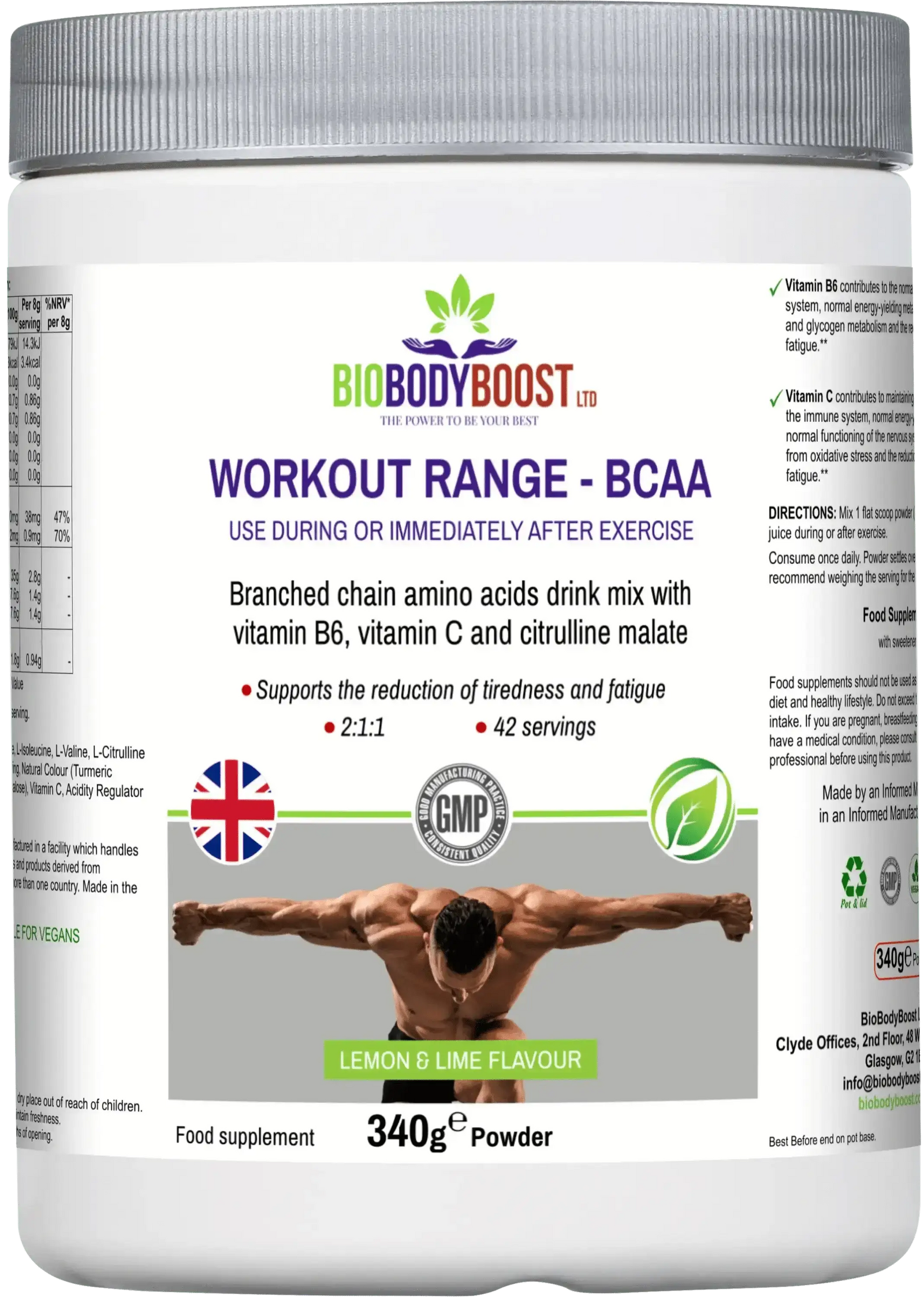
BCAAs — leucine, isoleucine and valine at the standard 2:1:1 ratio — are essential amino acids that skeletal muscle can oxidise directly for energy during exercise. Their primary supplement application: reducing muscle protein breakdown (MPB) during exercise, which is elevated during fasted training, caloric deficit and high-volume sessions. Howatson et al. (2012, JISSN) found BCAA supplementation significantly reduced creatine kinase and lactate dehydrogenase (muscle damage markers) and perceived soreness after eccentric exercise. Leucine specifically activates mTORC1, the primary muscle protein synthesis signalling pathway. BCAA Drink Mix — 5.6g 2:1:1 BCAA + citrulline malate, halal certified, vegan.
The halal compliance difference
Creatine: synthetically produced from sarcosine and cyanamide. No animal involvement. Inherently halal. The compliance check is the manufacturing environment only. Full halal guide.
BCAAs: more complex. BCAAs are produced by microbial fermentation (most common) or by hydrolysis of animal protein (keratin from feathers or hair, or porcine/bovine protein — haram). Fermentation-derived BCAAs are halal when growth media is confirmed halal. The label will often not specify the production method. Third-party halal certification is the meaningful verification. BioBodyBoost BCAA uses fermentation-derived BCAAs with full halal certification covering the growth media and manufacturing environment.
Which to take if you can only choose one
If training for strength or body composition with moderate-to-high volume: creatine. The evidence base is deeper (300+ studies), the cost is lower, the compliance is simpler and the benefits (strength, body composition, cognitive function) are broader and more consistent.
If training fasted (Ramadan fasting window training), in a caloric deficit, or with very high volume sessions (endurance + resistance): BCAAs add meaningful muscle protection that creatine does not provide via the same mechanism.
Why combining them makes more sense than choosing
They operate via completely different pathways. Creatine works via the phosphocreatine buffer and biogenesis. BCAAs work via reducing protein catabolism and activating mTORC1. There is no competition or redundancy between them. The practical combination: creatine daily (3–5g, any time), BCAA before or during training sessions (10g). For Ramadan: creatine at Suhoor, BCAA at Suhoor or Iftar. Browse the full Sports Nutrition UK collection.
Is BCAA halal UK?
BCAAs can be halal but require certification at source. The compliance risk is the production method: fermentation-derived BCAAs (from plant substrates, growth media halal-certified) are halal. BCAAs from animal protein hydrolysis (keratin, porcine or bovine) require certification of the animal source or are haram. The label typically doesn’t state the production route. Third-party halal certification is the meaningful check — BioBodyBoost BCAA Drink Mix carries full third-party halal certification confirming the fermentation process and growth media are from permissible sources.