Quick answer: calcium and magnesium share the same divalent transporter (TRPM7) for intestinal absorption — they genuinely compete at high doses. The practical rule: space high-dose calcium supplements and high-dose magnesium supplements by 2 hours to avoid competing for the same absorptive pathway. At typical dietary and moderate supplemental doses, the competition is not clinically significant. The bigger concern for most UK adults is not calcium-magnesium competition but simply correcting widespread magnesium deficiency (approximately 70% of UK adults below RNI) while maintaining adequate calcium intake.
Do calcium and magnesium really compete for absorption?
Yes — and the mechanism is specific. Both calcium and magnesium are divalent cations (carrying a 2+ charge) and both use TRPM7 (Transient Receptor Potential Melastatin 7) and other shared transporters for intestinal absorption. When both are present at high concentrations in the gut simultaneously, they compete for these transporters. Dai et al. (2001, Gastroenterology) demonstrated that high calcium intake significantly reduced magnesium absorption in human subjects. The competition is concentration-dependent — at low to moderate doses, the effect is modest; at high supplement doses taken simultaneously, it is clinically meaningful.
The practical timing guidance
- Space high-dose supplements by 2 hours: if taking calcium carbonate 500–1,000mg and magnesium glycinate 300–400mg as separate supplements, take them 2+ hours apart.
- Take calcium with meals: calcium carbonate requires stomach acid for dissolution — taking with food increases acid output and absorption. Calcium citrate does not require acid and can be taken without food.
- Take magnesium in the evening: magnesium glycinate taken 30–60 minutes before sleep supports the sleep and melatonin synthesis applications. This naturally spaces it from morning calcium intake.
- Dietary calcium and supplemental magnesium: the competition is primarily relevant for high-dose supplements, not between dietary calcium (in dairy, fortified plant milk) and supplemental magnesium. Normal food consumption does not significantly impair magnesium absorption from a supplement taken with that meal.
What most UK adults actually need
The UK calcium deficiency rate (in adults eating a mixed diet including dairy) is substantially lower than the magnesium deficiency rate (approximately 70% of UK adults below the RNI for magnesium). Most UK adults are getting adequate calcium from diet but inadequate magnesium. The focus for most people should be correcting magnesium — not worrying about calcium competition at typical supplement doses.
For UK South Asian adults and dairy-free/vegan adults: calcium intake may also be insufficient (lower dairy consumption), in which case both supplements are warranted — spaced by 2 hours as above. The NHS RNI for calcium is 700mg/day for adults; for magnesium, 270mg/day (women) and 300mg/day (men).
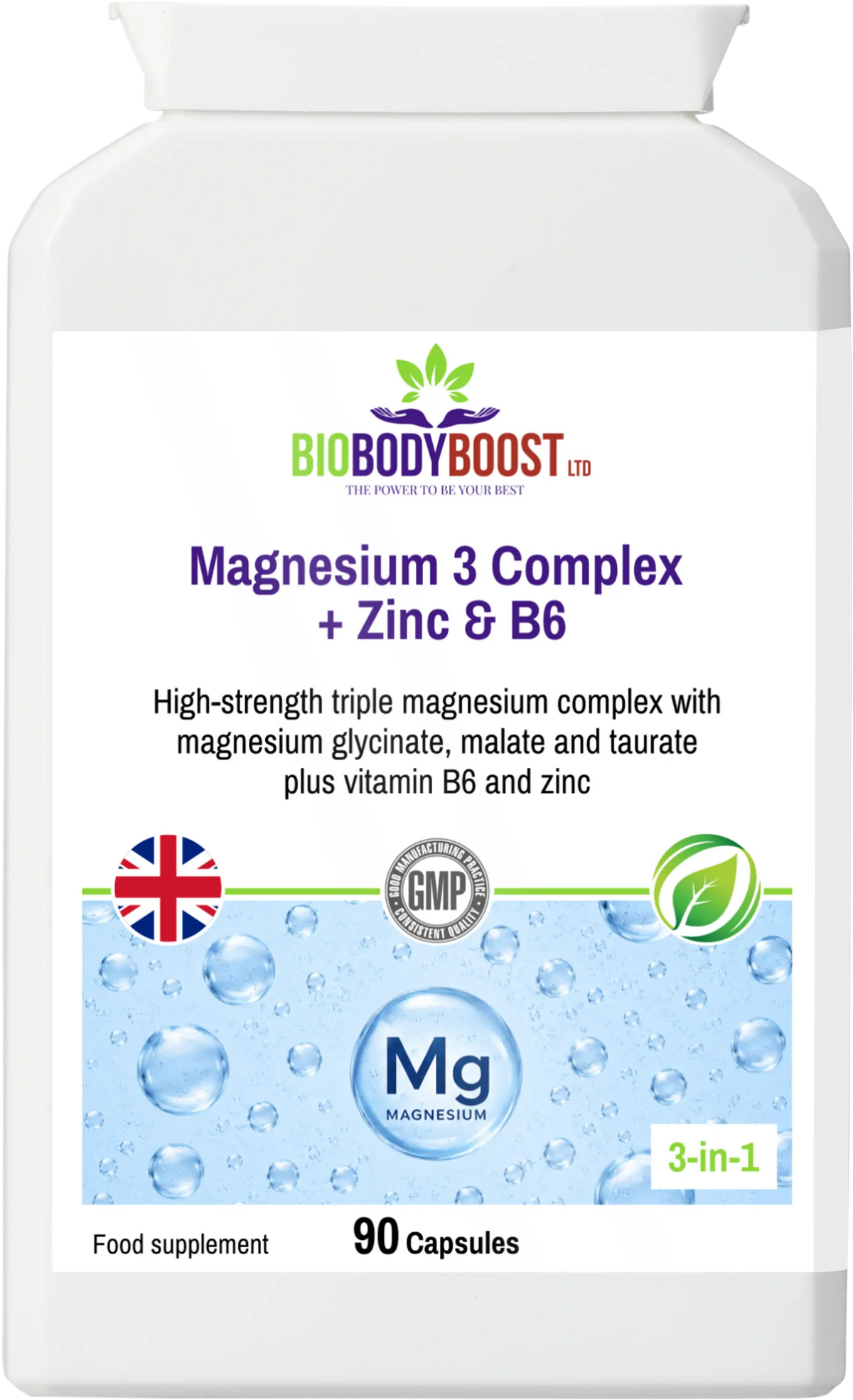
Magnesium 3 Complex — 300mg elemental magnesium as glycinate + malate + taurate, zinc 10mg, B6 5mg. Taken in the evening, naturally spaced from morning calcium intake. Halal certified, vegan, HPMC capsule. Full magnesium glycinate guide.
Should I take magnesium and calcium at the same time?
At high supplement doses, spacing them by 2 hours is advisable to avoid TRPM7 transporter competition for intestinal absorption. At typical dietary levels and moderate supplement doses, the competition is not clinically significant. The practical approach for most people: take magnesium in the evening (30–60 minutes before sleep for the sleep and relaxation benefits) and calcium with morning or midday meals. This naturally spaces them by 6– hours without requiring careful scheduling.
Does magnesium reduce calcium absorption?
At high concentrations, yes — they compete for shared intestinal transporters (TRPM7 and others). Dai et al. 2001 (Gastroenterology) confirmed high calcium intake reduced magnesium absorption in human subjects. The reverse is also true at high magnesium doses. At typical supplemental doses (300–400mg elemental magnesium, 500–700mg calcium) taken simultaneously, the competition reduces absorption of each by approximately 10–20% — meaningful at the upper range but not catastrophic. At normal dietary calcium intake (without high-dose calcium supplements), taking magnesium supplements does not significantly impair calcium status.