Key takeaways
- Acerola (Malpighia emarginata), also called Barbados cherry, is one of the richest natural sources of vitamin C.
- Gram for gram it can contain dozens of times more vitamin C than oranges.
- It spoils quickly, so in the UK you'll find it as powder, not fresh fruit.
- Adults only need 40mg of vitamin C a day, which a varied diet usually covers.
In this guide
What is acerola?
Acerola is a small, bright red fruit from a shrub native to the Caribbean, Central America and northern South America. It looks like a cherry, but it isn't related to the cherries grown in Europe.
It tastes sharp and slightly sweet, and it's best known for its exceptionally high vitamin C content.
Acerola vs oranges and other vitamin C foods
Vitamin C content varies with ripeness, growing conditions and storage, so these are typical figures per 100g of fresh food:
| Food (100g) | Vitamin C (approx.) |
|---|---|
| Acerola, raw | around 1,600mg |
| Red pepper, raw | around 130mg |
| Blackcurrants | around 180mg |
| Kiwi | around 90mg |
| Strawberries | around 60mg |
| Orange | around 50mg |
Typical values based on USDA FoodData Central. Actual amounts vary.
Put another way: adults need 40mg of vitamin C a day (NHS). A single small acerola fruit can provide that, while you'd need most of an orange.
Why you won't find acerola fresh in the UK
Acerola is very delicate. It bruises easily and starts to lose quality within days of picking, and its vitamin C breaks down with time, heat and light.
That's why it's usually freeze-dried or spray-dried into a powder close to where it's grown, then used in drinks, foods and supplements.
Acerola in supplements
Most vitamin C supplements use ascorbic acid, which is made industrially. Food-form products use powdered fruits like acerola instead.
| Food-form (acerola) | Ascorbic acid | |
|---|---|---|
| Source | Dried fruit | Manufactured |
| Typical dose | Moderate, everyday amounts | Often 500–1,000mg |
| Acidity | Gentler on the stomach for many | Acidic |
| Also contains | Natural fruit compounds such as polyphenols | Vitamin C only |
Both provide vitamin C. If high-dose tablets upset your stomach, see our guide to vitamin C and acid reflux.


Food-form · halal & kosher approved · vegan
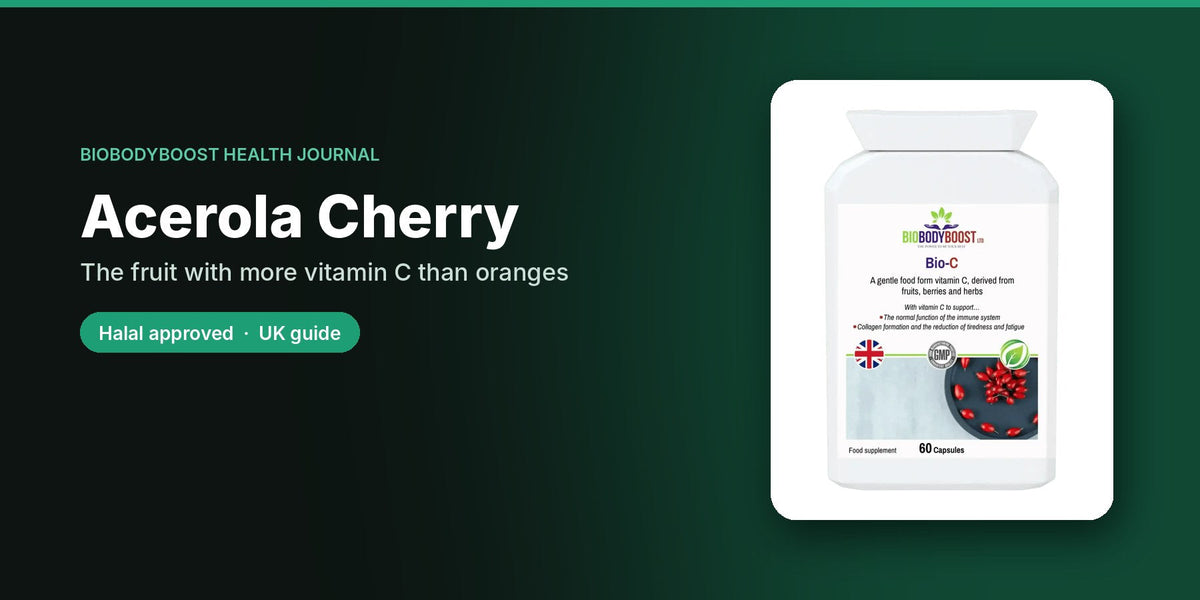
Bio-C
- 125mg vitamin C (156% NRV) from acerola cherry
- Vitamin C contributes to normal collagen formation for the normal function of skin
- Vitamin C contributes to the reduction of tiredness and fatigue
HALAL10 10% off your first order
Shop Bio-C →Questions people ask
Is acerola really better than oranges for vitamin C?
Gram for gram, acerola contains far more. But an orange still provides a useful amount, alongside fibre and other nutrients.
Can I buy fresh acerola in the UK?
Very rarely. It spoils quickly, so it's almost always sold as powder or juice.
Is acerola vitamin C natural?
Yes, it comes from the fruit itself. Check the label, as some “acerola” products also add ascorbic acid.
How much vitamin C do I need?
The NHS says adults aged 19 to 64 need 40mg a day. Taking more than 1,000mg a day from supplements can upset the stomach.
Is acerola halal?
Acerola is a fruit, so it's halal in itself. In a supplement, check the capsule and other ingredients.
Sources: NHS: vitamin C · USDA FoodData Central · GB NHC register
This article is general information, not medical advice. Food supplements should not replace a varied, balanced diet and healthy lifestyle.