Key takeaways
- Most vitamin C supplements are ascorbic acid, which is acidic and can irritate a sensitive stomach.
- Buffered forms (such as sodium or calcium ascorbate) and food-form vitamin C are gentler options.
- Adults need only 40mg a day (NHS), far less than most high-dose tablets.
- Taking vitamin C with food and avoiding big doses helps most people.
In this guide
Why vitamin C can upset your stomach
Vitamin C's chemical name is ascorbic acid. Dissolved in water, it's about as acidic as lemon juice.
For most people that's fine. But if you have reflux, heartburn or a sensitive stomach, a large dose of ascorbic acid on an empty stomach can be uncomfortable.
Dose matters too. The NHS says taking more than 1,000mg of vitamin C a day can cause stomach pain, diarrhoea and wind. Many effervescent and “high-strength” tablets provide exactly that amount or more.
The forms of vitamin C compared
| Form | Acidity | Good to know |
|---|---|---|
| Ascorbic acid | Acidic | The most common and cheapest form |
| Effervescent tablets | Acidic and fizzy | Often high dose; many also contain a lot of sodium |
| Sodium or calcium ascorbate | Buffered, near neutral | Gentler; sodium ascorbate adds a little sodium |
| Food-form (e.g. acerola) | Non-acidic in typical doses | Vitamin C from fruit, usually at lower, everyday doses |
| Liposomal | Depends on the form inside | Check whether it uses ascorbic acid or sodium ascorbate |
How much vitamin C do you actually need?
According to the NHS, adults aged 19 to 64 need 40mg a day. A varied diet with fruit and vegetables usually provides that.
So for most people, a gentle, moderate dose makes more sense than a 1,000mg tablet that may upset their stomach.

Tips for taking vitamin C comfortably
- Take it with food, not on an empty stomach
- Skip the fizzy tablets if reflux is a problem
- Avoid very high doses; spread intake through the day if you take more than one supplement
- Don't take it lying down; stay upright for a while after swallowing capsules
- Choose a gentler form such as buffered or food-form vitamin C
The NHS heartburn and acid reflux page has wider advice on eating habits and triggers.
When to see your GP
See your GP if heartburn happens most days, lasts three weeks or more, or comes with difficulty swallowing, weight loss you can't explain, or being sick. Don't keep changing supplements to work around persistent symptoms.

Non-acidic · halal & kosher approved · vegan
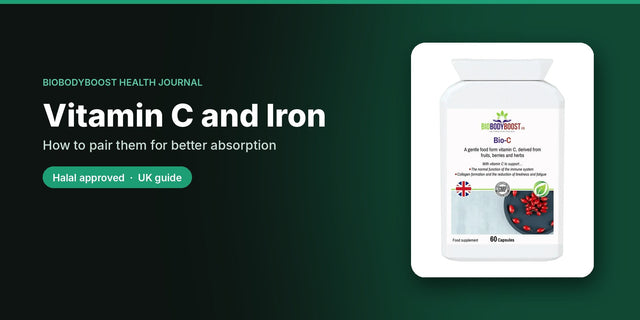
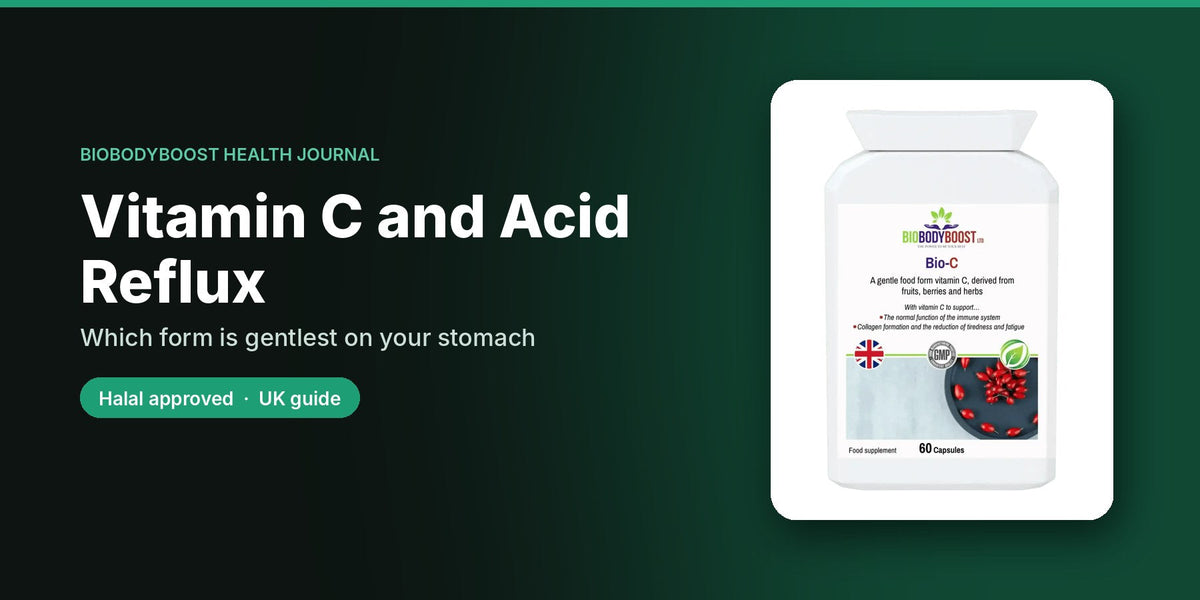
Bio-C Food Form Vitamin C
- 125mg vitamin C (156% NRV) from acerola cherry
- No synthetic ascorbic acid
- Vitamin C contributes to the normal function of the immune system
HALAL10 10% off your first order
Shop Bio-C →Questions people ask
Can vitamin C cause heartburn?
Some people find that acidic forms of vitamin C, especially in large doses on an empty stomach, trigger heartburn or discomfort.
What is non-acidic vitamin C?
It usually means a buffered form, such as sodium or calcium ascorbate, or vitamin C from food sources like acerola cherry.
Is it better to take vitamin C with food?
For a sensitive stomach, yes. Taking it with a meal usually reduces discomfort.
How much vitamin C is too much?
The NHS says having less than 1,000mg a day from supplements is unlikely to cause harm. Above that, stomach pain, diarrhoea and wind are more likely.
Is Bio-C suitable if I have reflux?
Bio-C contains no ascorbic acid, which many people with sensitive stomachs prefer. If you have ongoing reflux, check with your GP or pharmacist.
Sources: NHS: vitamin C · NHS: heartburn and acid reflux · GB NHC register
This article is general information, not medical advice. Food supplements should not replace a varied, balanced diet and healthy lifestyle. Speak to your GP if you have ongoing digestive symptoms.