Key takeaways
- Vitamin C increases iron absorption. That's an authorised health claim in the UK.
- It matters most for iron from plant foods (lentils, beans, greens, fortified cereals), which is harder to absorb than iron from meat.
- Simple pairings, such as lemon on dal or peppers with spinach, make a difference.
- Tea and coffee with meals can reduce iron absorption, so have them between meals instead.
In this guide
Why vitamin C helps your body absorb iron
There are two types of iron in food. Haem iron comes from meat and fish and is absorbed fairly easily. Non-haem iron comes from plants and fortified foods, and the body absorbs less of it.
Vitamin C helps convert non-haem iron into a form that's easier to absorb, when you eat them in the same meal.
How much iron do you need? The NHS says women aged 19 to 49 need 14.8mg a day, and men and women over 50 need 8.7mg (NHS iron).
Easy food pairings
| Iron-rich food | Add vitamin C from |
|---|---|
| Dal, chana or rajma | A squeeze of lemon, tomatoes, or a side of kachumber salad |
| Palak or saag | Red peppers, tomatoes or lemon |
| Fortified breakfast cereal | A small glass of orange juice or some berries |
| Wholemeal bread or roti | A tomato and pepper filling |
| Dried apricots, figs or dates | A kiwi or an orange |
| Tofu or tempeh | Broccoli, peppers or pak choi in a stir-fry |
What gets in the way
- Tea and coffee with meals. Their tannins and polyphenols can reduce iron absorption. Have chai or coffee an hour or so before or after eating instead.
- Calcium. Large amounts of milk or calcium supplements at the same meal can reduce iron absorption.
- Antacids and magnesium. Keep these at least 2 hours away from iron tablets.
A small change that adds up: in many households, chai is served with every meal. Moving it to between meals is an easy way to get more iron from the same food.
Who should pay most attention
- Women with heavy periods
- Vegetarians and vegans, who rely on plant iron
- Pregnant women, whose iron needs rise; follow your midwife's advice
- Teenage girls, who often have low intakes
- Regular blood donors
Feeling tired, short of breath or noticeably pale? See your GP, who can check for iron deficiency anaemia with a simple blood test. Don't take iron supplements long-term without advice, and keep them away from children.
If iron tablets have given you constipation, our guide on iron tablets and constipation may help.


Non-acidic · halal & kosher approved · vegan
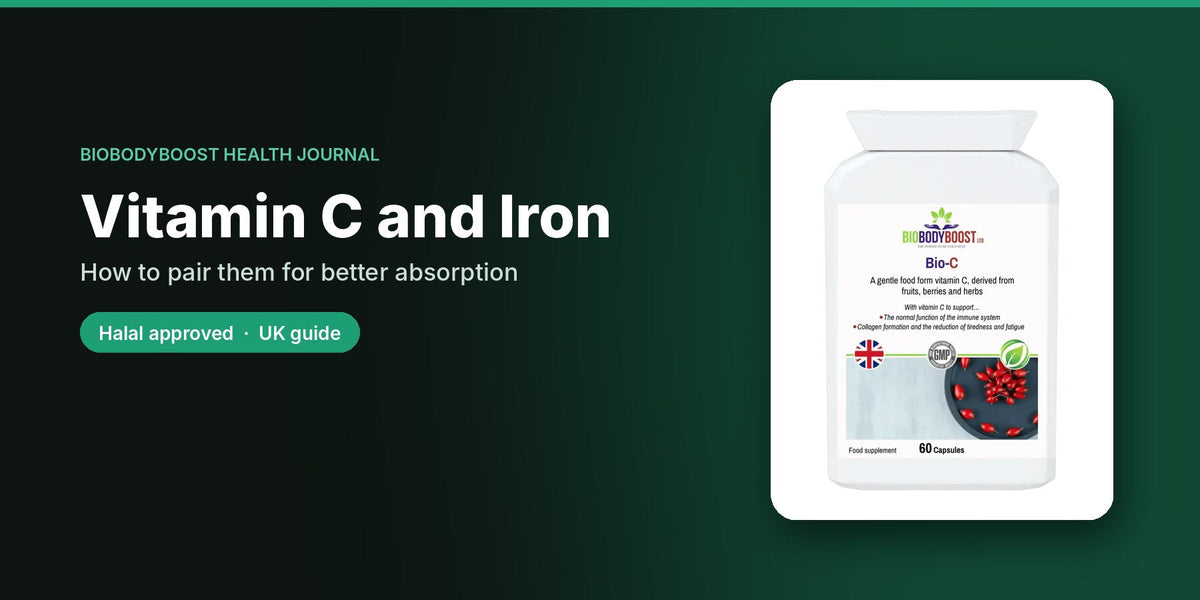
Bio-C
- 125mg vitamin C (156% NRV) from acerola cherry
- Vitamin C increases iron absorption
- Gentle on the stomach: take with your main meal
HALAL10 10% off your first order
Shop Bio-C →Questions people ask
Should I take vitamin C with iron tablets?
Many people do, as vitamin C increases iron absorption. Follow your GP's advice and the patient leaflet.
How much vitamin C do I need to help iron absorption?
A normal portion of vitamin C-rich food with your meal is enough for most people.
Does tea really block iron?
Tea and coffee with meals can reduce iron absorption. Having them between meals avoids most of the effect.
Is plant iron as good as meat iron?
Plant iron is absorbed less well, but pairing it with vitamin C and avoiding tea at meals helps a lot.
Can you get too much iron?
Yes. The NHS advises not taking more than 17mg a day from supplements unless your GP recommends it.
Sources: NHS: iron · NHS: vitamin C · GB NHC register
This article is general information, not medical advice. Food supplements should not replace a varied, balanced diet and healthy lifestyle.