Search "acai berry benefits UK" and nearly every result says the same thing: boosts metabolism, burns fat, suppresses appetite, fights ageing. It's consistent marketing — and it's not what the actual clinical research shows. One of the more thorough independent reviews available states plainly that "the clinical evidence for specific health benefits remains limited despite exceptionally high antioxidant capacity in laboratory assays." That gap between the marketing and the science is worth walking through properly before you buy anything.
What Acai Actually Is
Acai (Euterpe oleracea) is a small dark-purple palm fruit native to the Amazon basin, traditionally part of the diet in Brazil for generations. It's exceptionally rich in anthocyanins — the same class of antioxidant pigment that gives blueberries and blackcurrants their colour — along with healthy fats and fibre. None of that is in dispute. What's in dispute is what taking a capsule of it actually does for you.
The Weight-Loss Claim, Traced to Its Source
This is where most UK retailer pages go wrong. The honest position, stated by multiple independent reviewers, is that no independent peer-reviewed studies support acai supplements alone causing weight loss. One detailed UK supplement retailer even admits in its own small print that the weight-loss claim "is yet to be backed by solid evidence" — while still listing it as a headline benefit above the fold. That's the pattern across the category: the caveat exists, buried below the marketing.
Where does the claim come from, then? Mostly extrapolation — acai is rich in fibre and healthy fats, and foods with that profile can support satiety as part of an overall diet. That's a reasonable, modest point about whole foods. It is not the same as "acai supplements burn fat," which is the claim actually printed on capsule packaging across the UK market.
What the Antioxidant Content Actually Means
Acai does test very high for antioxidant capacity in laboratory assays — higher than cranberry, raspberry, blackberry or strawberry by some measures. That's a real, measurable property. The unresolved question is whether high antioxidant capacity in a lab dish translates into a meaningful health effect once the compounds are digested, metabolised and partially broken down in your body — a translation that fails for many "superfood" ingredients marketed on lab-assay numbers alone.
The Dosing Problem Nobody Mentions
Here's a detail that essentially never appears on a UK product page: there is no established or standardised dose for acai supplementation. Independent lab analysis has found "extreme anthocyanin variability" between different acai products, meaning a 1000mg capsule from one brand and a 1000mg capsule from another can contain meaningfully different amounts of the active compounds — with no way for you to tell from the label. Comparing "500mg" against "2000mg" products, as most buying guides encourage, is close to meaningless without knowing the actual anthocyanin content behind each number.
What's Genuinely Promising (With Caveats)
Preclinical research — laboratory and animal studies, not yet confirmed in humans — has explored acai's anti-inflammatory properties and a possible role in protecting cells from oxidative stress, including some interesting early neuroprotective findings. A small prospective study in 40 women found associations between acai intake and blood lipid markers. These are legitimate research directions. They are also, honestly, a long way from "clinically proven" — the phrase that shows up on far too many UK product pages for research still at this early stage.
What to Actually Expect
Taken plainly: acai is a nutrient-dense, antioxidant-rich fruit with an interesting research profile and no confirmed clinical benefit for weight loss, immunity or anti-ageing at the dosing levels sold as supplements. That's not a reason to avoid it — traditional foods don't need clinical trials to be worth including in your diet — but it is a reason to buy it for what it is (an antioxidant-rich botanical, taken as a matter of dietary variety) rather than what it's marketed as (a fat burner).
Our Approach
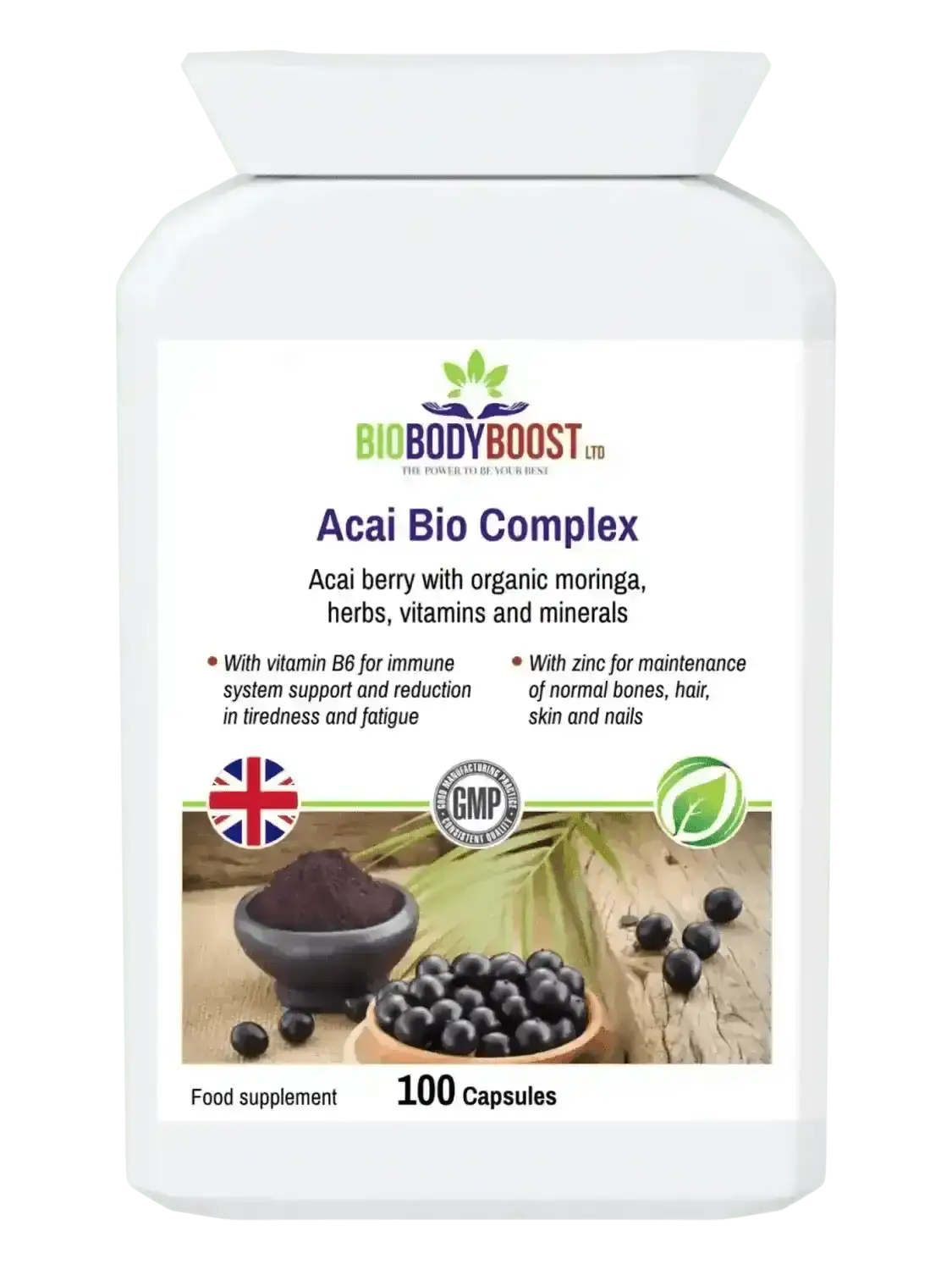
Acai Bio Complex is offered honestly: on the basis of its antioxidant content and traditional use, not on unproven weight-loss or metabolism claims. Vegan, halal approved. If antioxidant variety across multiple sources is your goal, it pairs naturally with Organic Mushroom Complex or Red Punch, both built the same way — real ingredients, honest claims.
Safety Notes
Generally considered safe as a food-level supplement for most adults. Not enough safety data exists to confirm it's appropriate in pregnancy or breastfeeding — best avoided in both. Raw, unpasteurised acai juice has been linked in some regions to outbreaks of Chagas disease; this risk applies to fresh juice in affected regions, not to processed UK capsule supplements, but it's worth knowing.
FAQs
Does acai berry actually help with weight loss?
No independent peer-reviewed evidence supports this. The claim is common in UK marketing but not backed by controlled human trials.
Is acai berry good for anything?
It's a genuinely antioxidant-dense traditional food with promising but early-stage preclinical research. Treat it as dietary variety, not a treatment for any condition.
How much acai should I take?
There's no established clinical dose — follow the label, and understand that milligram claims aren't directly comparable between brands due to natural variability in anthocyanin content.
Is acai safe to take daily?
Generally yes for most healthy adults as a food supplement, with the pregnancy/breastfeeding caution above. Consult your GP if you're taking medication or managing a diagnosed condition.
Browse the full Vegan Supplements UK collection.
Food supplements should not replace a varied diet. Not recommended in pregnancy or breastfeeding. Consult your GP if taking medication or managing a diagnosed condition.