"Hydrolysed marine collagen powder" and "hydrolyzed marine collagen powder" — one UK spelling, one US — are both searched heavily, and for good reason: the word "hydrolysed" appears on almost every collagen label in the UK, yet very few brands actually explain what it means or why it's there. Here's the real answer.
What "Hydrolysed" Actually Means
Collagen in its natural state — inside fish skin, scales or bovine hide — exists as a large, tightly wound protein structure. On its own, this structure is too large for your gut to absorb efficiently. Hydrolysis is the manufacturing process that breaks that large protein down into much smaller fragments called peptides, through controlled exposure to heat, water and enzymes.
The terms "hydrolysed collagen," "collagen peptides" and "collagen hydrolysate" all refer to the same processed result. If a product doesn't specify hydrolysis, that's genuinely worth questioning — collagen that hasn't been through this process is far harder for the body to break down and use.
Does Non-Hydrolysed Collagen Even Exist as a Supplement?
Rarely, and there's a reason for that. Most reputable marine collagen products on the market today are already hydrolysed — if they weren't, the intact protein molecules would simply be too large for meaningful gut absorption, which defeats the purpose of taking a supplement in the first place. "Native" or "undenatured" collagen does exist as a distinct category (most commonly type II, marketed specifically for joint applications through a different mechanism than peptide absorption), but for standard marine collagen powders aimed at skin, hair and general connective tissue support, hydrolysed is the standard and the sensible choice.
Why Peptide Size Is the Detail Worth Checking
Not all hydrolysed collagen is hydrolysed to the same degree. The technical measure is molecular weight, expressed in Daltons (Da) — smaller peptides are generally considered more efficiently absorbed. Premium marine collagen products increasingly state this figure explicitly; lower molecular weight (typically cited in the 1,000–3,000 Da range) is the marker of a more thoroughly processed, higher-quality peptide. Products that don't state a molecular weight or Dalton figure at all simply haven't published that level of manufacturing detail — not necessarily a red flag on its own, but one more thing you can ask a brand directly if it matters to you.
Hydrolysed Collagen vs Collagen Peptides — Same Thing?
Yes. This is one of the most common points of confusion, and the honest answer is simple: hydrolysed collagen and collagen peptides describe the same processed material. "Hydrolysed" describes the manufacturing process; "peptides" describes what that process produces. Brands sometimes use one term or the other for marketing reasons, but they're not describing different products.
What This Means for Marine Collagen Specifically
Marine collagen is already considered one of the more bioavailable collagen sources due to its naturally smaller particle size compared to some other animal sources, even before hydrolysis. Combining a marine source with proper hydrolysis is generally regarded as producing some of the most readily absorbed collagen supplements available — which is why marine collagen has become the preferred choice for people who've tried other collagen sources without noticing much difference.
Our Approach
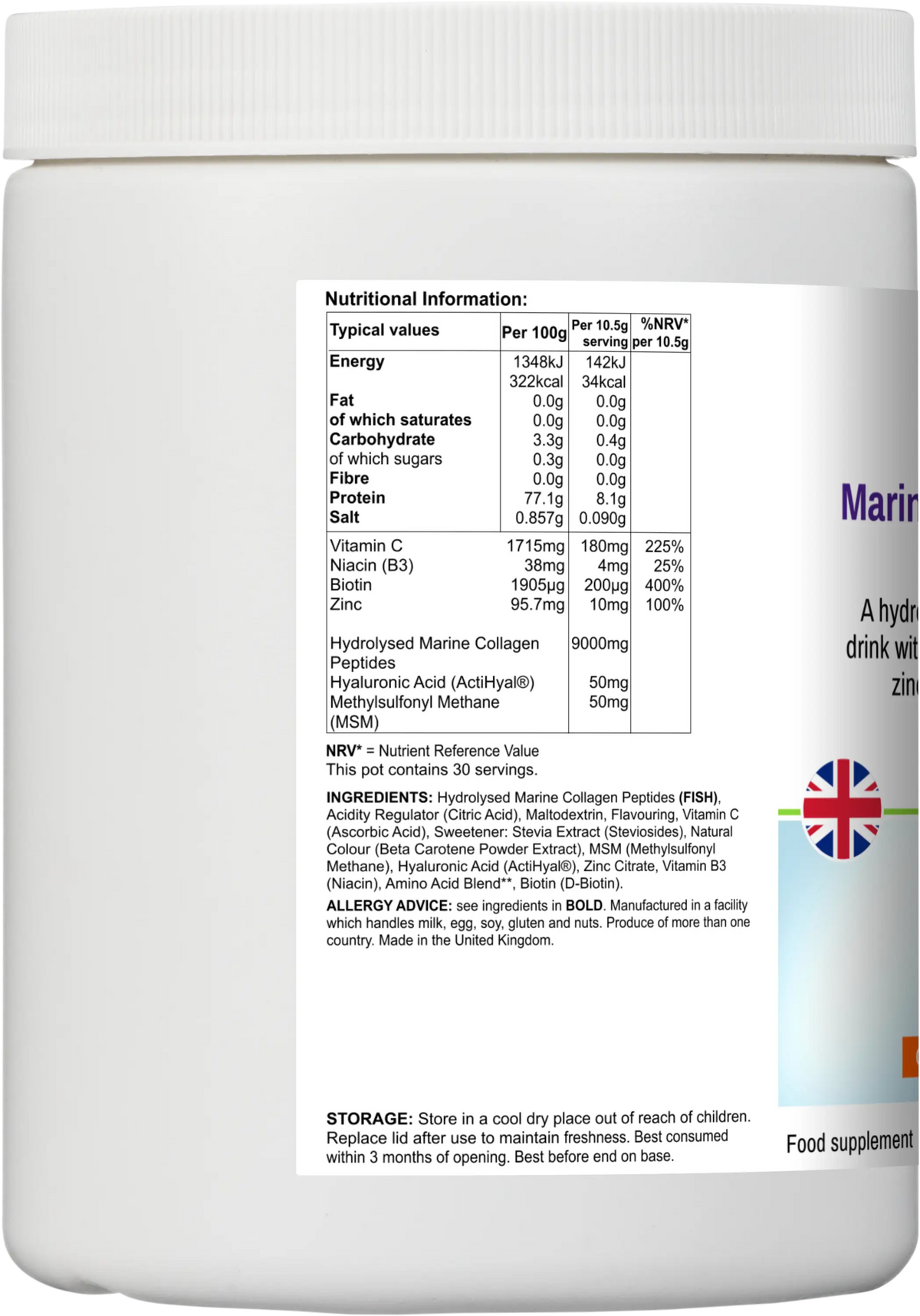
Marine Collagen Nourish uses hydrolysed marine collagen peptides at 9,000mg per serving — a substantial, clearly stated dose of properly processed peptides, not an ambiguous "collagen blend" figure. Full ingredient and dosing breakdown, including the amino acid profile, is published on the product page rather than left vague.
FAQs
Is hydrolysed collagen better than regular collagen?
For supplement purposes, yes — hydrolysis breaks collagen down into peptides small enough for your body to actually absorb and use. Non-hydrolysed collagen in its natural, intact form is too large for efficient gut absorption.
Are collagen peptides and hydrolysed collagen the same thing?
Yes. They describe the same material — "hydrolysed" refers to the process, "peptides" refers to the resulting smaller protein fragments. Brands use the terms interchangeably.
What does molecular weight or Daltons mean on a collagen label?
It's a measure of peptide size after hydrolysis. Lower Dalton figures generally indicate smaller, more efficiently absorbed peptides. Not every brand publishes this figure, but it's a legitimate detail to ask about if absorption is your priority.
Why is marine collagen often described as more absorbable than other sources?
Marine collagen naturally has a smaller particle size than some other animal collagen sources even before processing, and when combined with hydrolysis, it's widely regarded as one of the most bioavailable collagen types available.
Browse the full Hair, Skin & Beauty UK collection, or read our complete marine collagen guide for the full picture on benefits, dosing and timelines.
Food supplements should not replace a varied diet. Consult your GP before use if pregnant, breastfeeding, or managing a diagnosed health condition. Contains fish — not suitable for vegans, vegetarians or anyone with a fish allergy.