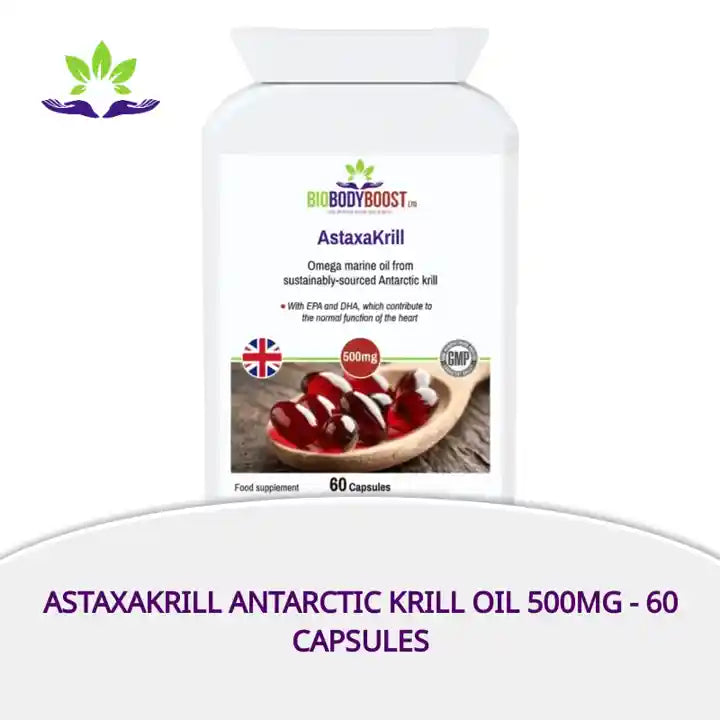
Allergy and safety warnings. Contains CRUSTACEAN. Not suitable for anyone with an allergy to FISH or SHELLFISH. The capsule shell is bovine gelatin — not suitable for vegans or vegetarians. Not intended for use by pregnant or lactating mothers. People with coagulopathy or taking blood-thinning medication should consult their doctor before use.
Krill oil differs from fish oil in a way that matters: the omega-3 arrives bound to marine phospholipids rather than triglycerides. Phospholipids are the same molecules that make up your cell membranes, which is why krill oil is absorbed differently — and why it doesn't produce the fishy repeats that put people off fish oil. AstaxaKrill provides 500mg of Antarctic krill oil (Superba) per capsule, with 200mg of total phospholipids and naturally occurring astaxanthin.
Why Phospholipid Omega-3 Is Different
In fish oil, EPA and DHA are attached to a triglyceride backbone. In krill oil they are bound to phospholipids. Because cell membranes are themselves built from phospholipids, the omega-3 arrives in a form the body already uses structurally.
The practical difference most people notice is the absence of fishy burps. Krill oil also carries its own antioxidant: astaxanthin, the carotenoid that gives krill their pink colour. It occurs naturally in certain algae and helps keep the oil stable, protecting the omega-3 from oxidising.
How Other UK Omega-3 Options Compare
Standard fish oil capsules — cheaper per gram of omega-3, triglyceride form. Higher EPA and DHA per capsule at lower cost, but no phospholipids, no astaxanthin, and the fishy aftertaste most people associate with them.
Premium concentrated fish oils — high dose, high price. Excellent omega-3 concentrations, still triglyceride-bound and without astaxanthin.
Algae omega-3 — vegan, no crustacean. The right choice if you avoid marine animals or have a shellfish allergy. Typically DHA-dominant with less EPA, and no phospholipid or astaxanthin content.
What's in Every Capsule
-
Antarctic krill oil (Euphausia superba) — 500mg · krill oil only, not blended with ordinary fish oil as some products are
-
Total phospholipids — 200mg · the structural form that distinguishes krill from fish oil, of which phosphatidylcholine 150mg (of which choline 25mg)
-
Total omega-3 — 110mg, of which:
- EPA (eicosapentaenoic acid) — 60mg
- DHA (docosahexaenoic acid) — 27.5mg
-
Astaxanthin — 50µg · naturally occurring carotenoid
EU-authorised claims and their conditions of use — stated honestly:
-
EPA and DHA contribute to the normal function of the heart · with a daily intake of 250mg. This formula provides 87.5mg combined EPA and DHA per capsule, so at the maximum 2 capsules daily it delivers 175mg — below that threshold.
-
DHA contributes to the maintenance of normal brain function and normal vision · with a daily intake of 250mg of DHA. Not reached from this product alone.
-
DHA and EPA contribute to the maintenance of normal blood pressure · with a daily intake of 3g.
-
DHA contributes to the maintenance of normal blood triglyceride levels · with a daily intake of 2g of DHA taken with EPA.
We'd rather publish the thresholds than imply this product meets them. What krill oil offers that fish oil doesn't is the phospholipid form, the astaxanthin and no fishy aftertaste. If your priority is hitting the 250mg heart threshold, use a higher-dose omega-3 alongside it.
Do not exceed a supplemental daily intake of 5g of EPA and DHA combined.
60 capsules. Ingredients: krill oil (Euphausia superba) extract (CRUSTACEAN), capsule shell (bovine gelatin, glycerol, water). Halal registered. The krill oil does not originate from the UK — it is supplied by Aker BioMarine in the EU.
Allergy advice: contains CRUSTACEAN. Not suitable for persons with an allergy to fish or shellfish. Not suitable for vegans or vegetarians — the capsule shell is bovine gelatin.
Every capsule is: ✓ 500mg krill oil (Superba) · ✓ 200mg phospholipids · ✓ 50µg astaxanthin · ✓ Halal registered · ✓ No fishy aftertaste · ⚠️ Crustacean · bovine gelatin
AstaxaKrill vs Other Omega-3 Options
|
AstaxaKrill
BioBodyBoost · 60 caps
|
Standard fish oil |
Algae omega-3 |
| Marine phospholipids |
✓ 200mg |
✗ Triglyceride |
✗ No |
| Natural astaxanthin |
✓ 50µg |
✗ No |
✗ No |
| No fishy aftertaste |
✓ Yes |
✗ Common |
✓ Yes |
| EPA + DHA per capsule |
87.5mg |
Often higher |
Varies |
| Suitable for vegans |
✗ Bovine gelatin |
✗ No |
✓ Yes |
Based on publicly available product information. Always verify current specs on manufacturer websites.
How to Take It
Take 1 to 2 capsules per day, or as advised by a health professional. Taking omega-3 alongside a meal containing fat improves absorption.
If you need a vegan or shellfish-free omega-3, OmegaBalance blends omega-3, 6 and 9.
Is This You?
- You've tried fish oil and given up because of the fishy repeats
- You want phospholipid-bound omega-3 and natural astaxanthin, not just EPA and DHA numbers
- You want halal registered marine omega-3
- You are not vegan, vegetarian, pregnant, breastfeeding, allergic to fish or shellfish, or on blood-thinning medication
Explore the full Protein & Performance UK and Halal Vitamins UK collections.
Questions We Get Asked
Is krill oil better than fish oil?
Different rather than straightforwardly better. Krill oil delivers omega-3 bound to phospholipids rather than triglycerides, plus astaxanthin as a natural antioxidant, and it doesn't cause fishy repeats. Fish oil typically delivers more EPA and DHA per capsule at lower cost. If total omega-3 milligrams are your priority, fish oil is more efficient. If absorption form, astaxanthin and tolerability matter more, krill oil is the better fit.
Can I take this if I'm pregnant or on blood thinners?
No to the first, and not without medical advice on the second. This product is not intended for use by pregnant or lactating mothers. Omega-3 fatty acids can also affect platelet function, so anyone with a coagulopathy or taking anticoagulant or antiplatelet medication should speak to their doctor before use, and before any planned surgery.
Is it suitable for vegetarians?
No. The krill itself is a marine crustacean, and the capsule shell is bovine gelatin, so it is unsuitable for both vegans and vegetarians. It is also not suitable for anyone with a fish or shellfish allergy.
How much EPA and DHA does it provide?
60mg EPA and 27.5mg DHA per capsule — 87.5mg combined, within a total of 110mg omega-3. The EU heart claim for EPA and DHA requires 250mg daily, and the DHA brain and vision claims require 250mg of DHA, so this product does not reach those thresholds at the recommended 1 to 2 capsules per day. It is designed around the phospholipid delivery form and astaxanthin content rather than raw omega-3 quantity.
Food supplements should not replace a varied diet or healthy lifestyle. Contains crustacean. Not suitable for persons with an allergy to fish or shellfish. Not suitable for vegans or vegetarians. Not intended for use by pregnant or lactating mothers. People with coagulopathy or taking blood-thinning medication should consult their doctor before use. Do not exceed a supplemental daily intake of 5g of EPA and DHA combined.