Vitamin C (ascorbic acid) is a water-soluble antioxidant vitamin that the human body cannot synthesise and must obtain from diet or supplements. The UK NHS recommends 40mg daily for adults — easily achievable through diet. The scientific interest in higher supplemental doses (200–2,000mg) relates to its roles beyond the basic deficiency-prevention level: immune support, collagen synthesis, antioxidant protection and iron absorption enhancement. Here is what the evidence actually supports at different doses.
What Does Vitamin C Actually Do?
Vitamin C has four well-documented, EU-authorised biological roles:
- Collagen synthesis — vitamin C is a mandatory cofactor for the enzyme prolyl hydroxylase, which hydroxylates proline residues in collagen's triple-helix structure. Without vitamin C, collagen is structurally weak and cannot form properly. This is the mechanism behind scurvy — the extreme deficiency disease characterised by connective tissue breakdown.
- Immune function — vitamin C supports both innate and adaptive immune function. It accumulates in immune cells (neutrophils, lymphocytes) at concentrations 10–100x higher than plasma, supporting phagocytosis and free radical neutralisation by immune cells operating in high-oxidative environments.
- Antioxidant protection — vitamin C is a direct free radical scavenger and regenerates other antioxidants (particularly vitamin E) from their oxidised forms.
- Iron absorption enhancement — vitamin C reduces dietary non-haem iron (plant-based iron) from ferric (Fe3+) to ferrous (Fe2+) form, increasing its absorption 2–3x. Taking vitamin C with plant-based iron sources significantly improves iron status.
How Much Vitamin C Do You Actually Need?
UK Reference Nutrient Intake (RNI) for adults: 40mg/day. This is the amount needed to prevent deficiency in most of the population — achievable from a single kiwi fruit, a portion of broccoli or a glass of orange juice.
Saturation dose for plasma: Research shows plasma vitamin C becomes fully saturated at approximately 200mg/day from dietary and standard supplemental sources. Above this, additional vitamin C is progressively excreted rather than raising plasma levels further. This is the “ceiling” for standard oral supplementation.
Therapeutic use: Some researchers and clinicians use doses of 1,000–2,000mg daily for immune support during illness or stress, based on evidence that physiological stress rapidly depletes vitamin C stores. The Cochrane review on vitamin C and the common cold found it does not prevent colds in most people but may modestly reduce duration when taken regularly.
What Is the Absorption Ceiling and Why Does It Matter?
Vitamin C crosses the intestinal wall via sodium-dependent vitamin C transporters (SVCTs). These transporters become saturated above approximately 200mg per dose — meaning the percentage of vitamin C absorbed decreases progressively as dose increases. At 180mg, absorption is approximately 80–90%. At 1,250mg, absorption drops to approximately 49%. The unabsorbed fraction remains in the colon, drawing in water via osmosis — causing the loose stools and GI discomfort associated with high-dose vitamin C.
What Is Liposomal Vitamin C and Is It Better?
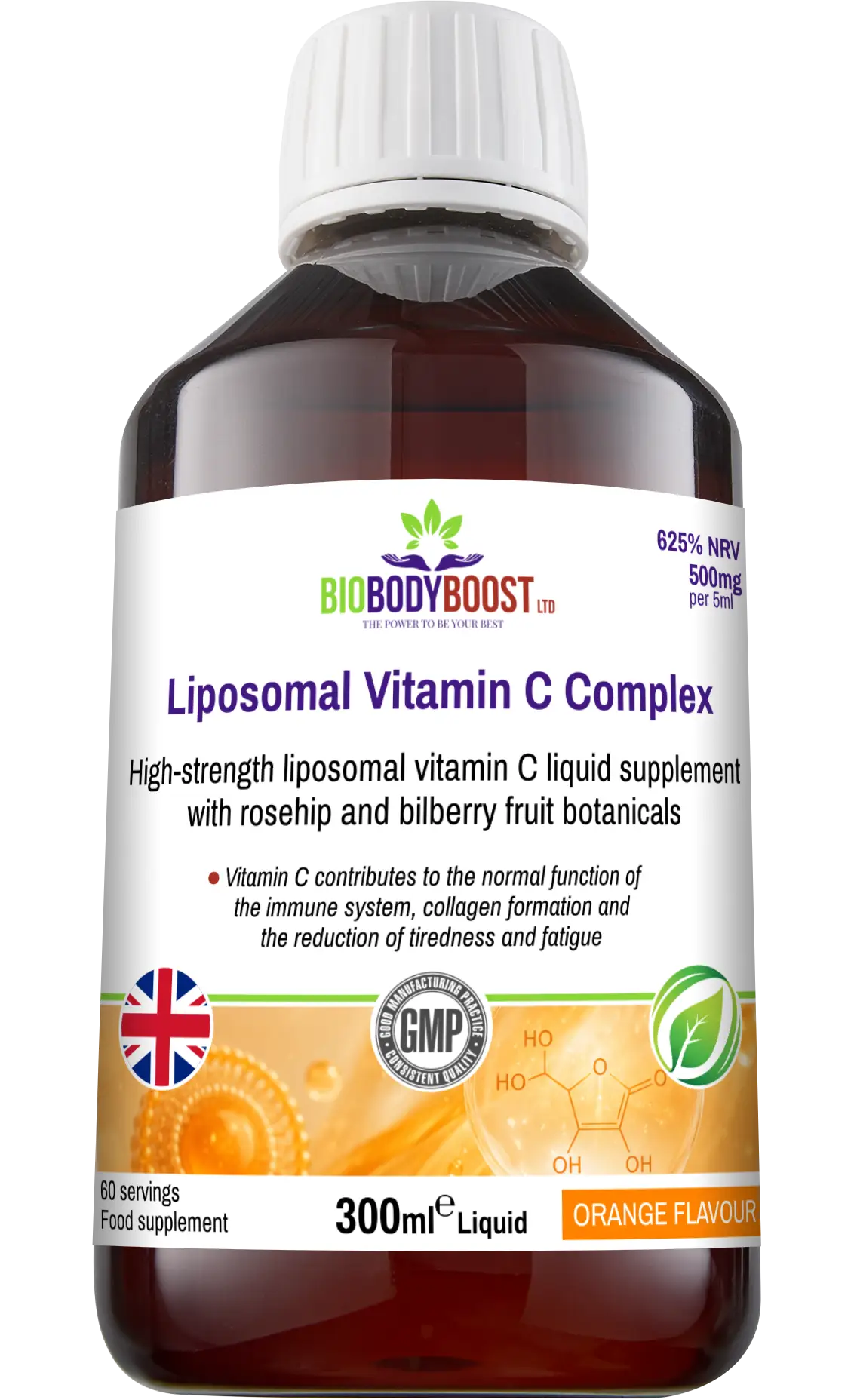
Liposomal vitamin C encapsulates ascorbic acid in phospholipid spheres (liposomes) that are absorbed via endocytosis — a different pathway that bypasses the SVCT transporter ceiling. Research confirms liposomal vitamin C produces significantly higher plasma levels than equivalent doses of standard oral vitamin C. The practical advantages:
- No GI side effects at higher doses — the liposomal package bypasses the osmotic effect of unabsorbed ascorbic acid in the colon
- Higher plasma saturation at the same dose
- Can be taken without food (fat-soluble within the phospholipid matrix)
The trade-off is cost — liposomal formats are more expensive than standard tablets. For standard daily maintenance (200mg), regular ascorbic acid is entirely adequate. For people seeking higher absorption at supplemental doses, or those who experience GI discomfort with standard high-dose vitamin C, liposomal format is worthwhile.
Food Sources vs Supplements: What's the Difference?
The vitamin C in food and supplements is chemically identical. The difference is context: food-source vitamin C comes packaged with bioflavonoids, polyphenols and other co-factors that may have synergistic effects. However, for meeting the RNI or achieving specific therapeutic doses, synthetic ascorbic acid performs identically to “natural” vitamin C from acerola or rose hip.
Who Should Supplement Vitamin C?
- Smokers — the NHS notes smokers need additional vitamin C (80mg vs 40mg) as smoking depletes vitamin C through oxidative stress
- People with low fruit and vegetable intake — for anyone not eating the recommended 5 portions daily
- People supplementing iron — taking vitamin C with iron supplements significantly improves non-haem iron absorption
- Anyone taking a collagen supplement — vitamin C is required to synthesise new collagen from supplemental collagen peptides
- During illness recovery — vitamin C stores are rapidly depleted during acute illness; supplementation supports immune recovery
Liposomal Vitamin C by BioBodyBoost — 500mg per 10ml serving in soy-free liposomal format, halal certified, vegan. Bio-C — non-acidic food form vitamin C for sensitive stomachs. Both UK GMP manufactured, halal certified. Browse the full range.