
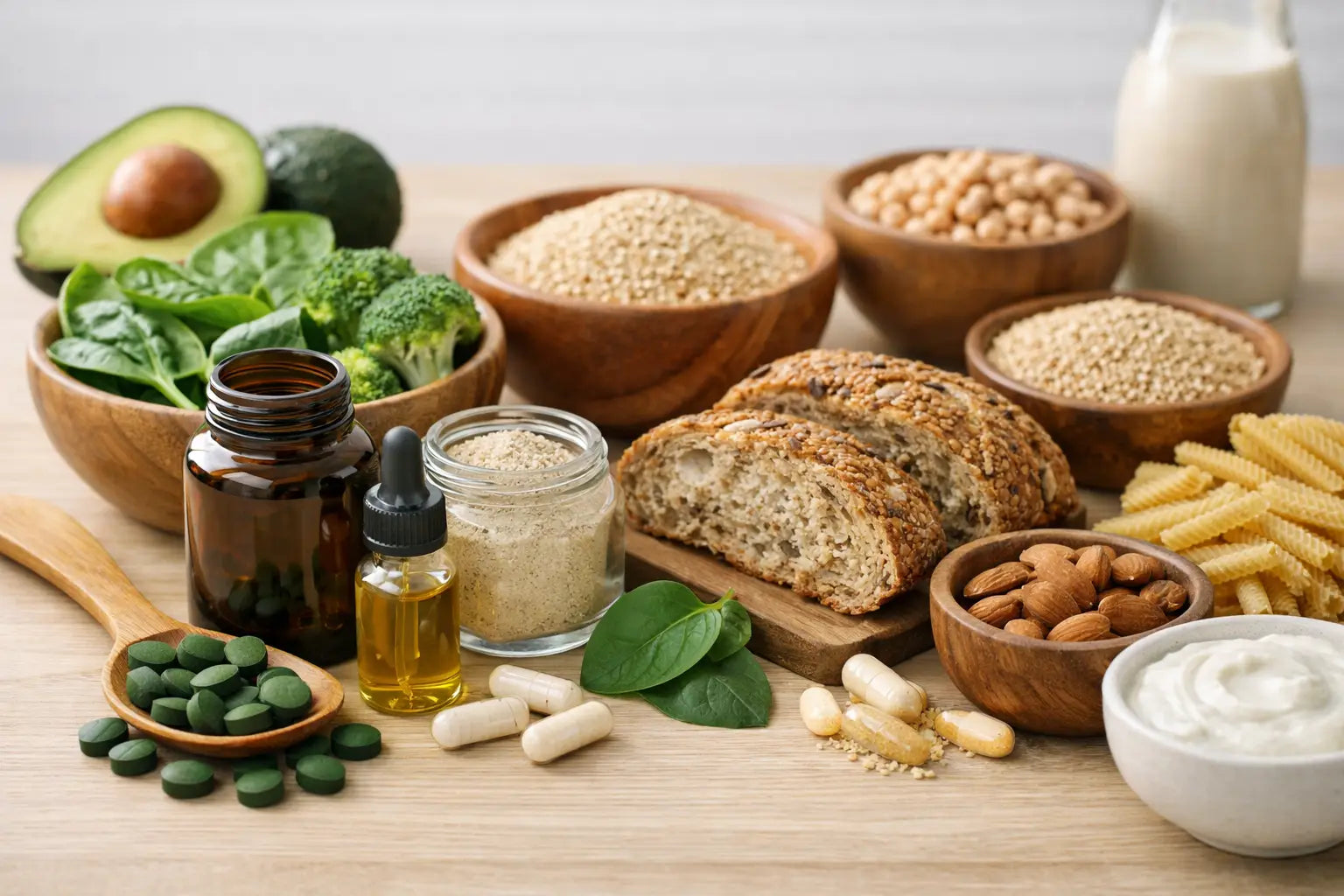
Cutting out gluten and animal products can clean up your routine fast - but it can also narrow your options more than expected. Plenty of tablets, powders and capsules look suitable at first glance, then hide gluten-containing fillers, coatings or cross-contamination risks. That is why choosing vegan supplements for gluten free diets is less about trends and more about precision.
When your diet already has firm boundaries, your supplements need to work harder. They should support energy, digestion, recovery and everyday resilience without causing gut disruption, ingredient guesswork or label fatigue. The right formula feels simple in practice: clean ingredients, clear allergen information, and benefits you can actually notice in daily life.
Why vegan supplements for gluten free diets need extra scrutiny
A supplement can be vegan and still not be gluten free. It can also be gluten free but use non-vegan ingredients such as gelatine, fish oil or vitamin D sourced from lanolin. For anyone managing both requirements, that middle ground matters.
The main issue is not always the active nutrient itself. Often it is the surrounding formula - binders, bulking agents, flavourings, malt-based ingredients or manufacturing processes. Powders and gummies can be especially mixed. A greens blend may look plant-based and wholesome, but if the flavour system or processing introduces gluten, it is no longer a good fit.
This is where clean-label standards make a real difference. Straightforward ingredient lists, third-party testing and clear dietary compatibility claims reduce the risk of buying something that sounds healthy but does not match your lifestyle. If you are already avoiding gluten because of coeliac disease, sensitivity or digestive discomfort, vague wording is not enough.
The nutrients most people miss
Not everyone on a vegan gluten free diet will need the same support. It depends on how varied your meals are, how well you absorb nutrients, your training load, stress levels and life stage. Still, a few gaps come up repeatedly.
Vitamin B12 for steady energy and nervous system support
B12 is one of the first nutrients to check. It is difficult to get reliably from a fully plant-based diet, and low intake can leave you feeling flat, foggy or unusually tired. If your mornings feel sluggish despite eating well, B12 is one of the sensible places to look.
A vegan-friendly B12 supplement is usually straightforward to find, but gluten free status still needs checking. The best option is a clearly labelled formula with no unnecessary fillers and a dose that fits regular daily use.
Vitamin D for immune resilience and mood
In the UK, vitamin D support is useful for a lot of people, especially through darker months. For vegans, sourcing matters because some vitamin D3 is derived from lanolin. If you want to keep your routine fully plant-based, look for vegan D3 from lichen or a clearly vegan vitamin D formula.
This is less about chasing mega doses and more about consistency. A reliable daily supplement can support immune function, bone health and general wellbeing without adding complexity.
Iron if low energy keeps creeping in
Iron needs can be higher for some adults, especially menstruating women, people with limited dietary variety and those with low ferritin confirmed through testing. But iron is not a supplement to take casually just because you feel tired. Too little is a problem, and too much is not better.
If iron support is appropriate, choose a formula designed for good tolerance. That matters even more if your digestion is already sensitive. A gentle, vegan, gluten free iron supplement can be far easier to stay consistent with than a harsher option that leaves you constipated or nauseous.
Omega-3 for brain, eyes and recovery
Many plant-based diets include flax, chia and walnuts, but converting these into the long-chain omega-3s the body uses is not always efficient. That is why algae-based omega-3 supplements are worth considering. They fit vegan requirements and can support brain function, eye health and recovery.
Again, check the full label. Softgels, flavourings and added oils all need to align with your dietary standards.
Calcium, magnesium and zinc when food intake is patchy
If you avoid dairy and also have a restricted gluten free diet, mineral intake can become inconsistent. Calcium matters for bones and muscles, magnesium for energy production and muscle function, and zinc for immune health and skin. You may not need all three separately, but if your diet is repetitive or your training volume is high, a well-formulated multi-mineral blend can be practical.
Gut support matters - but so does tolerance
People following a gluten free diet often pay close attention to digestion, and with good reason. If bloating after meals, irregularity or a heavy gut feeling are regular issues, probiotics or digestive support blends may help. The catch is that not every gut health formula is suitable.
Some probiotic products contain prebiotic fibres or flavour systems that do not agree with everyone, even if they are technically vegan and gluten free. If your system is reactive, start with a simpler formula rather than the busiest one on the shelf. More strains or more ingredients do not automatically mean better results.
There is also a difference between supporting daily gut balance and trying to solve a more serious digestive issue on your own. If symptoms are persistent, severe or worsening, supplements should not replace medical advice. Good wellness support works best alongside proper assessment, not instead of it.
What to check on the label before you buy
A good label should answer questions quickly. If you have to decode half the ingredients or search around for basic allergen information, that is not a strong start.
First, check that the formula is explicitly marked vegan and gluten free. Do not assume one means the other. Then look at the inactive ingredients. Fillers, anti-caking agents, flavourings and capsule materials all count.
After that, look for proof points. Third-party tested products inspire more confidence, particularly if you are strict about cross-contamination. It is also worth checking serving size and dose. Some products look affordable until you realise a daily serving means taking four large capsules. That can become a routine you abandon within a week.
Finally, consider format. Capsules suit some people, while powders fit better for smoothies, shakes or post-training routines. If you already use meal shakes, protein or greens powders, adding another powder may be easy. If your mornings are rushed, a one-capsule option may be more realistic.
Matching supplements to your actual goal
The smartest routine is not the longest one. It is the one that fits the outcome you want.
If your main issue is low energy, focus on essentials such as B12, iron if needed, and vitamin D. If your priority is digestion, a targeted probiotic or gut support formula makes more sense than stacking random products. If you train regularly and want better recovery, think about protein quality, magnesium and algae omega-3 rather than chasing every sports supplement going.
This is where a more tailored approach can help. People on restricted diets often do better when they stop buying by trend and start buying by function. Clean, research-backed formulas built around a specific goal are easier to stick with and easier to assess.
A few common mistakes to avoid
One of the biggest mistakes is assuming that healthy branding equals compatibility. A product can look natural, plant-based and premium while still missing your dietary standards.
Another is over-supplementing. If you take a multivitamin, a greens powder, an immune blend and a recovery formula, you may be doubling up on the same nutrients without realising it. More is not always better for absorption, budget or gut comfort.
The last mistake is ignoring how you feel after taking a product. If a supplement leaves you bloated, nauseous or simply reluctant to take it, it is not the right fit for your daily routine. Good supplementation should feel supportive, not like a compromise.
Building a routine that lasts
The best vegan supplements for gluten free diets are the ones you can trust and actually use consistently. That means clear sourcing, clean ingredients, sensible dosing and benefits that match your life - more stable energy, easier digestion, better recovery, stronger everyday resilience.
For most people, the sweet spot is a small, focused routine rather than a cupboard full of half-used tubs. Start with your likely gaps, choose formulas with transparent labelling and testing, and give them enough time to show what they can do. A well-chosen supplement should feel like a daily upgrade, not another thing to second-guess.


