Important: thyroid conditions require medical diagnosis and management. The NHS recommends speaking to your GP if you have symptoms of thyroid problems. This guide covers nutritional support that is evidence-based alongside medical care — not instead of it.
Quick answer: two micronutrients have the strongest evidence for thyroid function support: iodine (the raw material for thyroid hormone synthesis — cannot make T3 or T4 without it) and selenium (required for the deiodinase enzymes that convert inactive T4 to active T3, and for protecting the thyroid gland from oxidative damage). Both are deficient in significant portions of the UK population. Both are available in halal-certified UK supplements. No herbal supplement has comparable evidence to iodine and selenium for thyroid function.
Iodine — the thyroid’s primary raw material
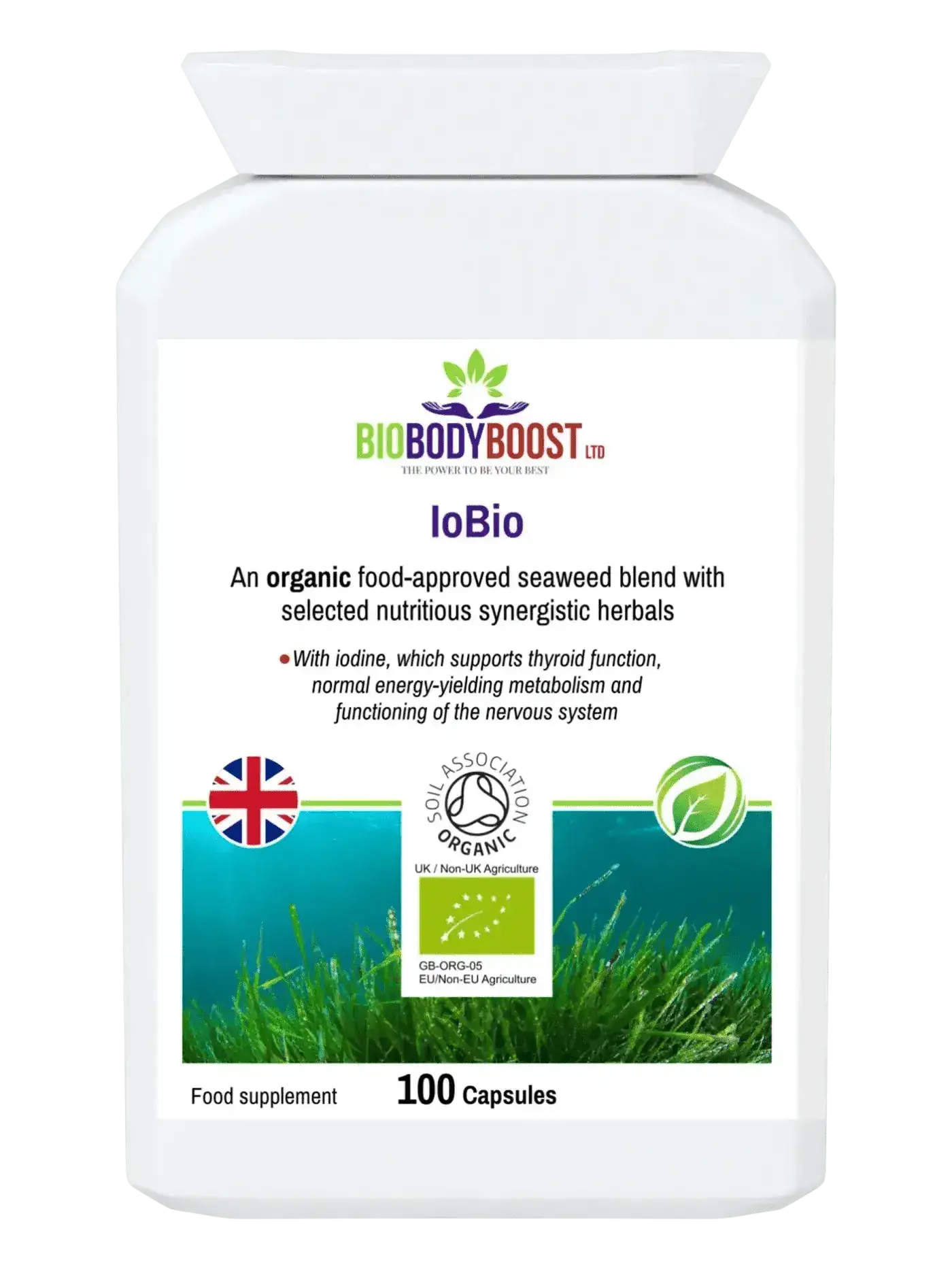
Thyroid hormones contain iodine atoms in their molecular structure — T4 has 4, T3 has 3. The thyroid gland actively concentrates iodine from the bloodstream (at up to 25x plasma levels) and incorporates it into thyroglobulin via thyroid peroxidase to produce thyroid hormones. Without adequate dietary iodine, the thyroid cannot produce normal T4 quantities regardless of TSH stimulation. The result: rising TSH, glandular hypertrophy (goitre), and eventually overt hypothyroidism. The NHS RNI for iodine is 140μg/day for adults. IoBio provides 192μg from organic Ascophyllum nodosum. Halal certified, vegan.
Selenium — the T4 to T3 conversion mineral
T4 (thyroxine) is the primary thyroid hormone produced by the thyroid gland but is largely inactive — it must be converted to T3 (triiodothyronine) in peripheral tissues (particularly liver and kidney) to exert its biological effects. This conversion is catalysed by iodothyronine deiodinase enzymes — which are selenoproteins. Selenium deficiency impairs deiodinase activity, reducing T3 production even when T4 output is normal. Additionally, glutathione peroxidase (another selenoprotein) protects the thyroid gland from hydrogen peroxide produced during hormone synthesis. Gartner et al. (2002, Journal of Clinical Endocrinology and Metabolism, RCT, n=36) found selenium supplementation at 200μg/day for 3 months significantly reduced anti-thyroid peroxidase antibody levels in patients with autoimmune thyroiditis (Hashimoto’s). CardioVital contains selenium 55μg (100% NRV) alongside nattokinase.
What does not have strong evidence
Bladderwrack (another seaweed), ashwagandha and guggul are commonly marketed as thyroid supplements. Ashwagandha has one small RCT (n=50) suggesting modest TSH normalisation in subclinical hypothyroidism. Bladderwrack’s iodine content is highly variable and potentially excessive. Guggul has limited human evidence. None has evidence comparable to correcting iodine and selenium deficiency. The most impactful nutritional thyroid intervention for most people is ensuring iodine and selenium are adequate — not taking herbal extracts.
Browse the Halal Vitamins UK collection.
Can supplements help with thyroid problems UK?
Nutritional deficiencies — particularly iodine and selenium — can impair thyroid function and are correctable with supplementation. This is not a treatment for diagnosed thyroid conditions such as Hashimoto’s, Graves’ disease, or hypothyroidism requiring medication. The NHS recommends GP assessment for thyroid problems including blood tests for TSH, free T4 and thyroid antibodies. Nutritional support (adequate iodine 140μg/day, selenium 55μg/day) is appropriate alongside medical management — it addresses deficiency contributors without interfering with standard thyroid medication.