Spirulina is a cyanobacterium (blue-green microalgae) that has been consumed as food for centuries — by the Aztecs and by communities around Lake Chad in Africa. NASA evaluated it as a complete space food in the 1980s. Modern nutrition science has confirmed its exceptional nutrient density and produced meaningful clinical evidence for specific health benefits. It is not a miracle cure — but it is genuinely one of the most concentrated whole-food nutrition sources available as a supplement.
What Does Spirulina Actually Contain?
Per 10g serving (typical supplement dose), spirulina provides:
- Protein: 5.7g — complete protein containing all 9 essential amino acids. 60–70% of dry weight is protein — higher than any animal product by weight.
- Iron: 2.8mg (20% NRV) — in a relatively bioavailable form, combined with vitamin C. Significant for vegans avoiding animal iron sources.
- B vitamins — including B1, B2, B3 and small amounts of B12 (though spirulina B12 is mostly pseudovitamin B12 — inactive in humans; do not rely on spirulina as a B12 source).
- Phycocyanin — the blue-green pigment unique to spirulina with potent antioxidant and anti-inflammatory properties. This is spirulina's most pharmacologically distinct component.
- Gamma-linolenic acid (GLA) — an omega-6 fatty acid with anti-inflammatory properties, rare in most foods.
- Chlorophyll, carotenoids, minerals — including magnesium, potassium and calcium.
What Does the Clinical Evidence Show?
Cholesterol and triglycerides — strong evidence
A 2016 systematic review of 7 RCTs confirmed spirulina supplementation significantly reduces total cholesterol (average 16.3 mg/dL reduction), LDL cholesterol and triglycerides while raising HDL. The dose range across trials was 1–8g daily. This is one of spirulina's most consistently demonstrated effects and is not explained by a single mechanism — phycocyanin, GLA and direct lipid metabolism modulation all contribute.
Blood glucose — moderate evidence
Multiple trials confirm spirulina supplementation reduces fasting blood glucose and HbA1c in people with type 2 diabetes or impaired glucose tolerance. A 2021 meta-analysis found significant fasting glucose reduction averaging 3.1 mg/dL. Mechanisms include antioxidant protection of beta cells and phycocyanin-mediated AMPK activation.
Anti-inflammatory effects — good evidence
Phycocyanin directly inhibits cyclooxygenase-2 (COX-2) — the same enzyme targeted by ibuprofen and similar NSAIDs — reducing prostaglandin synthesis and inflammatory mediator production. Multiple trials show significant reductions in CRP, IL-6 and TNF-alpha with spirulina supplementation. Anti-inflammatory effects are among the most mechanistically clear of any food supplement.
Athletic performance — moderate evidence
Several RCTs show spirulina supplementation reduces exercise-induced oxidative damage, decreases muscle damage markers and improves time to fatigue in endurance exercise. The mechanism involves phycocyanin antioxidant protection and iron-supported haemoglobin function.
Anaemia — modest evidence in specific populations
Studies in iron-deficient populations (particularly elderly and malnourished individuals) show spirulina supplementation improves haemoglobin levels. The iron content and co-occurring vitamin C support this effect, though spirulina should not replace medical iron supplementation for diagnosed anaemia.
Spirulina as a Protein Source for Vegans
At 60–70% protein content, spirulina is the most protein-dense plant food available. However, the practical dose matters: most people take 3–10g of spirulina daily, providing 1.8–6g of protein. This is a valuable protein addition but not a primary protein source — for meaningful protein supplementation, pea or hemp protein at 25–30g per serving is required. Spirulina's value as a protein source is its completeness (all essential amino acids) and concentrated nutrient density, not its volume.
B12 Warning for Vegans
Spirulina is frequently cited as a plant-based B12 source. This is misleading. Spirulina contains pseudovitamin B12 — a cobalamin analogue that is not bioactive in humans and may actually block true B12 absorption by competing for receptors. Vegans must not rely on spirulina for B12. Genuine B12 supplementation (methylcobalamin) is essential.
Is Spirulina Halal?
Spirulina is a microalgae — not an animal product, alcohol-derived or from any haram source. It is inherently halal. The halal compliance check is the capsule or product format — powder form is unambiguously halal; capsules should use HPMC not gelatine. Some spirulina is grown in facilities that also process non-halal products — third-party halal certification of the finished product is the cleanest solution.
Dose and Quality
Clinical trials use 1–8g daily. Most people take 3–5g (1 rounded teaspoon of powder or 6–10 tablets). Quality matters significantly: heavy metal contamination (particularly lead, mercury and arsenic) has been found in some spirulina products from unregulated sources. Choose spirulina from GMP-certified facilities with batch testing for heavy metals.
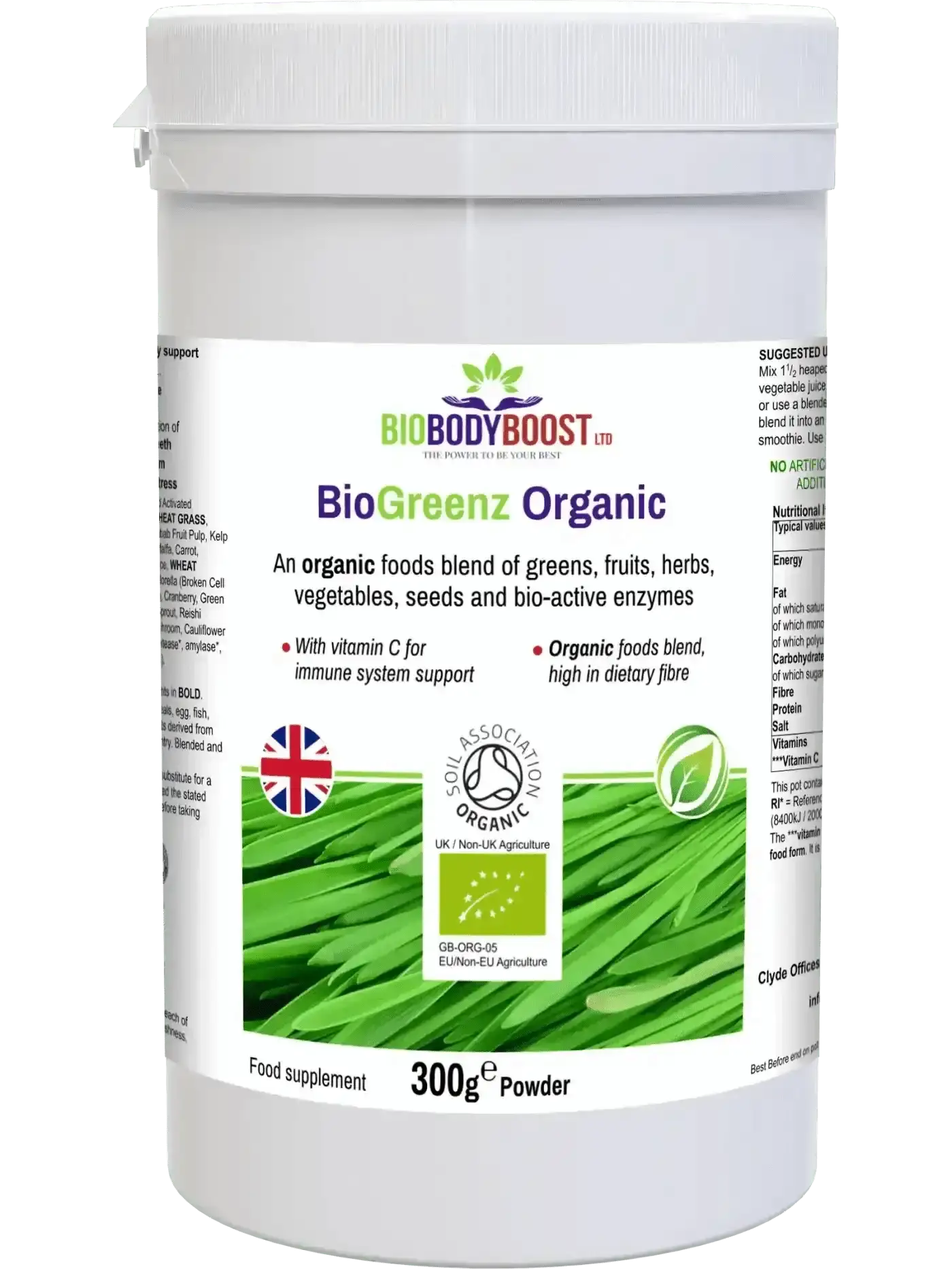
BioGreenz by BioBodyBoost combines spirulina with chlorella, wheatgrass and 32 other organic superfoods — heavy metal tested, halal certified, vegan. Browse the full range.