Saccharomyces boulardii is a beneficial yeast (Saccharomyces cerevisiae var. boulardii) — not a bacterium. This single distinction makes it fundamentally different from all bacterial probiotics: antibiotics cannot kill it. You can take S. boulardii during a course of antibiotics without the antibiotic destroying the probiotic, making it the most appropriate probiotic to use alongside antibiotic treatment.
What Makes S. Boulardii Different From Bacterial Probiotics?
Standard probiotic supplements contain bacteria — Lactobacillus, Bifidobacterium and similar species. Antibiotics are designed to kill bacteria, including the beneficial bacteria in probiotic supplements. If you take a bacterial probiotic during antibiotic treatment, the antibiotic largely destroys the probiotic before it can colonise. This is why the standard advice is to take bacterial probiotics 2–3 hours after antibiotics — to minimise but not eliminate this destruction.
S. boulardii is a yeast — a fungal organism. Antibiotics that target bacterial cell wall synthesis, protein synthesis or DNA replication have no effect on it. It passes through antibiotic treatment completely intact, ready to provide its benefits in the disrupted post-antibiotic gut environment.
What Does S. Boulardii Do?
S. boulardii produces its effects through several mechanisms:
- Reduces gut inflammation — inhibits NF-kB signalling and reduces pro-inflammatory cytokine production in intestinal epithelial cells
- Protects gut barrier integrity — increases tight junction protein expression, reducing intestinal permeability during antibiotic-induced dysbiosis
- Produces protease enzymes — directly degrades C. difficile toxins A and B, reducing the severity of C. diff infection when it occurs
- Competitive exclusion — occupies intestinal receptor sites, preventing pathogenic microorganisms from adhering
- Stimulates SIgA production — increases secretory immunoglobulin A, the primary immune antibody of the gut mucosa
What Does the Clinical Evidence Show?
Antibiotic-associated diarrhoea — very strong evidence
This is S. boulardii’s strongest evidence base. A 2010 Cochrane review of 21 RCTs (n=4,780) confirmed S. boulardii significantly reduced antibiotic-associated diarrhoea risk by approximately 50–60% versus placebo. This is one of the strongest effects of any probiotic in clinical trials.
Traveller’s diarrhoea prevention — good evidence
Multiple trials confirm S. boulardii reduces the incidence of traveller’s diarrhoea in people travelling to high-risk regions, with a protective effect of approximately 25–50% versus placebo.
IBS — moderate evidence
Several RCTs show S. boulardii reduces IBS symptoms including bloating, abdominal pain and stool consistency. Particularly relevant for post-infectious IBS that develops after a gut infection or antibiotic course.
Clostridium difficile infection — good evidence
Multiple trials confirm S. boulardii significantly reduces C. diff recurrence rates — a major concern in people who have had one C. diff episode and are at high risk of recurrence.
How to Use S. Boulardii With Antibiotics
- Start S. boulardii on the same day as your antibiotic course — not 2 hours apart, because the antibiotic won’t affect the yeast
- Continue for 2–4 weeks after completing antibiotics — to support microbiome recovery
- For traveller’s diarrhoea prevention: start 1–5 days before travel and continue throughout the trip
- Dose: 5–10 billion colony forming units (CFU) daily in most clinical trials
Who Should Not Take S. Boulardii?
Immunocompromised individuals (people on immunosuppressants, chemotherapy, with HIV/AIDS or after organ transplant) should consult their doctor before taking any live organism supplement including S. boulardii — rare cases of fungaemia (yeast in the blood) have been reported in severely immunocompromised patients.
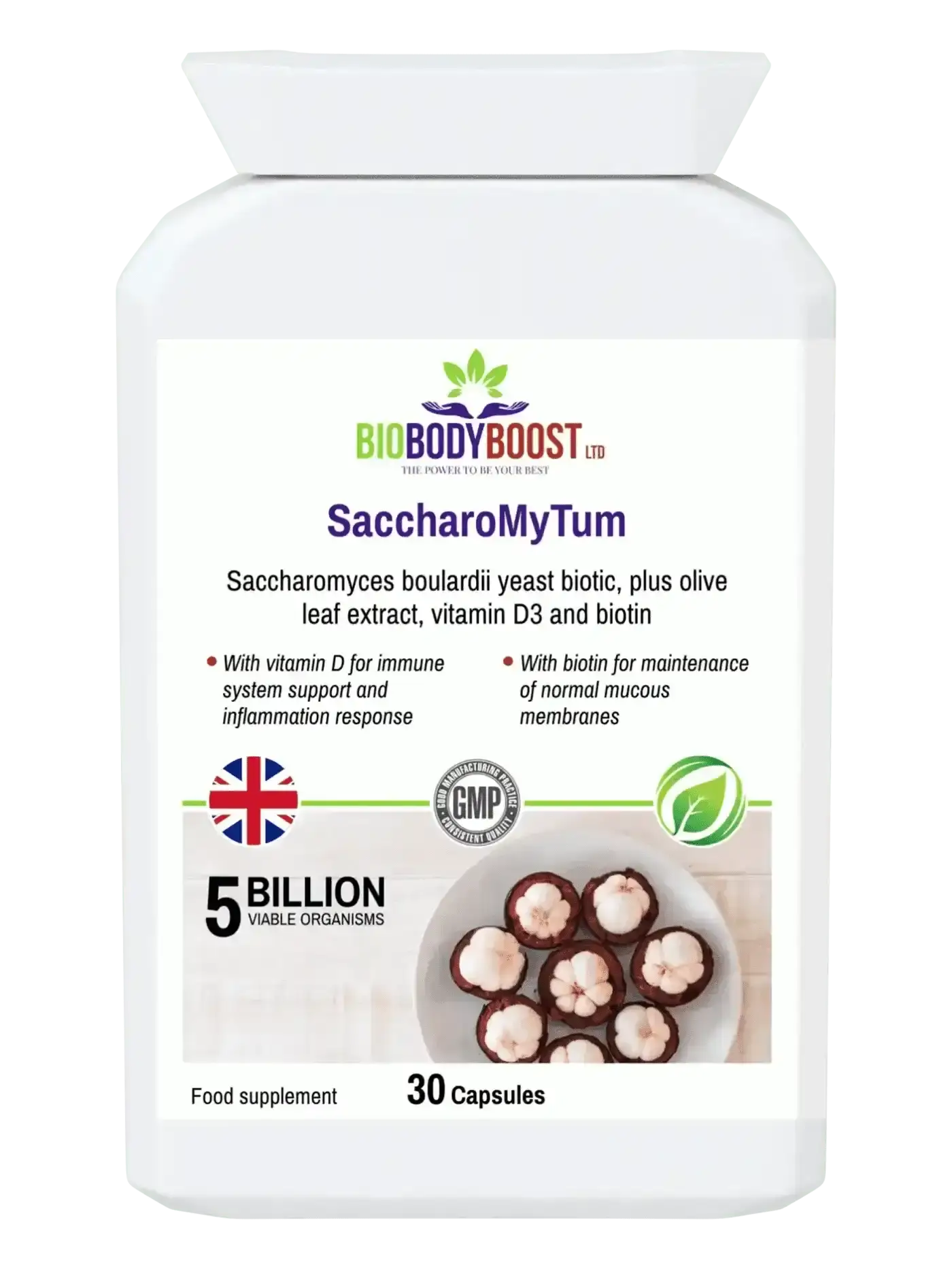
SaccharoMyTum by BioBodyBoost provides 5 billion CFU S. boulardii per capsule. Halal certified, vegan HPMC capsule, UK GMP manufactured. Follow with BioTic 20 Billion after your antibiotic course for comprehensive microbiome restoration with bacterial species. Browse the gut health range.