Key takeaways
- Red clover contains plant isoflavones, loosely similar in structure to oestrogen.
- Research on menopause symptoms is mixed, and red clover has no authorised health claim.
- It is not for everyone: avoid with hormone-sensitive conditions, tamoxifen or blood thinners.
- The herb is plant-based, so the halal check is the capsule and the rest of the formula.
In this guide
Red clover is one of the most common names on menopause supplements in UK pharmacies and health shops.
Many women try it because they want a plant-based option, or cannot take HRT. Here is what it can and cannot do, and what to check first.
What is red clover?
Red clover (Trifolium pratense) is a common meadow plant in the pea family, found across the UK. It has a long history in traditional European herbal use.
Supplements use the dried flower or an extract standardised to isoflavones: biochanin A, formononetin, genistein and daidzein. These are the same family of phyto-oestrogens found in soya and chickpeas.
What does the research show?
Trials of red clover for hot flushes and night sweats are inconsistent. Some report small improvements; others find no clear difference from placebo.
No herb has an authorised claim for menopause symptoms in the UK. The NHS sets out treatment options, including HRT and non-hormonal medicines, on its menopause and perimenopause pages.
First step: if symptoms are affecting your daily life, talk to your GP. A food supplement is not a replacement for medical care.
Who should avoid red clover
- Women who have had, or are treated for, breast cancer or another hormone-sensitive condition
- Anyone taking tamoxifen, HRT or the contraceptive pill, unless their doctor agrees
- Anyone on anticoagulants such as warfarin (red clover contains natural coumarins)
- Women who are pregnant or breastfeeding
- Anyone with a soya allergy, if the formula also contains soya isoflavones

Is red clover halal?
Red clover is a plant, so the herb itself is generally considered halal. The risks sit elsewhere:
| Check | Why |
|---|---|
| Capsule | Gelatine shells are common. Look for HPMC (plant cellulose). |
| Tinctures | Liquid red clover is often an alcohol extract. |
| Other ingredients | Blends add herbs, vitamins and carriers. Halal approval of the whole product is the reliable check. |
More: are gelatine capsules halal?
What actually carries an authorised claim
In women's formulas the regulated claims come from vitamins and minerals. The key one: vitamin B6 contributes to the regulation of hormonal activity and the reduction of tiredness and fatigue (NHS: B vitamins).
Long-term intake above 10mg of B6 a day may lead to mild tingling and numbness, so add up B6 across everything you take.
A halal approved red clover formula

Vegan · Halal & kosher approved
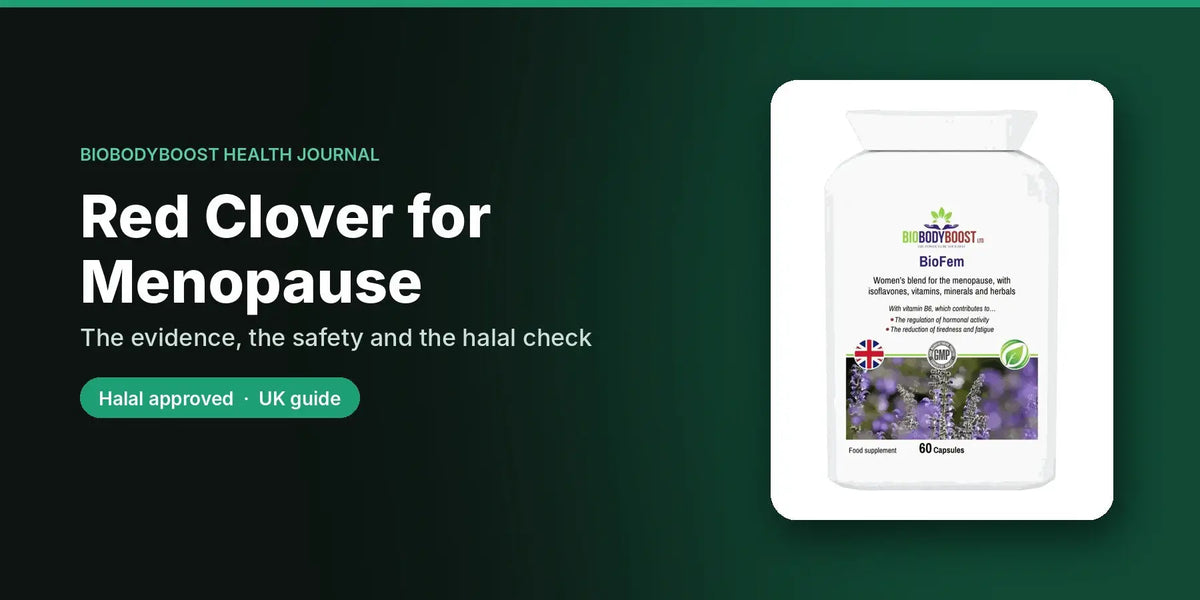
BioFem Red Clover & Wild Yam
- 800mg each of red clover and wild yam, plus 8 more botanicals
- Vitamin B6 5mg (357% NRV) contributes to the regulation of hormonal activity
- No hormones · Contains soya · Max 3 capsules a day
HALAL10 10% off your first order
Shop BioFem →Wild yam is often misunderstood. We explain it in does wild yam contain progesterone?
Questions people ask
Does red clover work for hot flushes?
Research is mixed, and red clover has no authorised claim in the UK. Speak to your GP about options if hot flushes affect you.
Is red clover the same as HRT?
No. It contains plant isoflavones, not hormones. Do not combine it with HRT without your doctor's advice.
Is red clover halal?
The herb is plant-based and generally considered halal. Avoid gelatine capsules and alcohol tinctures, or choose a halal approved product.
How long does red clover take to work?
Herbal formulas are not fast-acting. Give it several weeks and keep notes. Stop and see your GP if you notice side effects.
Is BioFem halal and vegan?
Yes, vegan, halal and kosher approved. It contains soya.
Sources: NHS: menopause and perimenopause · NHS: B vitamins · GB claims register
General information, not a religious ruling or medical advice. Food supplements should not replace a varied diet and healthy lifestyle. Speak to your GP if you are pregnant or breastfeeding, have a medical condition or take medication.