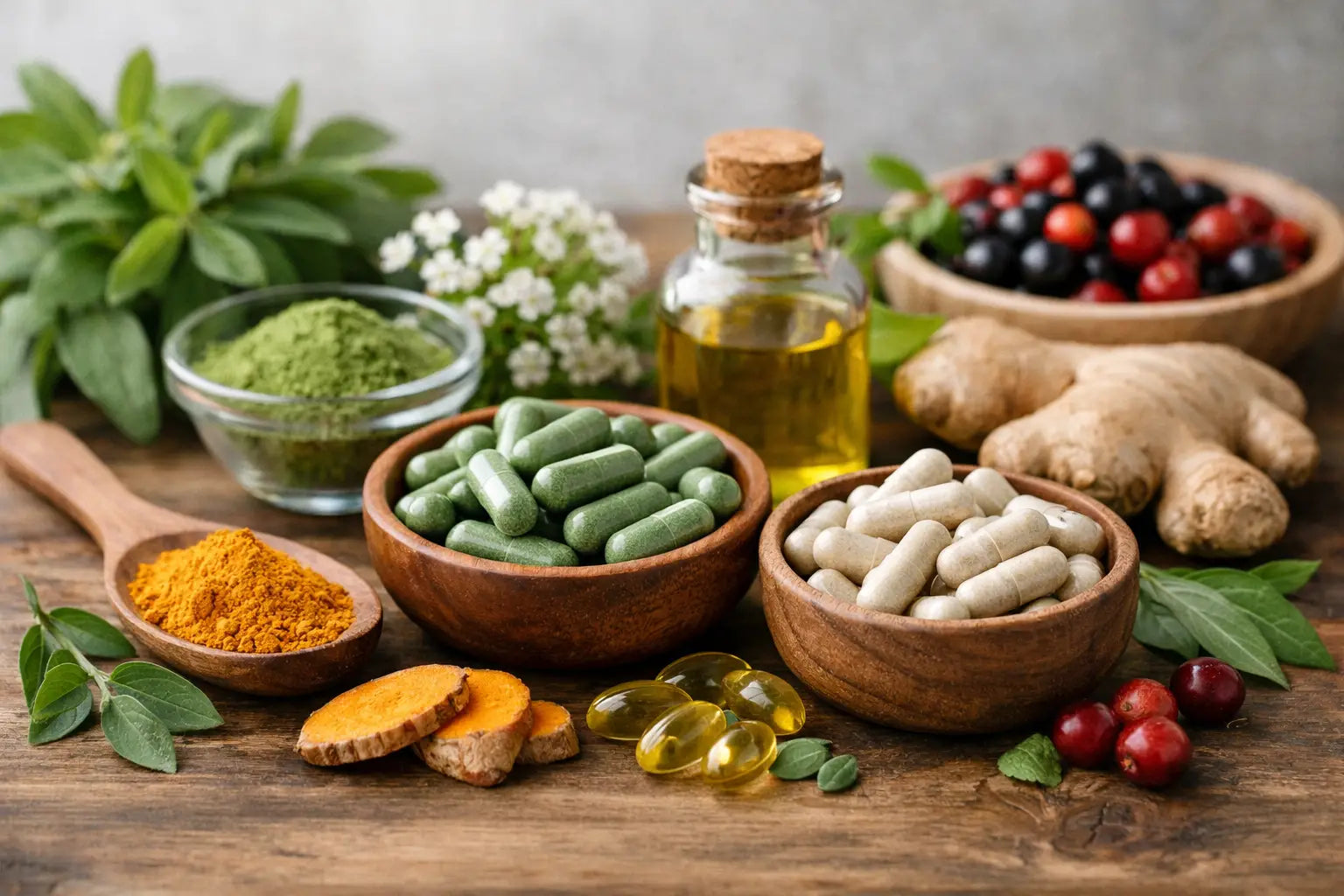
A stiff knee after a run, tight fingers first thing, slower recovery than you remember — these are everyday experiences, and a large supplement category has grown up around them. This article sets out what plant-based supplements in this space actually contain, and, importantly, which ingredients are permitted to make claims and which are not.
Start With What's Allowed to Be Said
This is where most articles on this subject go wrong, so it is worth being direct.
There is no authorised health claim for inflammation. Not in the UK, not in the EU. Phrases like "supports the body's normal inflammatory response" are not permitted claims — they are marketing language built to sound like one.
Anything that genuinely reduced inflammation would be a medicine, regulated as such. Turmeric, ginger, boswellia and the rest carry no authorised claims at all, because botanical claims have been on hold with the European Commission since 2010 and none has been approved.
That does not make these ingredients worthless. It does mean anyone claiming specific effects for them is going beyond what regulators have assessed.
The Nutrients That Do Carry Claims
If you want a supplement with a regulator-assessed claim relevant to joints and recovery, these are the ones:
- Vitamin C · contributes to normal collagen formation for the normal function of cartilage and bones. This is the strongest joint-relevant claim available, and it belongs to a cheap, ordinary vitamin.
- Manganese · contributes to the normal formation of connective tissue
- Copper and zinc · contribute to the protection of cells from oxidative stress
- Vitamin D · contributes to the maintenance of normal bones and normal muscle function
- Calcium · needed for the maintenance of normal bones
When you read a label, check which ingredient the claim is attached to. If a product leads on turmeric but the claim sits with vitamin C, that is the honest position — and a brand that says so is telling you something useful.
The Botanicals People Actually Buy
Turmeric and curcumin
Turmeric's colour comes from curcuminoids, of which curcumin is the main one. The practical issue is that curcumin is poorly absorbed, which is why formulations pair it with black pepper extract (piperine) or use concentrated extracts.
What to look for: a stated curcuminoid content, not just a turmeric weight. "2000mg turmeric" tells you nothing on its own — "providing 50mg curcuminoids" tells you something. Be sceptical of unverified potency figures like "95% curcumin" unless the manufacturer publishes them.
Turmeric may interact with blood-thinning medication — speak to your GP if you take any.
Ginger
Long used in both culinary and traditional contexts, and generally well tolerated. Like turmeric, it carries no authorised claims.
Glucosamine and MSM
Common in joint formulas. One thing worth knowing: most glucosamine is derived from shellfish, which rules it out for anyone with a shellfish allergy and for vegans. Vegetable-source glucosamine exists but is much less common — if that matters to you, check the label rather than assuming.
Omega oils
EPA and DHA carry an authorised claim for the normal function of the heart at 250mg daily — not a joint claim, but a real one. Sources include fish oil, krill oil and algae oil. Algae is the vegan option. Note that many omega products are not vegetarian even beyond the oil itself, since gelatin capsule shells are common.
What Actually Helps
Worth saying plainly: if stiffness and slow recovery are being driven by poor sleep, inactivity, overtraining or a poor diet, no capsule will carry that load. Movement, sleep, adequate protein and load management do more than any supplement in this category, and they are free.
Supplements sit alongside those things. They do not replace them.
When to See a Doctor
See your GP if you have joint pain with swelling, redness or heat; morning stiffness lasting more than 30 minutes; joint symptoms alongside fever, rash or unexplained weight loss; or pain that is worsening or waking you at night.
Inflammatory arthritis, including rheumatoid arthritis, needs early diagnosis and treatment — outcomes are substantially better when it is caught early. A supplement is not the right response to those symptoms.
If You're Looking at Our Range
Flexi-Time uses vegan glucosamine HCl at 300mg — not shellfish-derived — with turmeric at 2631mg providing 50mg curcuminoids, MSM 200mg, bamboo silica and vitamin C carrying the cartilage claim.
CurcuminBoost provides 150mg curcumin per capsule from organic root powder and extract, with zinc and B6.
Both are halal approved and vegan, with doses published. We don't sell boswellia or algae oil, and we're not going to recommend ingredients we don't stock as though we were neutral about it.
This article is general information, not medical advice. Food supplements should not replace a varied diet or a healthy lifestyle, and are not a substitute for medical treatment. Turmeric may interact with blood-thinning medication. Consult your GP before use if pregnant, breastfeeding, taking prescription medication, or managing a diagnosed health condition.