PCOS (polycystic ovary syndrome) is a hormonal condition requiring medical diagnosis and management. The NHS recommends speaking to your GP if you have symptoms of PCOS. Supplements are adjuncts to medical care and lifestyle management, not replacements for them.
Quick answer: PCOS is driven by insulin resistance, hyperandrogenism (excess androgen) and ovarian dysfunction. The most evidence-supported supplements address insulin resistance directly: magnesium (insulin receptor cofactor, significantly more deficient in PCOS than the general population), chromium (EFSA-authorised blood glucose claim, insulin sensitisation), inositol (particularly myo-inositol — the most robustly evidenced PCOS supplement available), and vitamin D (deficiency is significantly more prevalent in PCOS). All are available in halal-certified formats.
Why PCOS has a nutritional dimension
PCOS affects approximately 10% of women of reproductive age globally — the NHS identifies it as one of the most common hormonal conditions in women. Approximately 70% of women with PCOS have insulin resistance — making it fundamentally a metabolic condition as much as a hormonal one. Insulin resistance drives excess androgen production by the ovaries (hyperandrogenism), which disrupts ovulation and causes the characteristic symptoms: irregular periods, excess hair growth (hirsutism), acne, weight gain tendency and difficulty conceiving.
South Asian women have significantly higher rates of PCOS than white European women, with more severe insulin resistance component — making evidence-based nutritional management particularly relevant to UK South Asian communities.
1. Inositol (myo-inositol) — the most evidence-supported PCOS supplement
Inositol is a sugar alcohol (related to glucose) that functions as an intracellular insulin signal mediator. Women with PCOS have significantly impaired inositol metabolism and lower tissue inositol availability, contributing to insulin resistance specifically. Supplemental myo-inositol restores insulin signalling in PCOS via a different pathway to metformin, making them complementary rather than competing.
What research shows: Papaleo et al. (2007, Gynecological Endocrinology, RCT, n=25) found myo-inositol significantly improved menstrual cycle regularity, reduced testosterone levels and improved insulin sensitivity vs placebo. A 2016 meta-analysis in Endocrine, Metabolic and Immune Disorders (10 RCTs) confirmed myo-inositol significantly reduced fasting insulin, testosterone, BMI and significantly improved ovulation frequency in PCOS. A 2019 Clinical Endocrinology comparison found myo-inositol as effective as metformin for restoring ovulation in PCOS with fewer GI side effects. The standard effective dose: 2–4g myo-inositol daily, often in a 40:1 ratio with d-chiro-inositol. BioBodyBoost does not currently stock inositol as a standalone product.
2. Magnesium — the deficiency that worsens PCOS
Magnesium is required for insulin receptor tyrosine kinase activity — the molecular basis of insulin signalling. Women with PCOS have significantly lower serum and intracellular magnesium than women without PCOS, independent of BMI. Barbagallo et al. (2011, American Journal of Therapeutics) confirmed magnesium deficiency directly impairs insulin signalling and worsens metabolic syndrome markers. A 2018 Biological Trace Element Research study found women with PCOS had significantly lower serum magnesium, with magnesium supplementation significantly improving insulin sensitivity.
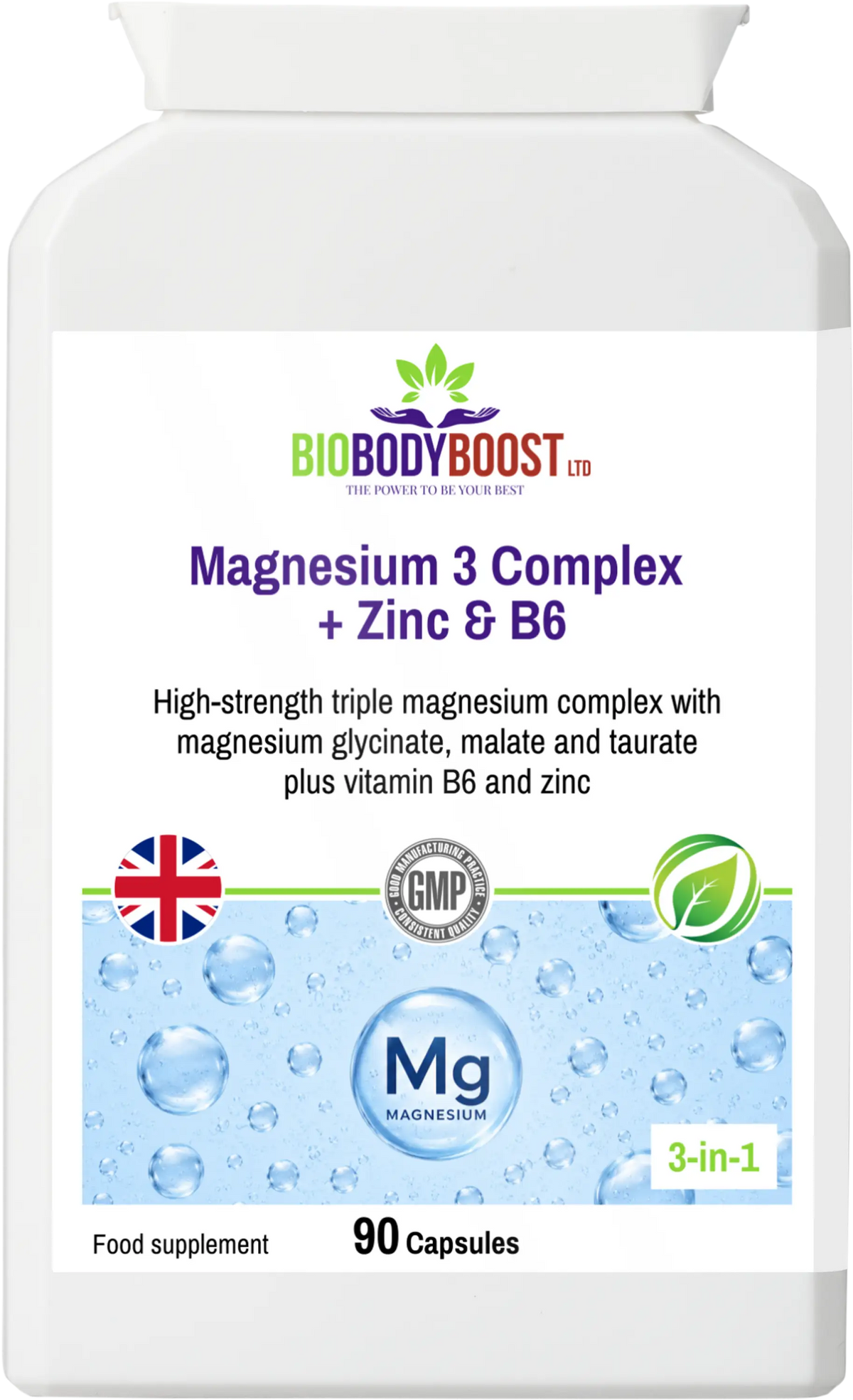
Magnesium 3 Complex — 300mg elemental magnesium as glycinate + malate + taurate, zinc 10mg (EU claim for normal testosterone levels), B6 5mg. Halal certified, vegan, HPMC capsule.
3. Chromium — EFSA-authorised insulin sensitisation
Chromium supports insulin receptor sensitivity via chromodulin, enhancing GLUT4 glucose transporter activity. EU/UK-retained EFSA-authorised health claim: chromium “contributes to the maintenance of normal blood glucose levels.” Lydic et al. (2006, Fertility and Sterility) found chromium supplementation significantly improved insulin sensitivity and reduced fasting glucose in women with PCOS. BodyLean Garcinia Complex provides chromium 100μg (250% NRV). Halal certified, vegan.
4. Vitamin D — PCOS amplifies an already-common deficiency
Vitamin D deficiency is significantly more prevalent in women with PCOS than in age-matched controls — estimated at 67–85% of PCOS patients. Vitamin D receptors are present on ovarian cells and regulate follicle-stimulating hormone (FSH) receptor expression. Irani et al. (2014, Journal of Clinical Endocrinology and Metabolism, RCT) found vitamin D supplementation in PCOS significantly improved insulin resistance markers and menstrual regularity. Lipovita D3+K2 — lichen-derived D3 4,000 IU, liposomal, halal, vegan.
5. Zinc — anti-androgenic support
Zinc inhibits 5-alpha reductase — the enzyme that converts testosterone to the more potent dihydrotestosterone (DHT) that drives hirsutism and acne in PCOS. Several studies have found significantly lower zinc in PCOS patients, and zinc supplementation has been shown to reduce hirsutism scores. Jamilian et al. (2015, Journal of Endocrinological Investigation, RCT, n=48) found zinc supplementation significantly reduced hirsutism and improved hormonal markers in PCOS. Magnesium 3 Complex provides zinc 10mg. EU-authorised claim: zinc contributes to normal testosterone levels in the blood.
The halal PCOS supplement stack
| Supplement | PCOS mechanism | Evidence |
|---|---|---|
| Inositol (myo-inositol) | Insulin signal mediator — PCOS-specific pathway | Very strong (not in BBB range) |
| Magnesium 3 Complex | Insulin receptor tyrosine kinase cofactor + anti-androgen zinc | Strong |
| Lipovita D3+K2 | FSH receptor expression + insulin resistance | Good (Irani 2014 RCT) |
| BodyLean Garcinia (chromium) | GLUT4 insulin sensitisation (EFSA claim) | Good |
What supplements help PCOS UK?
The most evidence-supported PCOS supplements by mechanism: myo-inositol (2–4g/day — the most robustly evidenced, addresses PCOS-specific inositol metabolism impairment; 2016 meta-analysis of 10 RCTs confirmed significant improvement in insulin, testosterone and ovulation frequency); magnesium glycinate (insulin receptor cofactor, significantly deficient in PCOS); vitamin D (67–85% of PCOS patients deficient; Irani 2014 RCT found significant improvement in insulin resistance and menstrual regularity); chromium (EFSA-authorised insulin sensitisation; Lydic 2006 Fertility and Sterility RCT confirmed improved insulin sensitivity in PCOS); zinc (anti-androgenic via 5-alpha reductase inhibition; Jamilian 2015 RCT showed reduced hirsutism). Discuss all supplementation with your GP alongside PCOS management.
Is PCOS more common in South Asian women UK?
Yes — prevalence studies consistently find higher PCOS rates in South Asian women (approximately 52% higher than white European women in UK studies), with a more severe insulin resistance component and greater metabolic risk profile at equivalent BMI. UK South Asian women with PCOS also have higher rates of vitamin D deficiency (compounding insulin resistance) and may have different dietary patterns that affect magnesium and chromium intake. This means the nutritional support approach is particularly relevant and impactful for South Asian women with PCOS.
Is myo-inositol halal?
Yes — myo-inositol is a sugar alcohol produced by the body from glucose and found in fruits, grains and beans. Supplement-grade myo-inositol is produced by hydrolysis of phytic acid from plant sources (corn, rice bran) or by microbial fermentation from plant substrates — no animal involvement. It is inherently halal, vegan and kosher. The compliance check for inositol supplements is the capsule shell and excipients. BioBodyBoost does not currently stock myo-inositol as a standalone product — the BBB PCOS stack addresses the insulin resistance, vitamin D, magnesium and zinc components.