Written by the BioBodyBoost Nutrition Team · Reviewed by a Registered Nutritionist (RNutr) · May 2026

Omega-3 fatty acids are among the best-evidenced supplements available, with robust research supporting their role in cardiovascular health, brain function, joint comfort and eye health. The EU authorises the health claim that DHA contributes to normal brain function and vision — a regulatory hurdle that requires substantial clinical evidence to pass. But the choice of omega-3 source — fish oil vs krill oil vs plant-based — is less straightforward than most supplement brands suggest.
Why omega-3s matter: EPA and DHA
Omega-3s are a family of polyunsaturated fats. The most physiologically active forms are EPA (eicosapentaenoic acid) and DHA (docosahexaenoic acid), found primarily in marine sources. ALA (alpha-linolenic acid) is found in plant sources like flaxseed and walnuts, but the body converts ALA to EPA and DHA very inefficiently — typically only 5–10% conversion to EPA and under 0.5% to DHA. Plant-based ALA supplements are therefore not equivalent substitutes for marine EPA/DHA for most purposes.
Standard fish oil: the baseline
Conventional fish oil provides EPA and DHA as triglycerides (TG) or ethyl esters (EE), depending on the processing method. Triglyceride form is more natural (how fat exists in fish tissue) and absorbs approximately 70% better than ethyl ester form. The NHS recommends eating at least two portions of oily fish per week, particularly for cardiovascular health — supplementation is the practical alternative for those who do not.
The evidence base for fish oil covers three decades and thousands of trials. It remains the gold standard for omega-3 supplementation on a cost-per-dose basis.
Krill oil: the phospholipid difference
Krill oil supplies EPA and DHA in phospholipid form — the same structural form used in human cell membranes. This phospholipid packaging has two meaningful consequences. First, absorption studies suggest 25–40% greater EPA/DHA uptake compared to standard fish oil triglycerides. Second, krill oil contains phosphatidylcholine, which delivers choline to the brain independently — a nutrient important for cognitive function and liver health that most fish oils do not provide.
Krill oil also contains astaxanthin — a powerful antioxidant carotenoid that protects the EPA and DHA from oxidation and has its own anti-inflammatory properties. Research in Lipids in Health and Disease found krill oil produced comparable reductions in triglycerides and inflammatory markers to fish oil at lower EPA/DHA doses due to superior absorption.
Head-to-head comparison
| Factor | Fish oil (TG form) | Krill oil | Flaxseed (ALA) |
|---|---|---|---|
| EPA/DHA per capsule | High (300–600mg) | Lower (100–250mg) | None (ALA only) |
| Absorption | Good ✓ | Superior (phospholipid) ✓ | Poor conversion ✗ |
| Antioxidant protection | Low ✗ | Astaxanthin ✓ | N/A |
| Halal certification | Depends on gelatine capsule | Depends on source | Inherently halal ✓ |
| Cost-effectiveness | Best value ✓ | Premium ££ | Low cost ✓ |
The halal consideration
Most fish oil softgels use bovine or porcine gelatine capsules, making them non-halal despite the fish-derived contents. Halal-certified omega-3 supplements use fish gelatine or plant-derived capsule materials. This distinction is rarely visible on front-of-pack labelling, making certification verification essential for Muslim consumers.
The 3-6-9 approach
Beyond EPA and DHA, omega-6 (linoleic acid) and omega-9 (oleic acid) also play important roles in cardiovascular and skin health. The modern Western diet is already omega-6 heavy — the important ratio is omega-6 to omega-3, ideally 4:1 or lower. A comprehensive 3-6-9 formula delivers the full spectrum while balancing the ratio, typically combining fish oil with plant sources like flaxseed (ALA/omega-3) and organic sunflower or evening primrose (omega-6) and olive or avocado (omega-9).
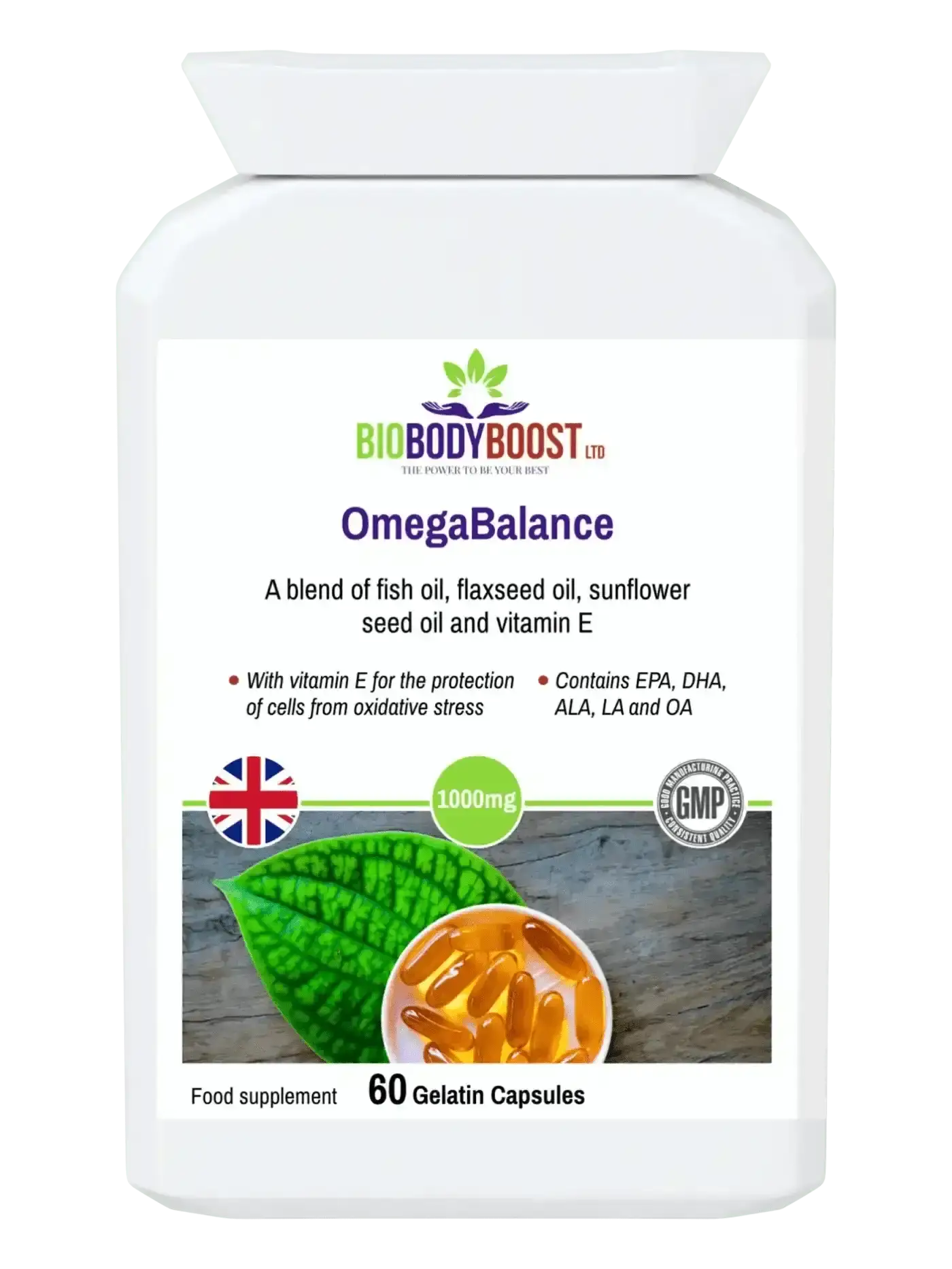
The BioBodyBoost OmegaBalance combines halal-certified fish oil with organic flaxseed oil in a gelatine-free softgel with no bovine gelatine. For the astaxanthin-enhanced krill option, see the AstaxaKrill Antarctic Krill Oil. Explore the full Joints & Bones UK and Halal Vitamins UK collections.
Food supplements should not replace a varied diet. Not suitable for those with fish or shellfish allergies. Consult your GP before use if taking anticoagulant medication, as high-dose omega-3 may affect blood clotting.