Nattokinase is a serine protease enzyme extracted from natto — a traditional Japanese fermented soybean food. It has genuine clinical evidence for reducing blood pressure, degrading fibrin (blood clot proteins), and improving cardiovascular blood flow markers. Interest surged post-COVID as research explored its fibrinolytic properties in the context of long COVID and cardiovascular risk. Here is what the evidence actually shows.
What Is Nattokinase and How Was It Discovered?
Nattokinase was first identified in 1987 by Dr Hiroyuki Sumi, a researcher at the Chicago University Medical School, who was studying thrombolytic (clot-dissolving) agents. He discovered that natto — a sticky fermented soy food eaten daily in Japan — contained an enzyme with potent fibrinolytic activity. Unlike pharmaceutical thrombolytics (which require intravenous administration and carry bleeding risks), nattokinase is orally active and appears to have a more moderate and sustained effect.
What Does Nattokinase Do?
Nattokinase works through two primary mechanisms:
- Fibrinolysis — nattokinase directly degrades fibrin, the protein scaffold of blood clots, and plasminogen activator inhibitor-1 (PAI-1), which normally suppresses the body’s own clot-dissolving activity. This reduces the tendency toward pathological clot formation (thrombosis) and may help dissolve existing microclots.
- Blood pressure reduction — multiple RCTs confirm nattokinase reduces both systolic and diastolic blood pressure. The proposed mechanism involves inhibiting angiotensin-converting enzyme (ACE) — the same pathway targeted by ACE inhibitor antihypertensive medications, though with a much weaker effect.
What Does the Clinical Evidence Show?
Blood pressure — strongest evidence
A 2008 RCT published in Hypertension Research found nattokinase supplementation (2,000 FU daily for 8 weeks) significantly reduced systolic blood pressure by 5.5 mmHg and diastolic by 2.8 mmHg versus placebo in people with prehypertension and stage 1 hypertension. A systematic review of four RCTs confirmed consistent modest blood pressure reductions.
Fibrinolytic activity — good evidence
Multiple trials confirm nattokinase produces measurable reductions in fibrinogen, D-dimer and Factor VIII — blood coagulation markers. A Japanese study found regular natto consumption significantly reduced cardiovascular mortality, with the nattokinase content proposed as a contributing mechanism.
Post-COVID / long COVID interest
Interest in nattokinase increased significantly after research suggested microclotting may contribute to long COVID symptoms. Several researchers have proposed nattokinase as a potential intervention for fibrin microclot degradation in long COVID — though this remains investigational and has not been confirmed in controlled trials. Nattokinase should not be used as a self-treatment for long COVID without medical guidance.
Nattokinase vs Beetroot: Which Is Better for Heart Health?
A common question — and the honest answer is that they do completely different jobs, so "better" depends on what you are trying to support.
Nattokinase works on the blood itself. Its mechanism is fibrinolysis: degrading fibrin and PAI-1, which affects clotting tendency and blood viscosity. Its blood pressure effect comes from mild ACE inhibition. Think of it as acting on what flows through the vessels.
Beetroot works on the blood vessels. Beetroot is rich in dietary nitrates, which convert to nitric oxide — a vasodilator that relaxes and widens blood vessel walls. That is why beetroot's evidence base centres on blood pressure reduction and exercise performance (improved oxygen efficiency), not clotting markers. Think of it as acting on the pipes.
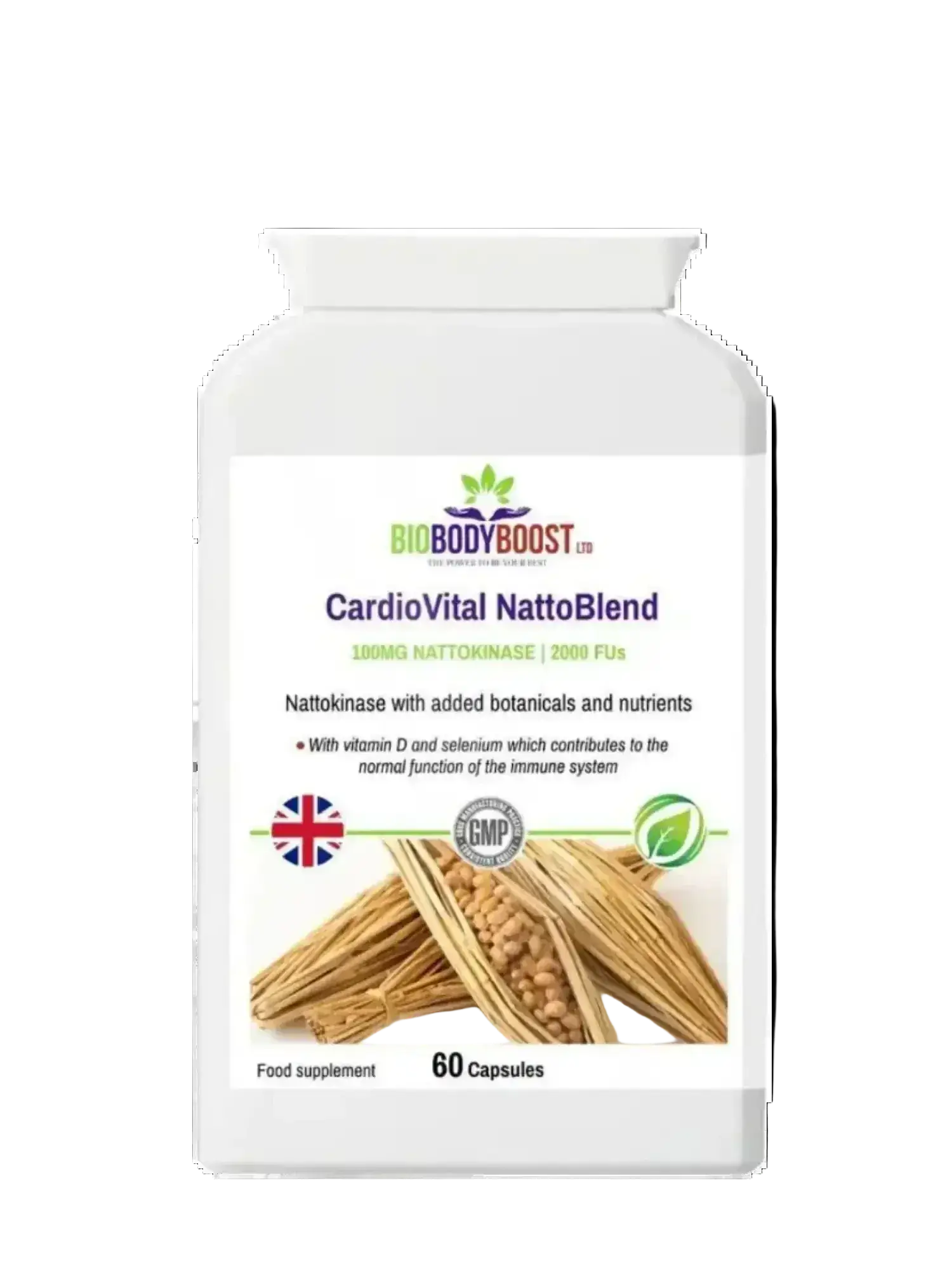
In practice: for blood pressure alone, both have RCT support and beetroot's nitrate effect is faster-acting; for coagulation and blood viscosity, only nattokinase is relevant; for exercise performance, only beetroot. Because the mechanisms don't overlap, some people use both — for example CardioVital (2,000 FU nattokinase) alongside Red Punch beetroot & cherry capsules. The critical caveat is unchanged: if you take anticoagulant or antiplatelet medication, the nattokinase side of that pairing needs GP sign-off first, as covered in the interactions section below. For the wider context of what actually has evidence in this category, see the heart health supplements evidence guide.
Nattokinase Dosing: Understanding FU
Nattokinase is measured in Fibrinolytic Units (FU) — a measure of enzyme activity, not weight. Clinical trials typically use 2,000 FU daily. The standard supplemental dose is 1,000–4,000 FU per day. Product labels should state FU, not just mg — mg weight without FU activity measurement means nothing for this enzyme.
Critical Drug Interactions
This is the most important safety section for nattokinase:
- Anticoagulants (warfarin, heparin, apixaban, rivaroxaban) — nattokinase’s fibrinolytic activity can amplify the bleeding risk of anticoagulant medications. Never combine without medical supervision.
- Antiplatelet drugs (aspirin, clopidogrel) — similar amplification risk. Consult GP before combining.
- Pre-surgery — stop nattokinase at least 2 weeks before any surgical procedure.
For people not on blood-thinning medications, nattokinase at standard supplemental doses has a good safety profile.
CardioVital Natto Blend by BioBodyBoost provides 2,000 FU nattokinase with vitamin D3, selenium and NAC — a cardiovascular support formula. Halal certified, vegan, UK GMP. Always consult your GP before use if you take anticoagulant medication. Browse the range.