Milk thistle (Silybum marianum) has genuine clinical evidence for liver protection — specifically its active flavonolignan complex, silymarin. It works via three mechanisms: antioxidant protection of hepatocytes, anti-inflammatory modulation, and promotion of liver cell regeneration. However, the evidence is strongest in people with existing liver conditions (hepatitis, cirrhosis, alcohol-related liver disease) rather than healthy adults using it as a general “liver detox.” Here is what the research actually shows.
What Is Silymarin and How Does It Work?
Silymarin is a mixture of flavonolignan compounds (silybin, isosilybin, silychristin, silydianin) extracted from the seeds of the milk thistle plant. Three mechanisms are documented:
- Antioxidant protection — silymarin scavenges reactive oxygen species generated during hepatic metabolism and upregulates glutathione (the liver’s primary antioxidant). Liver cells face unusually high oxidative stress because the liver processes virtually everything absorbed from the gut, including alcohol, medications and environmental toxins.
- Anti-inflammatory modulation — silymarin inhibits NF-kB activation and reduces pro-inflammatory cytokine production in Kupffer cells (the liver’s resident immune cells). This reduces the inflammatory component of liver injury.
- Hepatocyte regeneration — silymarin stimulates RNA polymerase I activity in liver cells, accelerating protein synthesis and cellular repair following injury.
What Does the Clinical Evidence Show?
Alcoholic liver disease — strong evidence
Multiple clinical trials confirm silymarin significantly improves liver enzyme markers (AST, ALT) and liver histology in people with alcoholic liver disease. A 2005 systematic review found consistent improvements in liver function tests across trials, with effects greatest in people with more significant baseline liver damage.
Non-alcoholic fatty liver disease (NAFLD) — good evidence
A 2017 systematic review found silymarin supplementation significantly reduced AST, ALT and GGT (liver enzymes indicating hepatocyte stress) in NAFLD patients, with some trials showing improvements in liver steatosis (fat accumulation) on ultrasound.
Hepatotoxic drug protection — good evidence
Silymarin has documented protective effects against hepatotoxic medications including paracetamol (at high doses), amiodarone and certain chemotherapy agents. Several hospitals in Germany and Austria use IV silymarin as a standard treatment for Amanita phalloides (death cap mushroom) poisoning — one of the most potent hepatic toxins known.
Healthy liver maintenance — limited evidence
For healthy people without liver conditions, evidence for milk thistle producing measurable benefits is limited. The liver is highly resilient and self-repairing in healthy individuals. Using milk thistle as a “detox” after alcohol overconsumption has limited clinical support — though the antioxidant and anti-inflammatory mechanisms are biologically plausible.
What Is an Effective Dose of Milk Thistle?
Clinical trials use silymarin standardised to 70–80% silymarin content. Effective doses in trials range from 140–800mg silymarin daily. Most UK supplements provide 150–400mg silymarin equivalent. Check that the product is standardised to silymarin percentage — ground milk thistle powder without standardisation has unpredictable active compound content.
Who Benefits Most From Milk Thistle?
- People with diagnosed fatty liver (NAFLD/NASH) — strongest evidence for liver enzyme normalisation
- Regular or heavy alcohol drinkers — for ongoing hepatocyte protection
- People taking long-term medications with hepatotoxic potential (statins, NSAIDs, paracetamol) — antioxidant protection
- People with exposure to environmental toxins
Is Milk Thistle Safe?
Milk thistle has an excellent safety profile with decades of clinical use. Most common reported effects are mild GI symptoms (loose stools, nausea) in a small minority at high doses. People with allergies to plants in the Asteraceae family (ragweed, chrysanthemums, marigolds) should use caution. Mild oestrogenic effects have been reported — people with hormone-sensitive conditions should consult their GP.
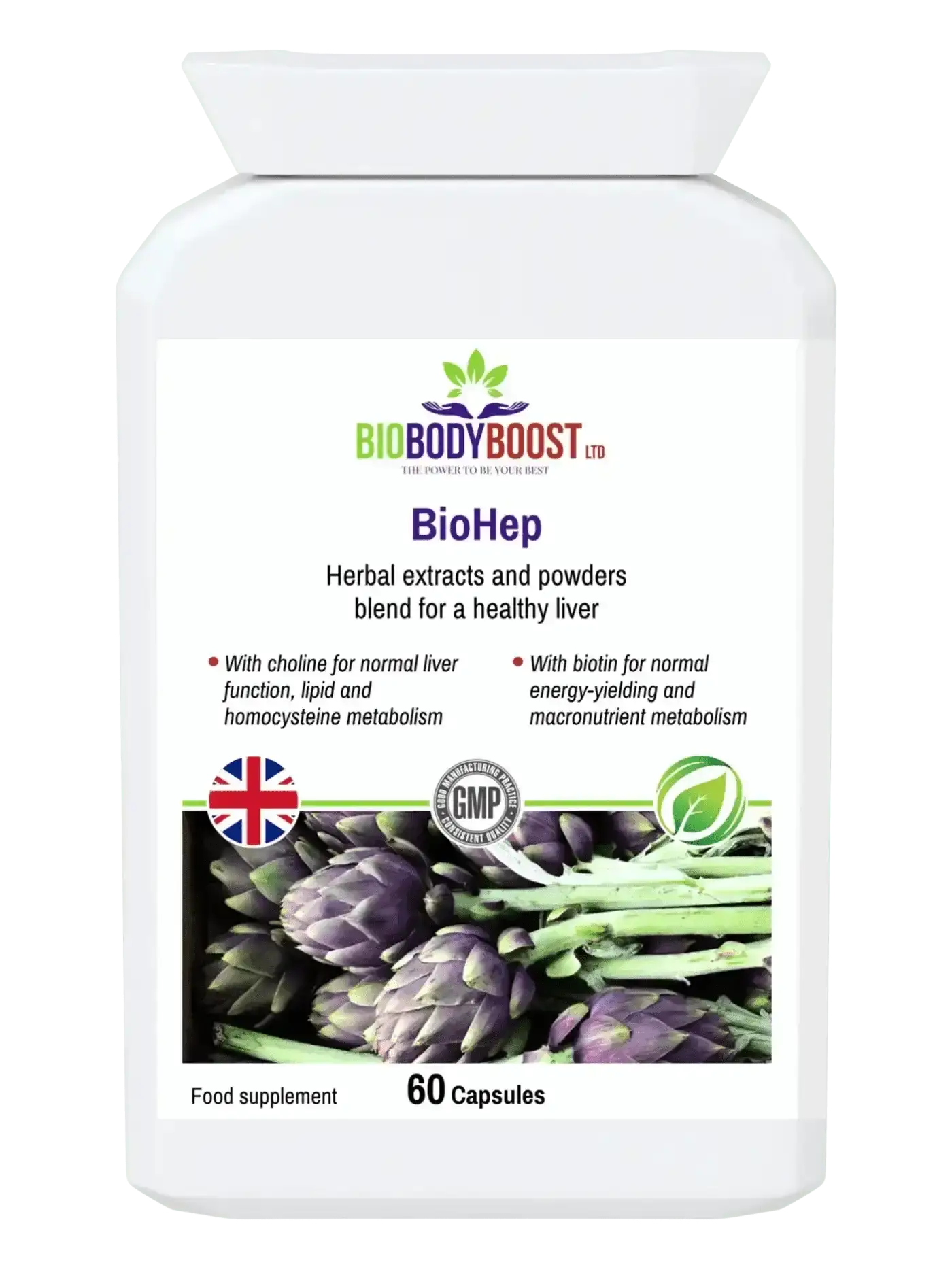
BioHep by BioBodyBoost combines milk thistle (standardised silymarin extract) with choline, dandelion root and artichoke — a comprehensive botanical liver support formula. Halal certified, vegan, UK GMP. Browse the digestive health range.