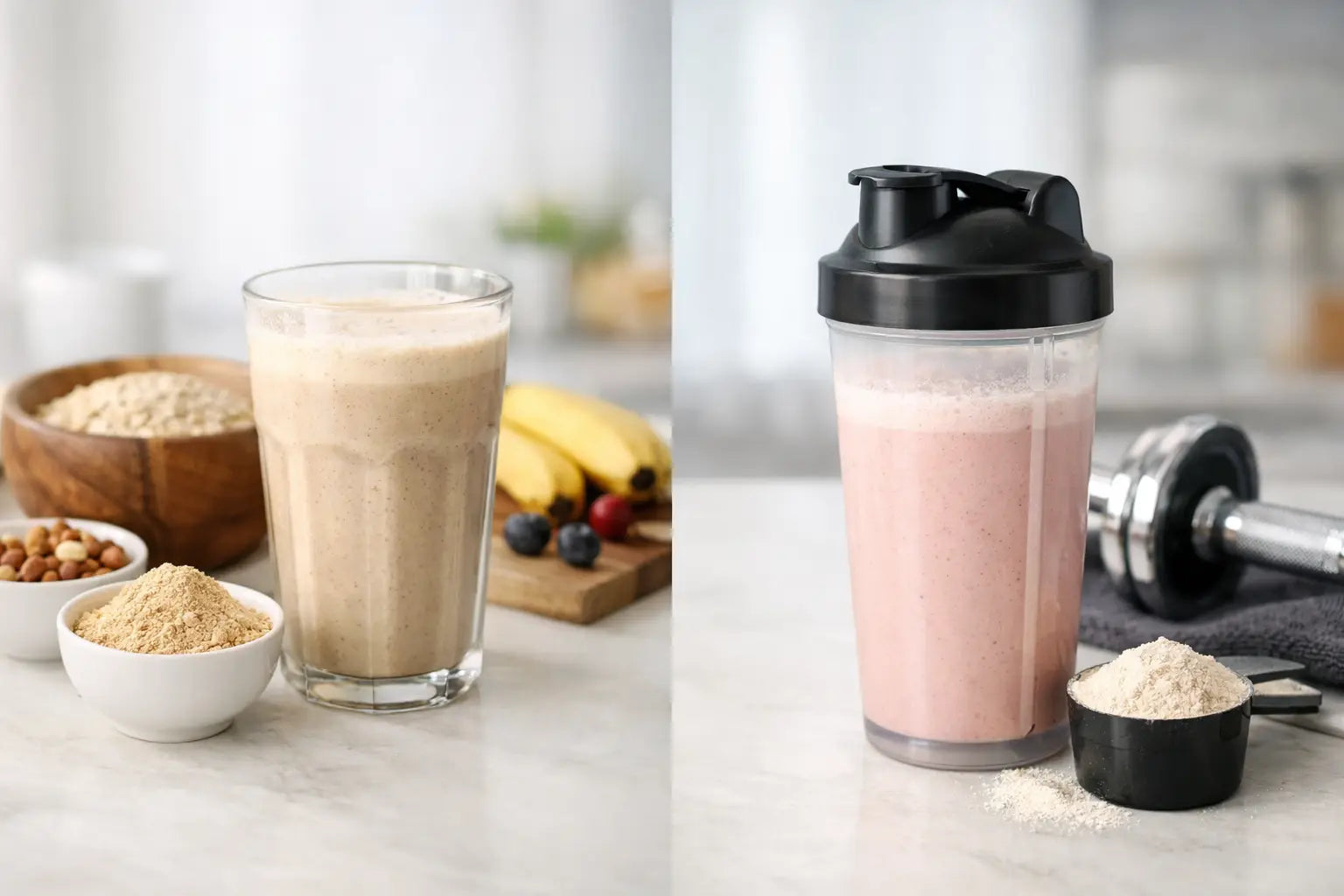
If you have ever stood in your kitchen weighing up a quick shake before work or after training, the meal shake vs protein shake question is not a small one. Pick the right option and you get better energy, better recovery and fewer random snack attacks by 11am. Pick the wrong one and you may feel hungry an hour later or miss the nutrition your routine actually needs.
The good news is that meal shakes and protein shakes are not competing for the same job. They can look similar in a shaker bottle, but they are built for different outcomes. One is usually designed to stand in for a meal. The other is there to increase protein intake, often around exercise, recovery or appetite control.
Meal shake vs protein shake: the core difference
A meal shake is typically formulated to replace a meal, not just top up one nutrient. That means it usually contains a broader mix of protein, carbohydrates, fats, fibre, vitamins and minerals. The goal is balance, satiety and convenience. If breakfast gets skipped, lunch is rushed or you want a more controlled calorie intake without grabbing something ultra-processed, a meal shake makes sense.
A protein shake is narrower in focus. Its main job is to deliver protein efficiently, often with fewer calories and less carbohydrate and fat than a meal shake. That makes it useful when you want to support muscle repair, preserve lean mass during a calorie deficit, or simply boost daily protein without turning it into a full meal.
That distinction matters because your body responds differently to each. A balanced meal replacement is more likely to keep you full and support steady energy. A protein shake can help recovery and muscle maintenance, but on its own it may not satisfy hunger for long, especially if you are using it when you actually need a proper meal.
What a meal shake is designed to do
A well-formulated meal shake is about more than calories in a bottle. It is there to make busy days easier without leaving obvious nutritional gaps. Most include a meaningful amount of protein, but also enough fibre and healthy fats to slow digestion and support fullness. Many also include added vitamins and minerals to better reflect the role of a complete meal.
For busy professionals, this can be the difference between staying focused through the afternoon and crashing into the biscuit tin at 3pm. For people working on weight management, meal shakes can help create structure. Portion control becomes simpler, and there is less guesswork than there is with café lunches or rushed supermarket meal deals.
That said, not every meal shake is equal. Some are little more than sugary powders with a health halo. A stronger option will usually prioritise quality protein, functional fibre, a sensible sugar profile and clean-label ingredients that fit into daily use without gut disruption.
What a protein shake is designed to do
Protein shakes are more targeted. Their main value is helping you hit protein needs in a way that is quick, portable and easy to digest. This is especially useful after exercise, when convenience matters, or on days when your meals are lighter than usual.
If you train regularly, protein supports muscle recovery and adaptation. If fat loss is your goal, higher protein intake can also support satiety and help protect lean tissue while calories are lower. Even outside the gym, protein shakes can be practical for older adults, plant-based eaters and anyone who struggles to get enough protein from meals alone.
But a protein shake is not automatically a meal replacement just because it feels substantial. If it is mostly protein with very little fibre, fat and micronutrient support, it is doing a different job. That is not a flaw. It just means expectations should match the formula.
When a meal shake is the better choice
If your main problem is not enough time to prepare balanced meals, a meal shake is usually the smarter option. It is built for those moments when life gets chaotic and nutrition still needs to happen. Think early starts, long commutes, back-to-back meetings or family days where everyone else gets fed before you do.
Meal shakes also suit people who want a more consistent routine around weight management. They can reduce decision fatigue, help manage portions and make it easier to stay on track without counting every bite. For some, that structure is what finally settles the cycle of skipping meals, overeating later and feeling sluggish.
They can also work well for people with sensitive digestion, provided the formula is thoughtfully designed. A plant-based meal shake with added fibre and a balanced macronutrient profile may feel lighter than a heavy takeaway lunch while still giving you enough to keep going.
When a protein shake is the better choice
If your meals are already fairly balanced and you just need more protein, go for the protein shake. This is often the better fit for gym-goers, runners, cyclists and anyone focused on recovery or body composition.
It can also be useful between meals if hunger tends to creep in and lead to lower-quality snacking. A protein shake is usually lighter than a meal shake, so it can bridge the gap without making you feel overly full. For people in a calorie deficit, that can be a helpful tool.
Another solid use case is the plant-based diet. Many people eating well overall still fall short on protein, particularly at breakfast. A protein shake can raise intake quickly without requiring a complete rethink of the whole day.
Meal shake vs protein shake for weight loss
This is where the answer depends on what is making weight loss difficult in the first place. If your biggest issue is chaotic eating, oversized portions or missing meals and then overcompensating later, a meal shake may help more. It offers structure, convenience and usually better fullness than a basic protein shake.
If your eating pattern is already organised but your protein intake is low, a protein shake may be the better support. Higher protein can make a calorie deficit easier to sustain because it helps with fullness and muscle retention.
The catch is that neither product guarantees fat loss on its own. Results come from the overall pattern - calorie balance, food quality, consistency, sleep and movement. A shake should make that pattern easier, not distract from it.
What to check on the label
The fastest way to tell whether you are holding a meal shake or a protein shake is to look beyond the front of the pack. Check the protein content, but also look at fibre, fat, carbohydrate and added vitamins and minerals.
A meal shake should look more complete. It should provide enough calories to reasonably stand in for a meal and include a broader nutritional spread. A protein shake should be more protein-forward and less dependent on extra ingredients to create the illusion of substance.
Ingredient quality matters too. Clean formulas with clearly named ingredients, no unnecessary fillers and a digestion-friendly profile are better suited to daily use. If a shake leaves you bloated, hungry or jittery, it is not helping your routine, no matter how impressive the marketing sounds.
The plant-based angle matters more than people think
For many people, especially those choosing vegan-friendly nutrition, the meal shake vs protein shake decision is also about tolerability and ingredient standards. Plant-based formulas can be an excellent fit when they are blended well and built for function, not just label appeal.
A good plant-based protein shake should deliver a complete or complementary amino acid profile and mix well enough to become part of real life, not a gritty punishment after training. A strong plant-based meal shake should go further, offering not just protein but also fibre, essential fats and micronutrient support in one convenient serving.
This is where quality control matters. Research-backed formulation and third-party testing add trust, especially if you are using shakes daily and want consistency without compromise.
So which one should you choose?
Choose a meal shake if you need a genuine meal alternative that supports fullness, balanced nutrition and everyday energy. Choose a protein shake if you want targeted protein support for recovery, appetite control or muscle maintenance.
Some people benefit from using both at different times. A meal shake might rescue a rushed breakfast, while a protein shake covers post-workout recovery. That is not overcomplicating things. It is matching the tool to the job.
If you are building a cleaner routine, start with the gap you need to solve. Too hungry between meals, not recovering well, skipping breakfast, struggling with portion control, feeling heavy after lunch - each of those points to a different answer. At BioBodyBoost, that practical lens matters more than chasing trends.
The best shake is the one that fits your day, supports your goal and feels easy enough to keep using when life gets busy.