Lion's mane mushroom (Hericium erinaceus) stimulates the production of Nerve Growth Factor (NGF) — a signalling protein essential for the growth, maintenance and survival of neurons. This makes it uniquely different from every other supplement in the nootropic category: it doesn't stimulate the brain like caffeine or modulate neurotransmitters like ashwagandha. It supports the literal structural maintenance of the nervous system. Here's what the evidence actually shows.
What Is Lion's Mane Mushroom?
Lion's mane is a culinary and medicinal mushroom native to North America, Europe and Asia. Named for its distinctive white, shaggy appearance resembling a lion's mane, it has been used in traditional Chinese and Japanese medicine for centuries — primarily for cognitive support and digestive health. In the West, its pharmacological properties have been researched intensively since the 1990s.
The active compounds responsible for its neurological effects are hericenones (found in the fruiting body) and erinacines (found in the mycelium). Both classes induce NGF synthesis, though through different mechanisms and with different potencies.
What Does Lion's Mane Actually Do? The NGF Mechanism Explained
Nerve Growth Factor (NGF) is a neurotrophin — a family of proteins that support the growth, survival and differentiation of neurons. NGF cannot cross the blood-brain barrier when administered directly, but the small-molecule hericenones and erinacines in lion's mane can. Once across the barrier, they upregulate the synthesis of NGF in the brain.
Increased NGF supports:
- Neurogenesis — the formation of new neurons, primarily in the hippocampus (memory and learning centre)
- Myelination — the formation of myelin sheaths around neurons that improve signal transmission speed
- Neuronal survival — protection against age-related neuronal death
- Synaptic plasticity — the ability of neural connections to strengthen with use (the mechanism of learning)
No other widely available supplement has this mechanism. This is why lion's mane has attracted serious attention from researchers studying cognitive decline, Alzheimer's disease and nerve injury repair.
What Does the Clinical Evidence Show?
Cognitive function in older adults
A landmark double-blind RCT published in Phytotherapy Research by Mori et al. found that lion's mane supplementation (750mg daily) significantly improved cognitive function scores in adults with mild cognitive impairment versus placebo over 16 weeks. Crucially, scores declined again after supplementation stopped — suggesting the benefits require ongoing use.
Anxiety and depression
A 2010 study published in Biomedical Research found that lion's mane supplementation significantly reduced anxiety and depression scores in menopausal women compared to placebo over 4 weeks. The proposed mechanism is via hippocampal neurogenesis and the gut-brain axis rather than direct neurotransmitter modulation.
Nerve regeneration
Animal studies have consistently shown lion's mane extract accelerates peripheral nerve regeneration following injury. Human research in this area is limited but the preclinical evidence is compelling enough that lion's mane is being studied in the context of peripheral neuropathy and nerve recovery.
What it does NOT do
Honest context: lion's mane is not a stimulant. It will not produce a same-day cognitive boost. It does not suppress anxiety acutely the way ashwagandha does. The effects are gradual, cumulative and primarily structural — it supports the brain's infrastructure rather than its acute chemistry. People expecting a caffeine-like response will be disappointed.
How Long Does Lion's Mane Take to Work?
This is the most important question for setting realistic expectations:
- 0–4 weeks: No perceptible effect for most people. NGF upregulation has begun but neuronal changes are not yet reflected in function.
- 4–8 weeks: Some people begin to notice improved mental clarity, reduced brain fog and slightly better verbal recall. Effects are subtle at this stage.
- 8–16 weeks: The window in which clinical studies observe meaningful cognitive improvements. More consistent focus, faster word retrieval, reduced mental fatigue.
- 16+ weeks: Continued improvement. The Mori et al. trial ran for 16 weeks; longer-term effects with continuous use are not fully characterised.
The effects reverse when supplementation stops. This is consistent with the NGF mechanism — when the stimulus is removed, NGF levels return to baseline over weeks.
What Dose Is Effective?
The Mori et al. RCT used 750mg daily of dried lion's mane powder (three 250mg tablets). However, the potency of lion's mane products varies enormously based on:
- Fruiting body vs mycelium — Fruiting body extracts contain hericenones, the primary active class. Mycelium-on-grain preparations (where the mycelium is grown on and mixed with grain substrate) have significantly lower active compound content and higher starch content. Always look for "whole fruiting body" on the label.
- Extraction method — Hot water extraction concentrates beta-glucans and hericenones. Dual extraction (water + alcohol) also captures erinacines. Raw dried powder is the least concentrated form.
- Standardisation — Look for products standardised to beta-glucan or hericenone content.
Is Lion's Mane Halal?
Yes — lion's mane is a mushroom (fungal organism) with no animal derivatives. It is inherently halal, vegan and suitable for all dietary requirements. The halal compliance consideration for lion's mane supplements is the capsule shell (HPMC vs gelatine) and any processing aids, not the ingredient itself.
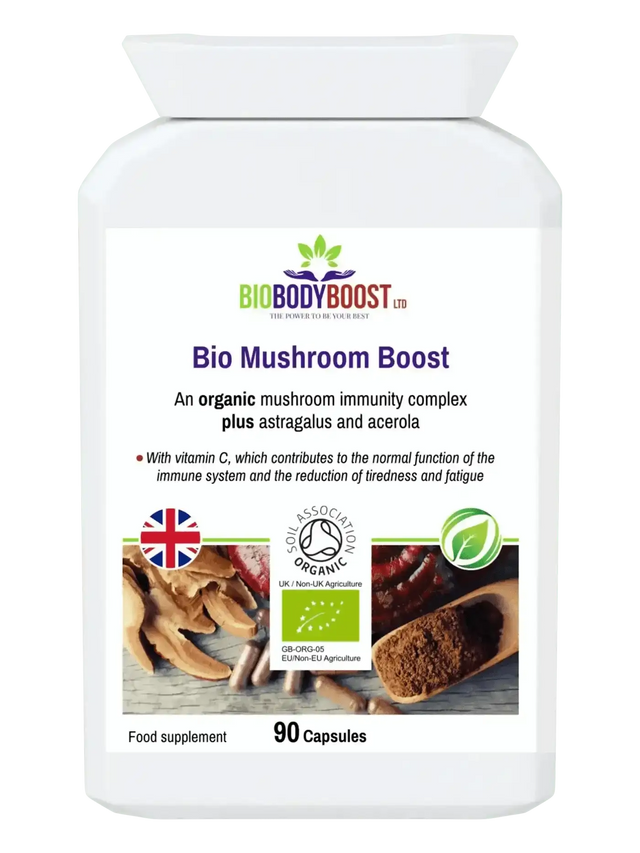
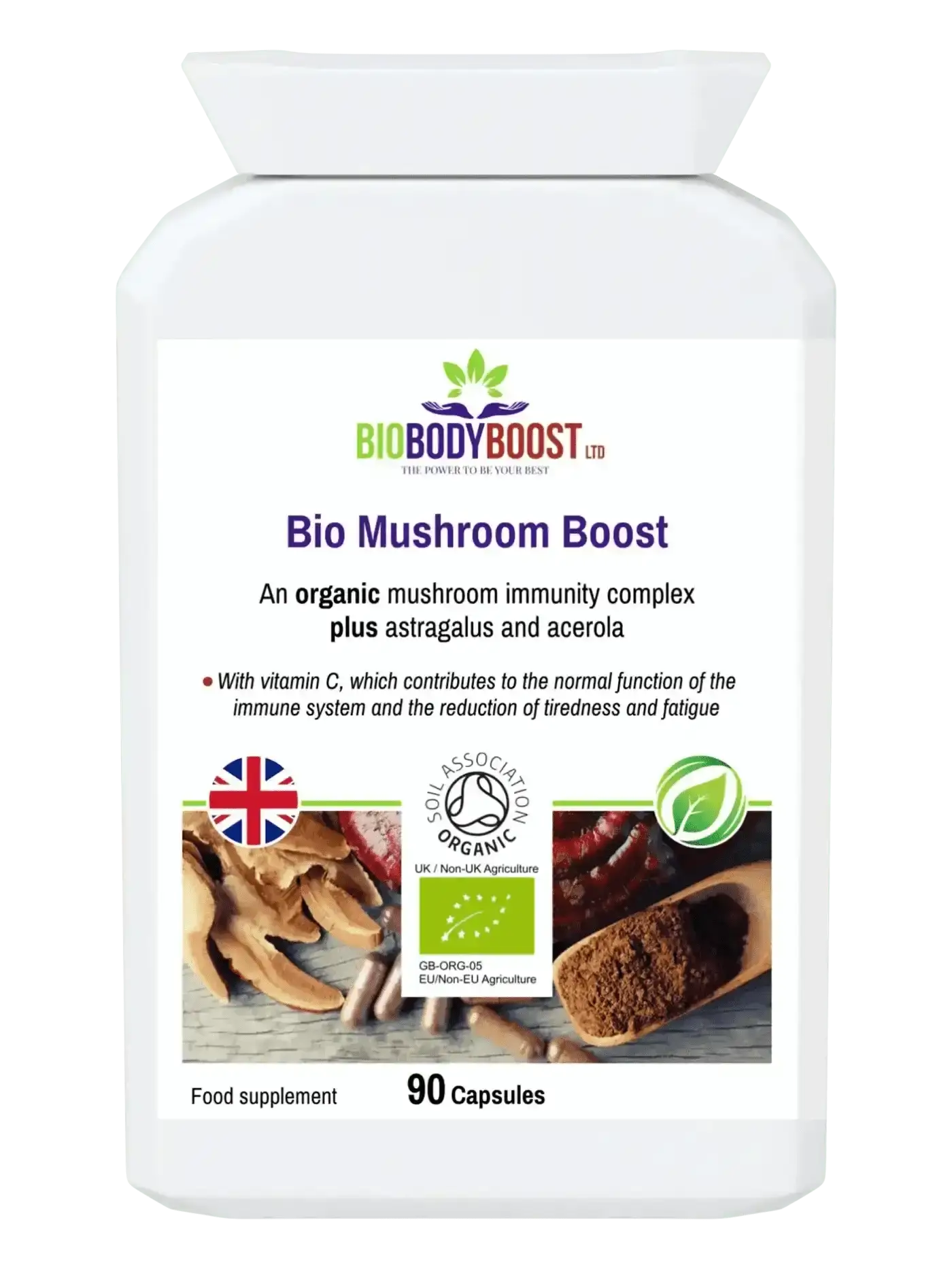
Bio Mushroom Boost by BioBodyBoost contains lion's mane as part of a 7-mushroom certified organic formula — whole fruiting body extracts, no mycelium on grain, halal certified, vegan. For a broader cognitive support approach, lion's mane pairs well with bacopa monnieri, ginkgo biloba and L-theanine as used in BioBrain. Browse the immunity and wellness range.