Short answer: yes, spirulina itself is generally considered halal. It is a type of blue-green algae grown in water, and scholars treat plants and algae as permissible unless they are harmful or intoxicating. The halal question is really about the product: the capsule shell, flavourings, added vitamins and how cleanly it was grown.
Key takeaways
- Spirulina and chlorella are algae, not animals, so the raw ingredient is generally halal.
- The risks are in the extras: gelatine capsules, alcohol-based flavourings and animal-derived added vitamins.
- Purity matters too. Algae grown in poorly controlled water can pick up toxins and heavy metals.
- Spirulina is not a reliable source of vitamin B12, despite what some labels imply.
- Avoid spirulina if you have phenylketonuria (PKU), and check with your GP if you take blood thinners or thyroid medicine.
In this guide
What spirulina and chlorella are
Spirulina (Arthrospira) is a blue-green microalga, technically a type of cyanobacteria. It grows in warm, alkaline water and is dried into a deep green powder.
Chlorella is a single-celled green freshwater alga. Its tough cell wall is usually broken during processing so it can be digested.
Both are sold as powders, tablets and capsules, and often appear inside greens blends. You can read more about what spirulina does and doesn't do in our spirulina evidence guide.
Why algae are generally halal
In Islamic dietary law, the starting point for plants and things that grow in water is that they are permissible (halal), unless they are harmful, intoxicating or impure. Algae are not animals, are not intoxicating and are not slaughtered, so there is no slaughter question to consider.
Scholars have applied the same reasoning to seaweed-derived ingredients. For example, IslamQA has ruled that carrageenan, a seaweed extract, is permissible.
The principle that matters: the algae are fine. Whether the finished supplement is halal depends on everything else in the tub and how it was made. If in doubt, ask a scholar you trust and look for an independent halal approval.
What to check on the label
| What to check | Why it matters | What to look for |
|---|---|---|
| Capsule shell | Many capsules are gelatine, often from pigs or non-halal cattle | HPMC (vegetable) capsules, or powder/tablets |
| Flavourings | Some flavourings use alcohol as a carrier | Unflavoured products, or a halal approval |
| Added vitamins | Some vitamin forms are coated with gelatine | Food-form nutrients or vegan-labelled premixes |
| E-numbers and excipients | Some, like E441 or E542, can be animal-derived | A short, clear ingredient list |
| Purity | Poorly grown algae can contain toxins or heavy metals | Organic certification and a named UK or EU supplier |
Our guides to gelatine vs HPMC capsules and E-numbers in supplements go into these in detail.
Purity is a halal point as well as a safety one. Islamic dietary principles avoid what is harmful, so a cleanly grown, tested product is the better choice either way.

The vitamin B12 myth
Spirulina is often promoted as a vegan source of vitamin B12. It isn't a reliable one. Much of the B12-like material in spirulina is a form the body can't use.
If you eat a plant-based diet, the NHS advises getting B12 from fortified foods or a B12 supplement instead.
Who should avoid spirulina
- Phenylketonuria (PKU): spirulina contains phenylalanine, so avoid it.
- Blood thinners such as warfarin: greens and algae can contain vitamin K, which affects these medicines. Speak to your GP or anticoagulation clinic first.
- Thyroid conditions: greens blends that include kelp contain iodine. Check with your GP.
- Autoimmune conditions or immune-suppressing medicine: ask your doctor before use.
- Pregnancy, breastfeeding and under-18s: check with your GP or midwife first.
- Coeliac disease or sulphite sensitivity: many greens blends contain cereal grasses (gluten), and spirulina and chlorella can contain naturally occurring sulphites.

Soil Association organic · halal & kosher approved · vegan
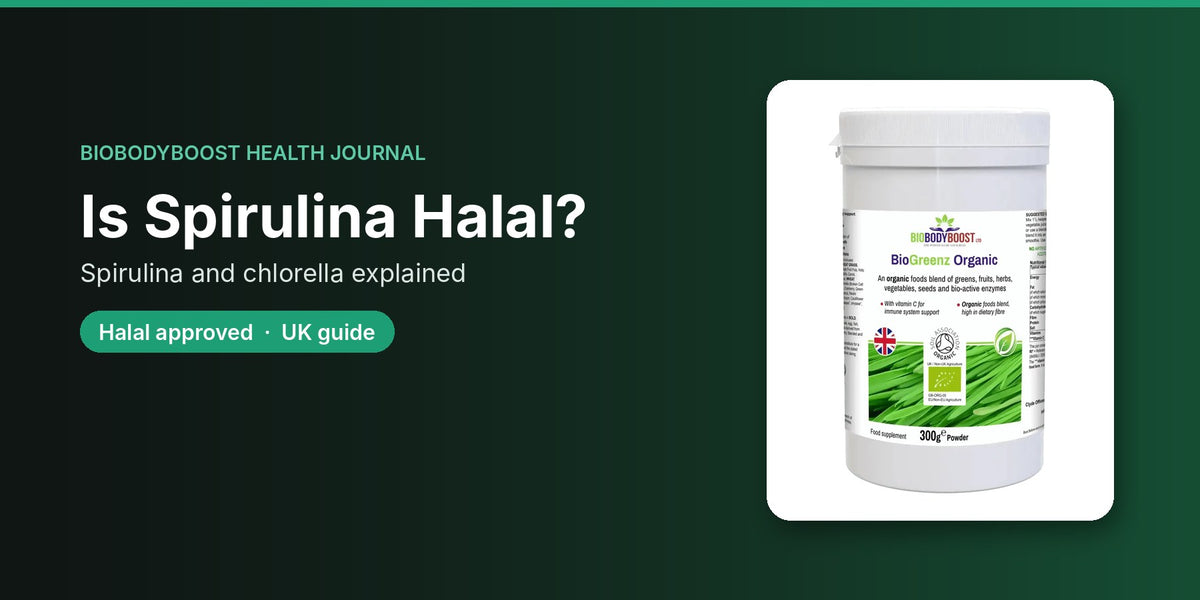
BioGreenz Organic Greens Powder
- Spirulina and chlorella in a 35+ ingredient organic blend
- Food-form vitamin C from acerola and baobab, 23% NRV per 15g serving
- Vitamin C contributes to the normal function of the immune system
HALAL10 10% off your first order
Shop BioGreenz →Please note: BioGreenz contains gluten and sulphites, so it isn't suitable for coeliacs. Prefer capsules? SuperBio is the same organic blend in HPMC capsules (it also contains gluten and sulphites). For tips on using a greens powder, see how to take greens powder every day.
Questions people ask
Is spirulina halal or haram?
Spirulina itself is generally considered halal, because it is an alga that grows in water, not an animal. Check the capsule shell, flavourings and added ingredients of the specific product.
Is chlorella halal?
Yes, chlorella is a freshwater alga and is generally considered halal on the same basis. The same label checks apply.
Is spirulina vegan?
Yes. Spirulina is a microalga, so it is suitable for vegans, though capsules and added ingredients still need checking.
Does spirulina contain alcohol?
Plain spirulina powder doesn't. Some flavoured drinks, liquid extracts or flavourings may use alcohol, so read the ingredients or choose a halal-approved product.
Can I take spirulina while fasting in Ramadan?
Take it at suhoor or after iftar, with plenty of water. Taking anything by mouth during fasting hours breaks the fast.
Sources: NHS: the vegan diet · NHS: B vitamins and folic acid · IslamQA: ruling on carrageenan · GB NHC register · How to check halal approval
This article is general information, not religious or medical advice. For a ruling on your situation, ask a scholar you trust. Food supplements should not replace a varied, balanced diet and healthy lifestyle. Speak to your GP before use if you are pregnant, breastfeeding, under 18, take medication or have a medical condition.