Quick answer: fish oil omega-3 from fish with fins and scales is halal — fish are permitted in Islam without requiring specific slaughter rites. Krill oil is not halal — krill are crustaceans (shellfish), which lack fins and scales and are not permitted under classical Islamic jurisprudence. Algae-derived omega-3 (DHA from microalgae) is halal, vegan and kosher. The compliance check for fish oil supplements is the capsule shell (gelatine must be halal-sourced) and the fish species (must have fins and scales). BioBodyBoost OmegaBalance uses halal-certified omega 3-6-9 oils in an HPMC capsule.
Fish oil — which species are halal
Fish with fins and scales are halal under the Maliki, Shafi’i and Hanbali schools. The Hanafi school permits all sea creatures. Common halal fish oil species: anchovy, sardine, mackerel, salmon, cod — all have fins and scales. Shellfish (shrimp, krill, crab, lobster) are not permitted under most schools as they lack fins and scales.
Krill oil — not halal under most schools
Krill are tiny crustaceans — they have no fins and no scales. They are not fish. Under the Maliki, Shafi’i and Hanbali schools, krill are not halal. Under the Hanafi school, which permits all sea creatures, there is scholarly disagreement. For the majority of UK Muslims, krill oil requires a scholarly ruling specific to their school of thought before consuming. A conservative approach avoids krill oil and uses fish oil (from finned, scaled species) or algae-derived DHA instead.
Algae omega-3 — the unambiguous halal and vegan option
DHA (docosahexaenoic acid) from microalgae (Schizochytrium sp.) is the source from which fish actually get their omega-3 — fish accumulate DHA by eating algae. Algae DHA is plant-origin, inherently halal, vegan and kosher. It provides DHA specifically — not EPA — which is the primary omega-3 for brain, eye and cardiovascular health. BioBrain contains algae-derived DHA as one of its 25 active ingredients.
The capsule shell question
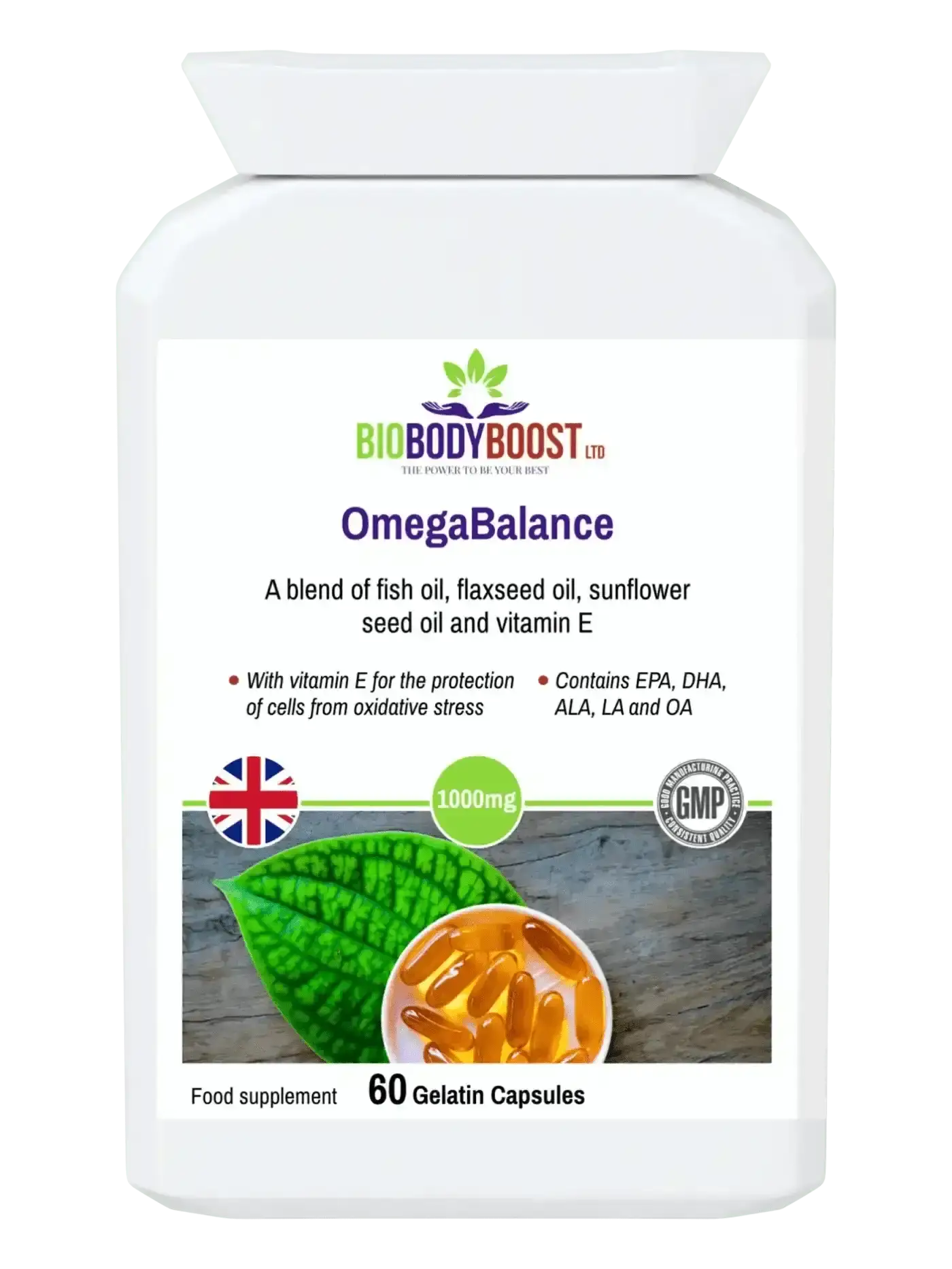
Fish oil capsules and krill oil capsules are very often gelatine softgels. The gelatine source matters: porcine gelatine = haram; bovine gelatine = halal only if from certified dhabiha slaughter; fish gelatine from halal fish = halal. HPMC capsules = halal without question. OmegaBalance uses HPMC capsules — the clearest compliance choice. OmegaBalance — 1000mg omega 3-6-9 (fish, flaxseed, evening primrose oils) in HPMC capsule, halal certified, UK GMP.
Is fish oil halal in Islam?
Fish oil from fish with fins and scales is halal under all four major Sunni schools of jurisprudence — Maliki, Shafi’i, Hanbali and Hanafi all permit finned, scaled fish. The compliance check for supplements is the capsule shell (gelatine source) and the fish species. HPMC capsule + certified halal oil from anchovy/sardine/mackerel/salmon = straightforwardly halal. OmegaBalance meets all these criteria with third-party halal certification.
Is krill oil halal?
Under most Sunni schools (Maliki, Shafi’i, Hanbali), krill are crustaceans without fins and scales and are not halal. The Hanafi school’s permissibility of all sea creatures is debated for crustaceans specifically. Conservative practice avoids krill oil and uses fish oil from finned/scaled species or algae-derived DHA instead. If you follow the Hanafi school, consult your local scholar for a specific ruling on crustacean-derived supplements.