Short answer
L-glutamine itself can be fully halal and vegan. Most of it is now made by fermenting sugar (such as glucose from corn or other starch) with bacteria, with no animal material. But “most” is not “all”: the nutrients used in fermentation can be animal-derived, and glutamine blends often add flavourings, colours or gelatine capsules. The reliable check is a stated plant or fermentation source and a halal approval on the finished product.
Updated October 2026 · BioBodyBoost Team
What is L-glutamine?
Glutamine is an amino acid — one of the building blocks of protein. It is the most abundant free amino acid in the body and is found naturally in foods such as beans, lentils, tofu, meat, fish, eggs and dairy. As a supplement it is sold as a white, almost tasteless powder or in capsules. The “L” refers to the form found in nature. For what the research says about glutamine and exercise, see our L-glutamine guide. This article covers one question only: is it halal?
How is L-glutamine made?
Commercial amino acids are produced in three main ways:
| Method | How it works | Halal and vegan risk |
|---|---|---|
| Microbial fermentation | Bacteria (often Corynebacterium glutamicum) are fed sugar and produce the amino acid, which is then purified | Low — the main check is the fermentation nutrients |
| Chemical synthesis | Built from simple chemical starting materials in a lab | Low — no animal source, but check processing aids |
| Protein hydrolysis | Proteins are broken down and the amino acids separated | Higher — depends entirely on which protein was used |
Fermentation is now the standard industrial route for many amino acids — a review on industrial amino acid production describes Corynebacterium glutamicum as the workhorse organism. Some specialist suppliers also make glutamine by chemical synthesis; one US manufacturer’s kosher and halal statement describes its glutamine as of synthetic origin with no animal materials — but notes it is not halal approved.
Where can animal ingredients hide?
- Fermentation nutrients. Bacteria need a nitrogen source to grow. This is usually plant-based or mineral, but it can be a meat or animal peptone. Halal bodies such as the MUI flag fermentation media as a critical control point for fermented ingredients.
- Hydrolysed protein sources. Some amino acids have historically been extracted from animal proteins — the best-known example is L-cysteine from feathers or hair. Glutamine is rarely made this way today, but an unstated source leaves the question open. The same issue affects BCAAs; see our vegan BCAA guide.
- Capsules. Glutamine capsules may use a gelatine shell.
- Flavoured blends. Glutamine is often mixed into recovery or “gut” formulas with flavourings, colours (such as carmine, E120) or other amino acids of unknown origin.

A 4-step halal check for any glutamine product
- Is the source stated? Look for “fermented from glucose”, “plant-based fermentation” or “vegan”. No source stated means you cannot be sure.
- Is the finished product halal approved? This covers the fermentation media and processing aids that a label will not show.
- What is the capsule made of? Choose powder or a plant-based HPMC capsule over gelatine.
- What else is in it? Pure, unflavoured glutamine has one ingredient. Blends need every ingredient checked. Our halal gym supplement label check walks through the common problem ingredients.
Is unflavoured glutamine easier to verify?
Yes. A single-ingredient powder removes the flavourings, sweeteners, colours and capsule shell from the question, leaving only the source of the glutamine itself. It also mixes into water, juice or a protein shake without changing the taste.

Frequently asked questions
Is L-glutamine made from animals?
Usually not. Most L-glutamine sold today is made by bacterial fermentation of sugar or by chemical synthesis. However, unless the source is stated, you cannot rule out animal-derived inputs.
Is L-glutamine vegan?
Glutamine made by fermentation of plant sugars is vegan. Check that the product says so, and that the capsule (if any) is plant-based.
Is L-glutamine haram for Muslims?
No — glutamine is not haram in itself. It is the source and the other ingredients that decide whether a particular product is halal, which is why a halal approval matters.
Can I take glutamine during Ramadan?
Most scholars consider swallowing anything during fasting hours to break the fast, so take it between iftar and suhoor, for example mixed into a drink after iftar.
Is L-glutamine the same as glutamate or MSG?
No. Glutamine and glutamate are different amino acids, and monosodium glutamate (MSG) is a flavour enhancer made from glutamate. They are often confused because the names are similar.
Where BioBodyBoost fits
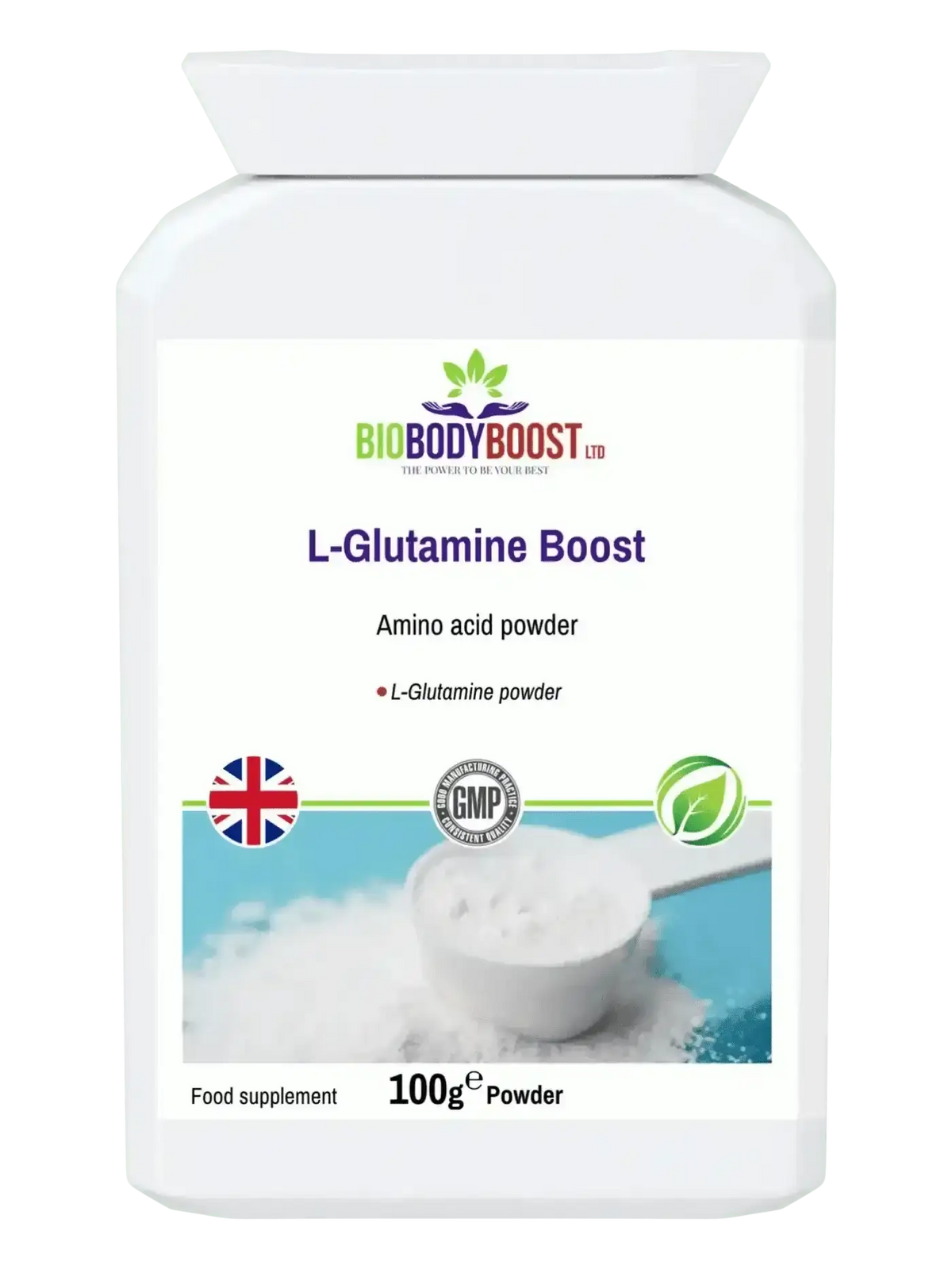
L-Glutamine Powder is 100g of pure, unflavoured L-glutamine fermented from glucose — a single ingredient with no sweeteners, flavourings, fillers or capsule shell. It is halal approved, kosher approved and vegan. Use code HALAL10 for 10% off your first order.
This article is general information about halal status and is not a religious ruling. Food supplements should not replace a varied, balanced diet and healthy lifestyle. Speak to your GP before taking supplements if you have a medical condition or take medication.